
Asian Rhinoplasty
Home . Nose Job / Rhinoplasty Surgery . Asian Rhinoplasty



BEFORE & AFTER PHOTOS
Browse our gallery of Asian rhinoplasty before and after photos performed by Dr. Jacob Sedgh, a double board-certified facial plastic surgeon specializing in rhinoplasty and ethnic nose surgery. These images highlight how Asian rhinoplasty can enhance facial harmony while maintaining natural identity through procedures such as bridge augmentation, nasal tip refinement, and nostril narrowing.
There are many approaches to rhinoplasty. My patient had been contemplating her options and wanted a more refined, projected tip—without altering the character of her nose. Maintaining authenticity was her top priority, and at just 3 months post-op, it’s clear we achieved that. The enhanced tip projection and definition created a truly transformational improvement from every angle. That’s how important proper nasal tip projection is in facial aesthetics.
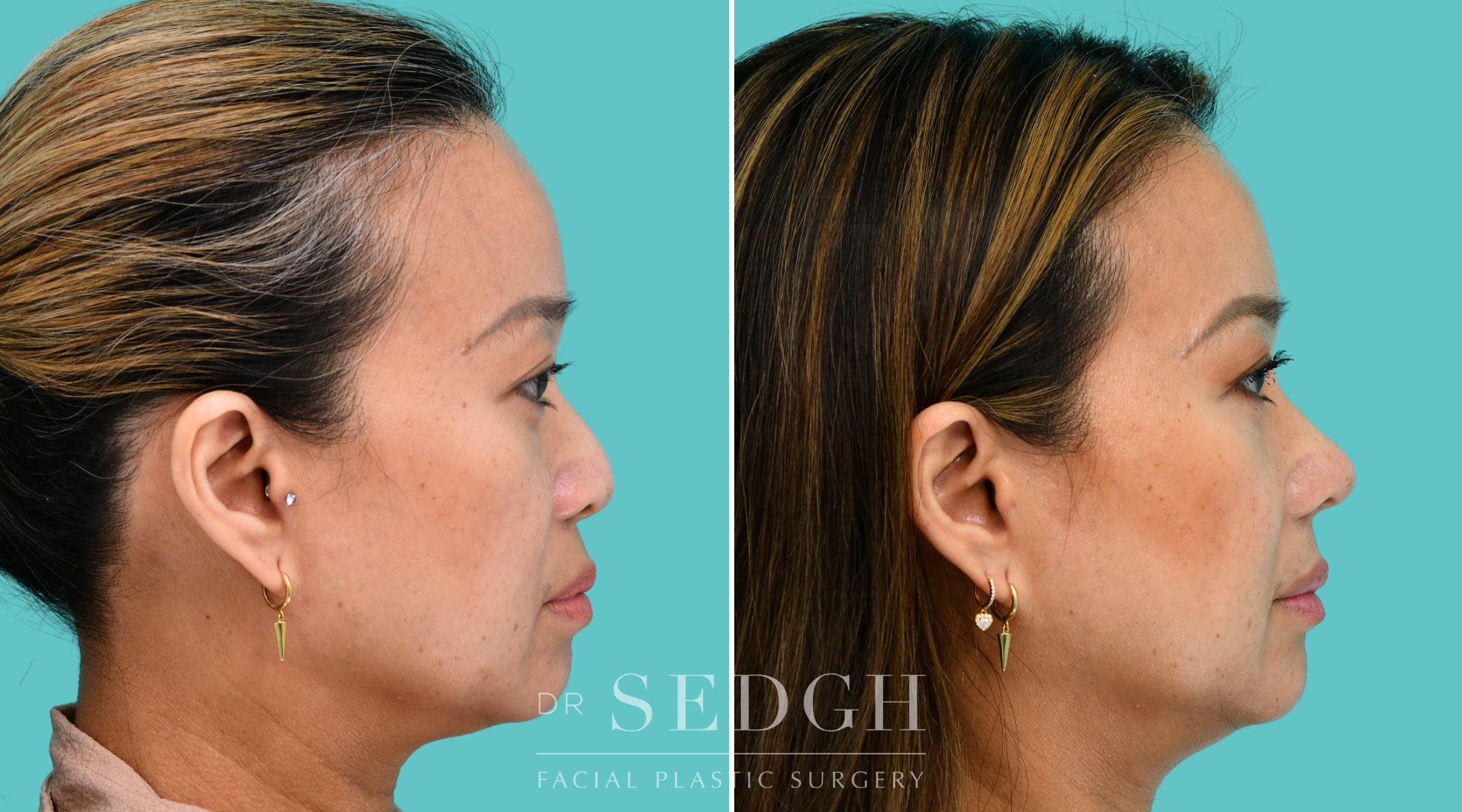
There are many approaches to rhinoplasty. My patient had been contemplating her options and wanted a more refined, projected tip—without altering the character of her nose. Maintaining authenticity was her top priority, and at just 3 months post-op, it’s clear we achieved that. The enhanced tip projection and definition created a truly transformational improvement from every angle. That’s how important proper nasal tip projection is in facial aesthetics.
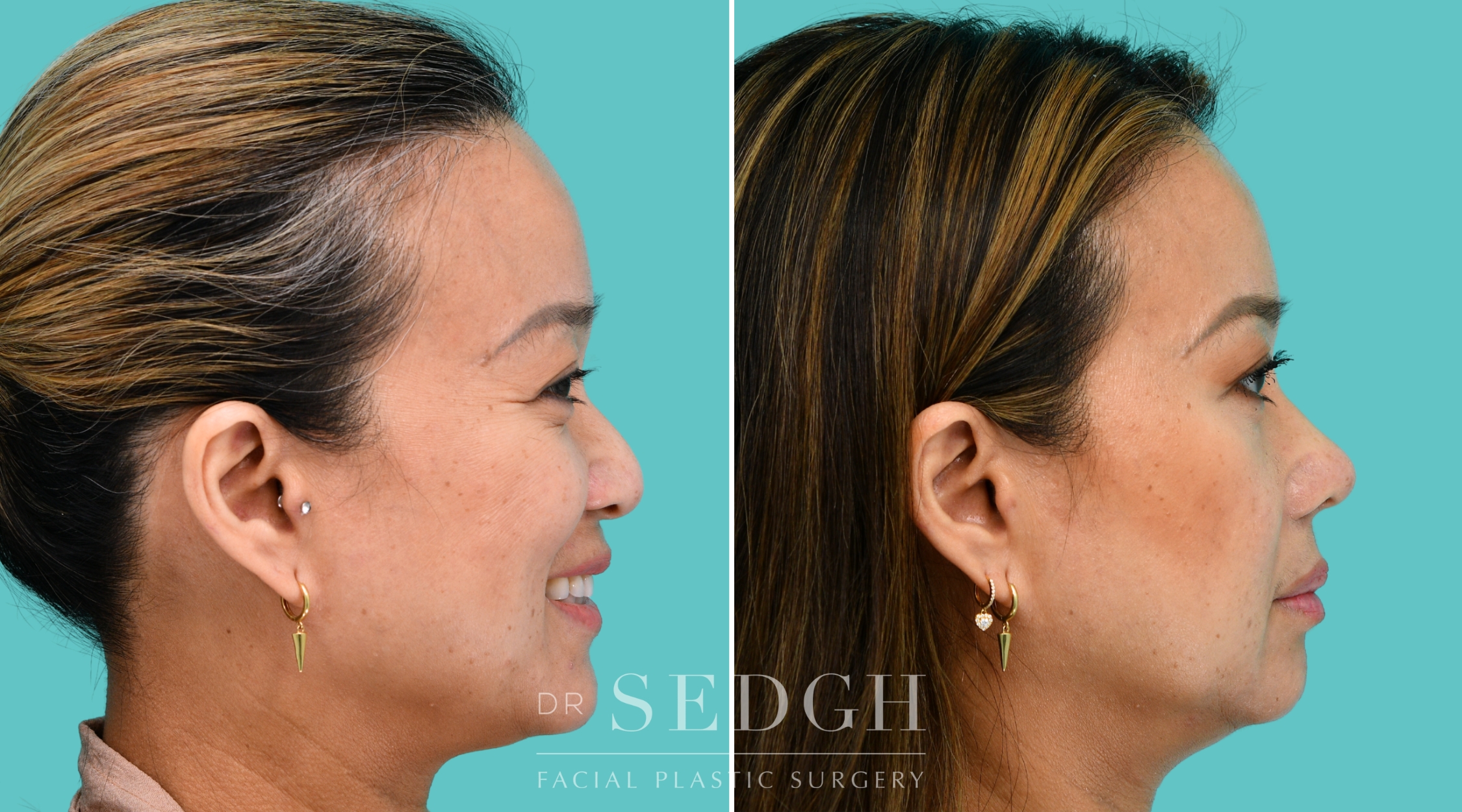
There are many approaches to rhinoplasty. My patient had been contemplating her options and wanted a more refined, projected tip—without altering the character of her nose. Maintaining authenticity was her top priority, and at just 3 months post-op, it’s clear we achieved that. The enhanced tip projection and definition created a truly transformational improvement from every angle. That’s how important proper nasal tip projection is in facial aesthetics.
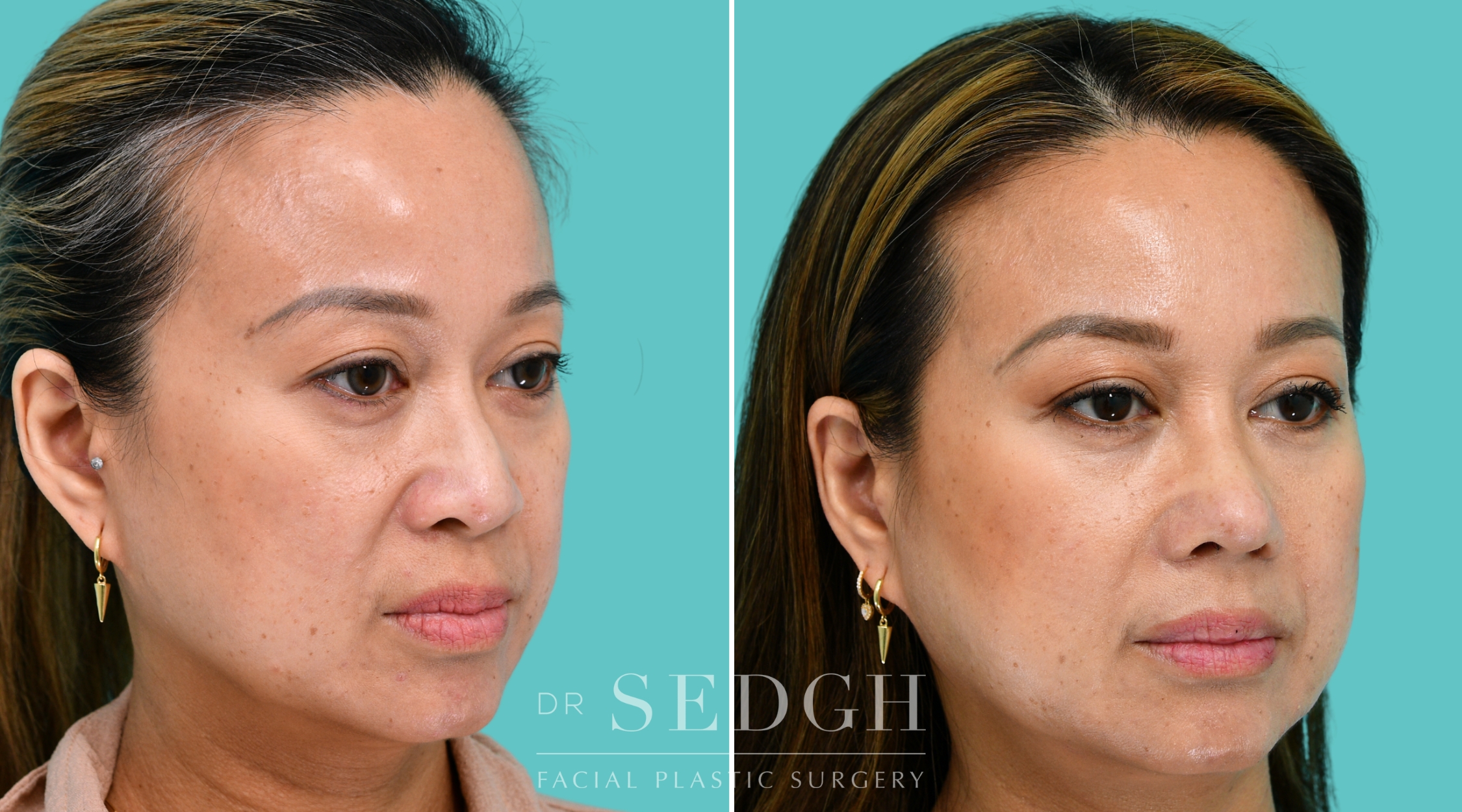
There are many approaches to rhinoplasty. My patient had been contemplating her options and wanted a more refined, projected tip—without altering the character of her nose. Maintaining authenticity was her top priority, and at just 3 months post-op, it’s clear we achieved that. The enhanced tip projection and definition created a truly transformational improvement from every angle. That’s how important proper nasal tip projection is in facial aesthetics.
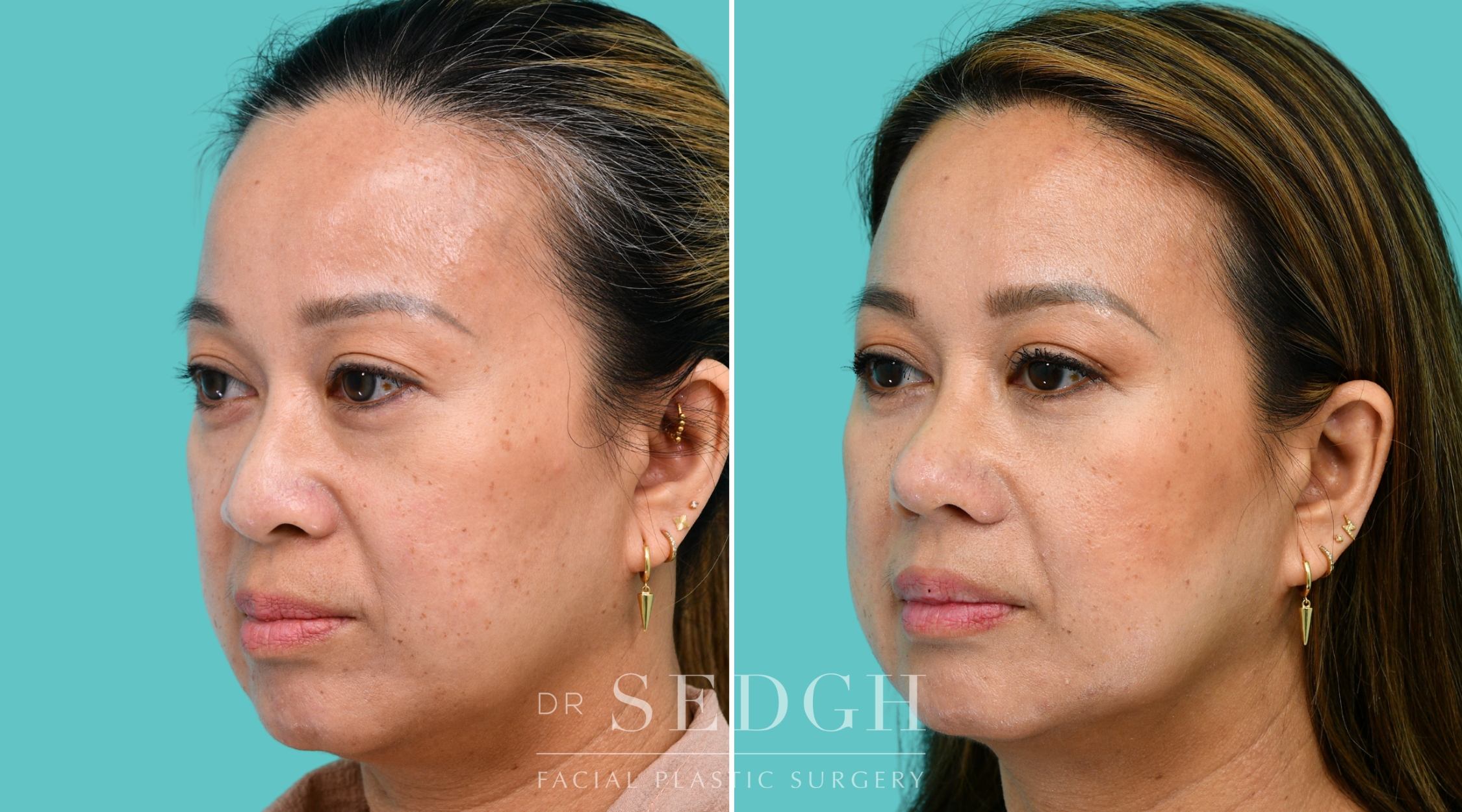
There are many approaches to rhinoplasty. My patient had been contemplating her options and wanted a more refined, projected tip—without altering the character of her nose. Maintaining authenticity was her top priority, and at just 3 months post-op, it’s clear we achieved that. The enhanced tip projection and definition created a truly transformational improvement from every angle. That’s how important proper nasal tip projection is in facial aesthetics.
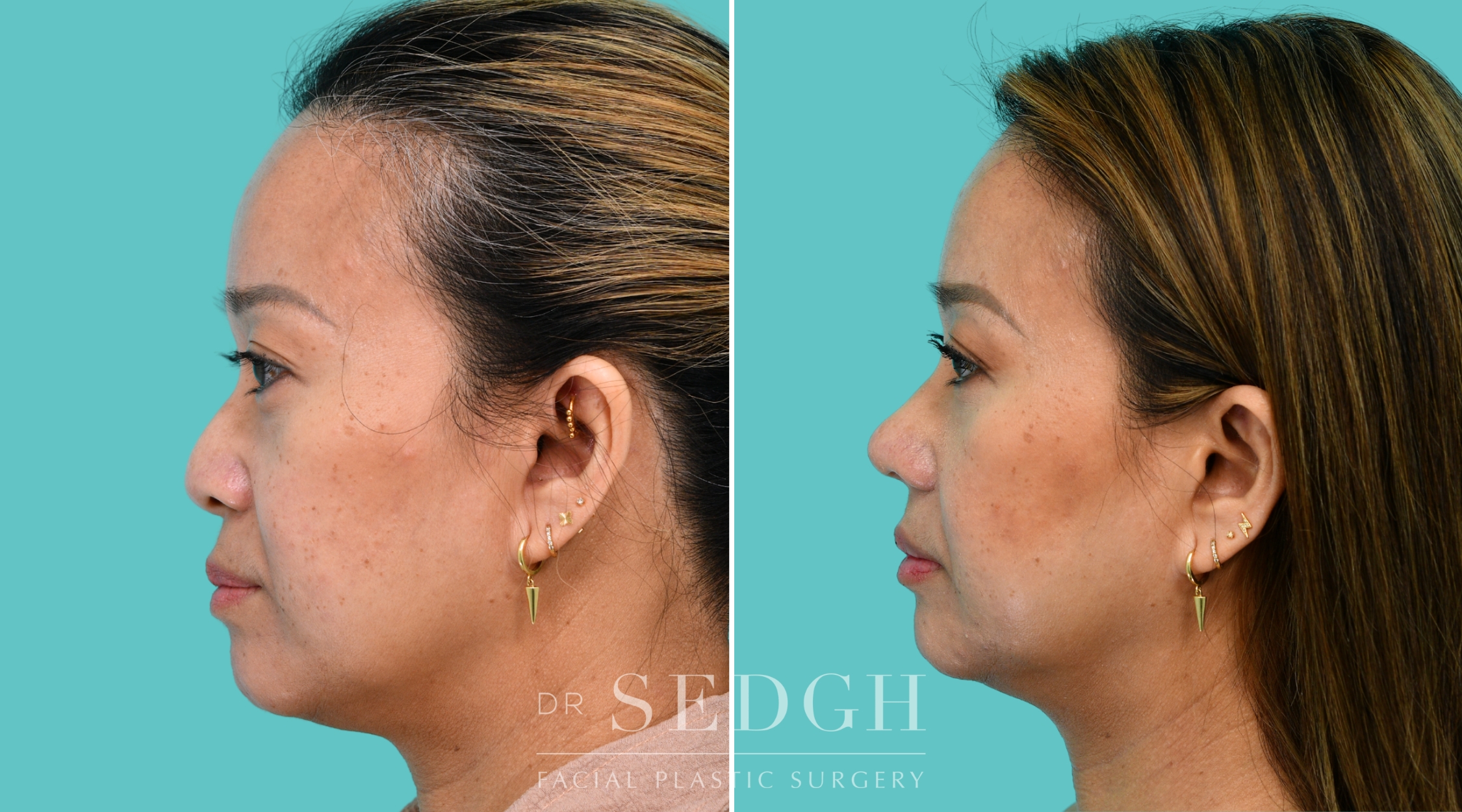
There are many approaches to rhinoplasty. My patient had been contemplating her options and wanted a more refined, projected tip—without altering the character of her nose. Maintaining authenticity was her top priority, and at just 3 months post-op, it’s clear we achieved that. The enhanced tip projection and definition created a truly transformational improvement from every angle. That’s how important proper nasal tip projection is in facial aesthetics.
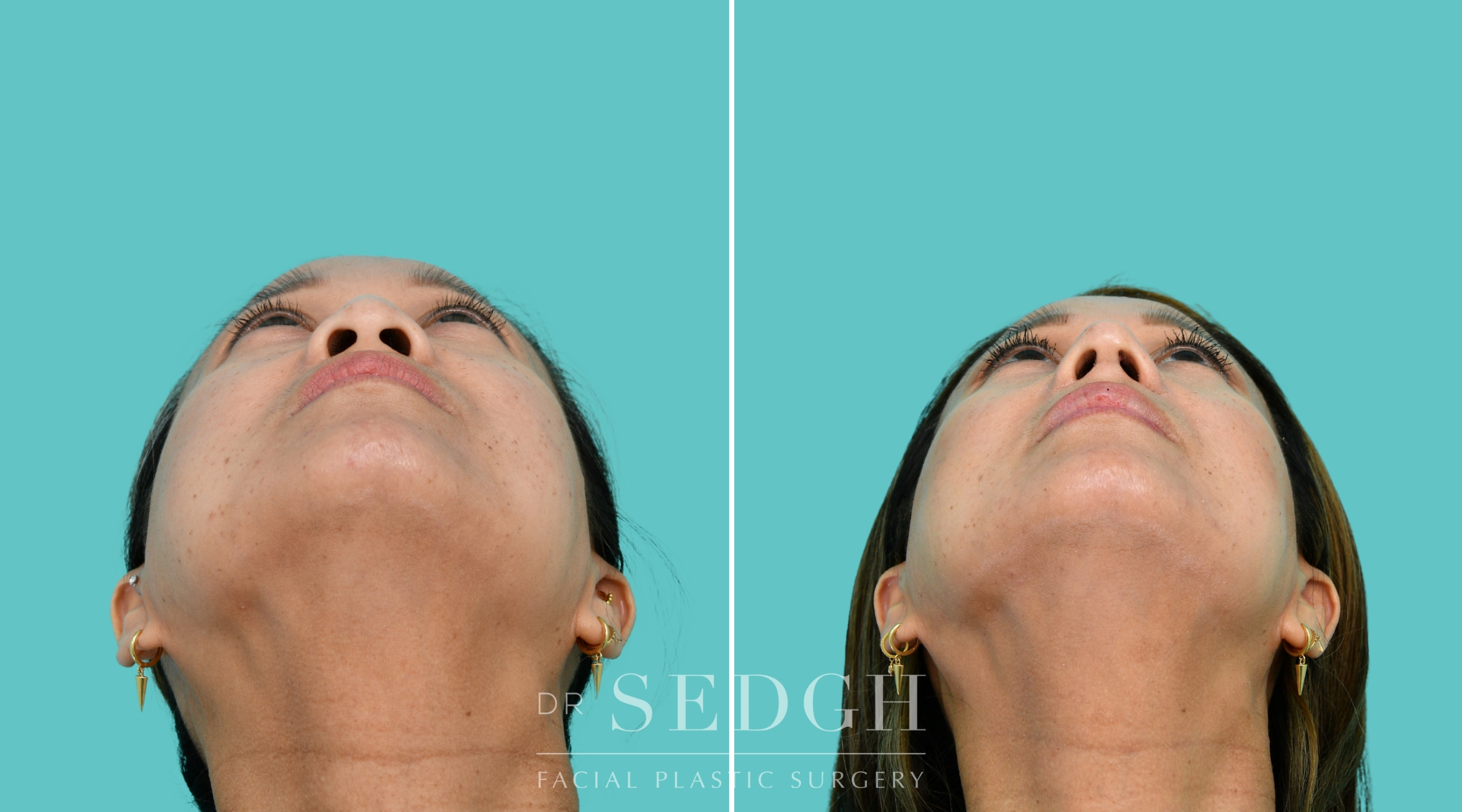
There are many approaches to rhinoplasty. My patient had been contemplating her options and wanted a more refined, projected tip—without altering the character of her nose. Maintaining authenticity was her top priority, and at just 3 months post-op, it’s clear we achieved that. The enhanced tip projection and definition created a truly transformational improvement from every angle. That’s how important proper nasal tip projection is in facial aesthetics.
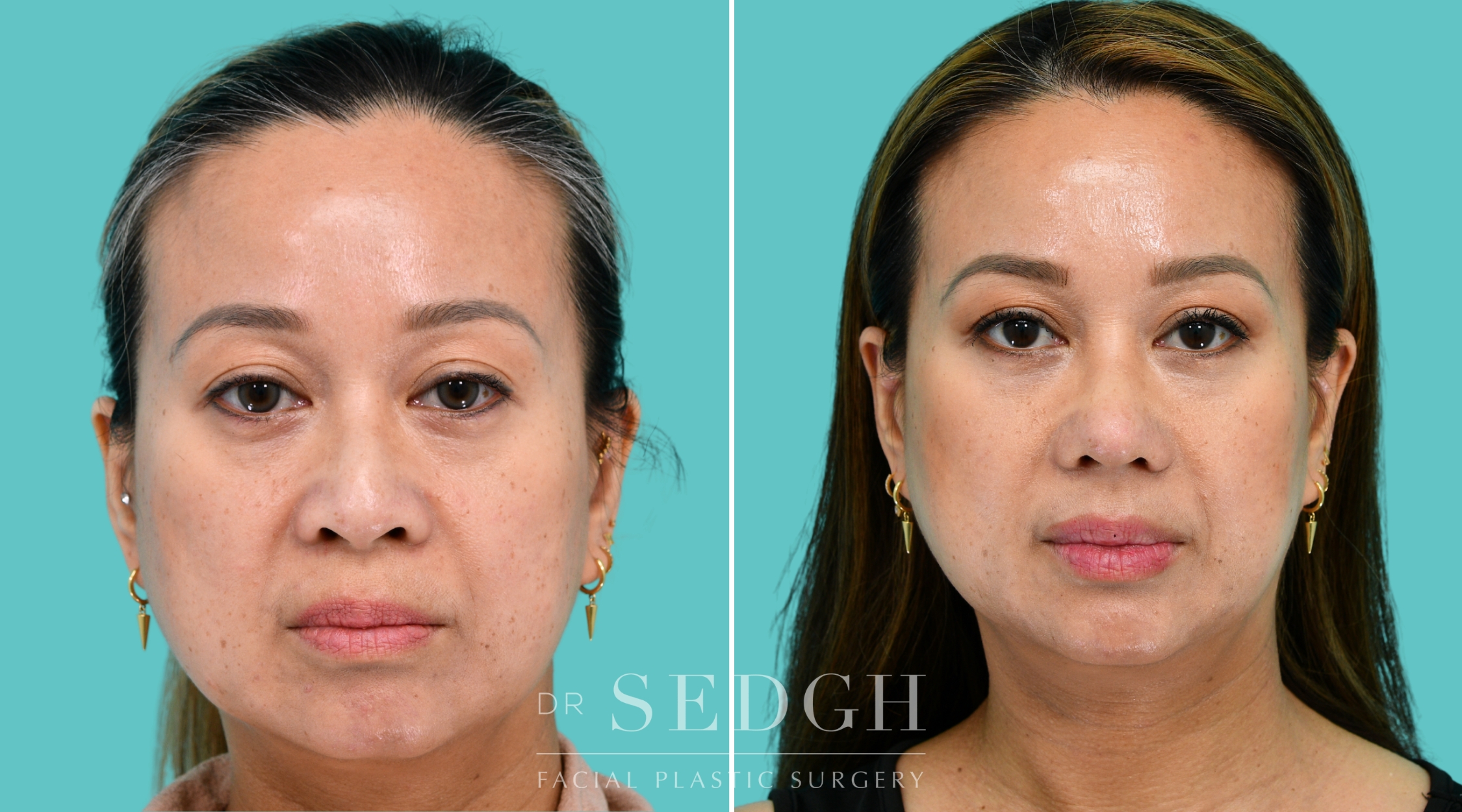
This is an excellent example of Asian rhinoplasty, which often presents unique anatomical considerations. In this case, I used rib cartilage grafting to enhance definition along both the bridge and nasal tip, improve tip projection, and increase the height of the radix. She also desired a refined, accentuated supratip break, something we were able to achieve beautifully.
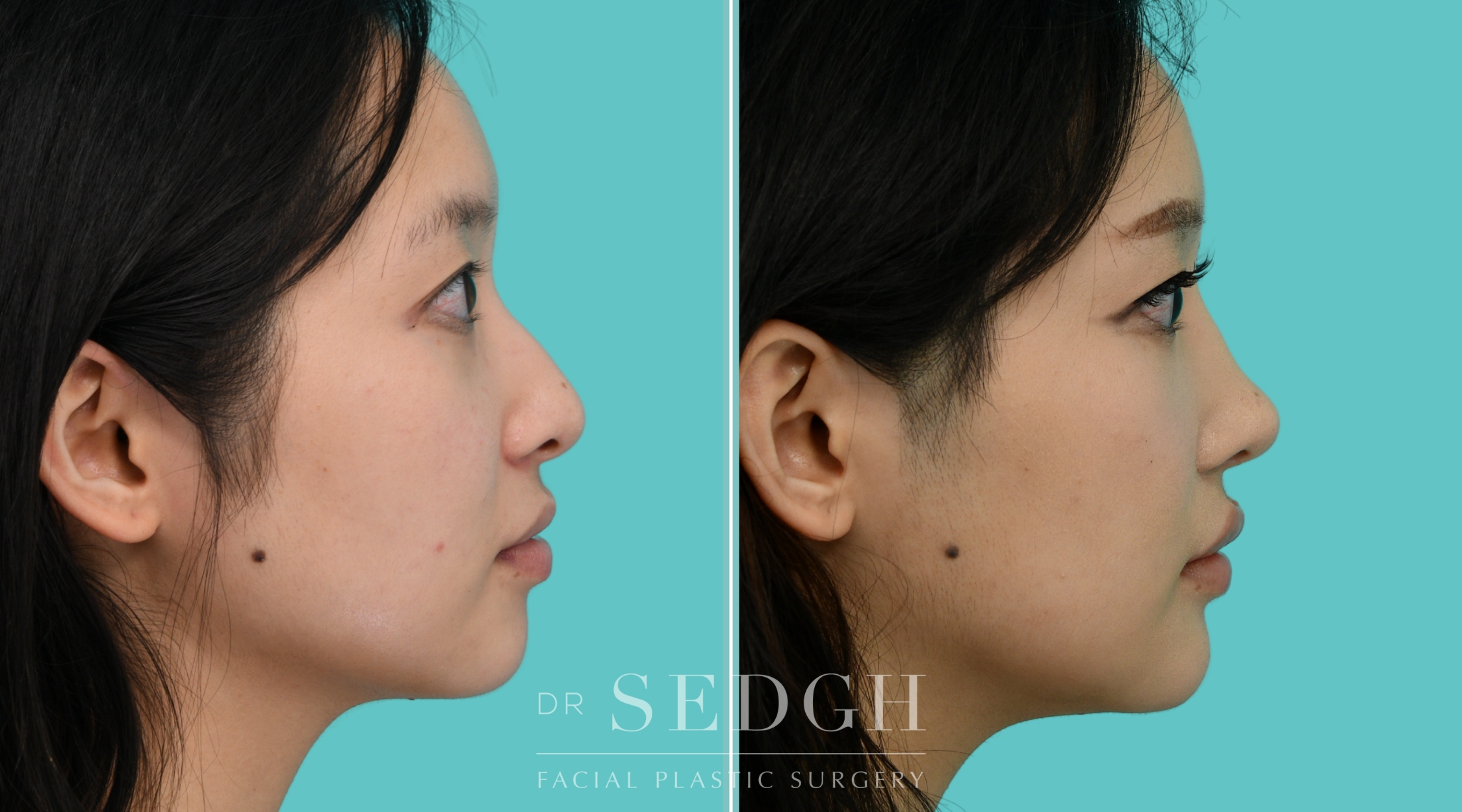
This is an excellent example of Asian rhinoplasty, which often presents unique anatomical considerations. In this case, I used rib cartilage grafting to enhance definition along both the bridge and nasal tip, improve tip projection, and increase the height of the radix. She also desired a refined, accentuated supratip break, something we were able to achieve beautifully.
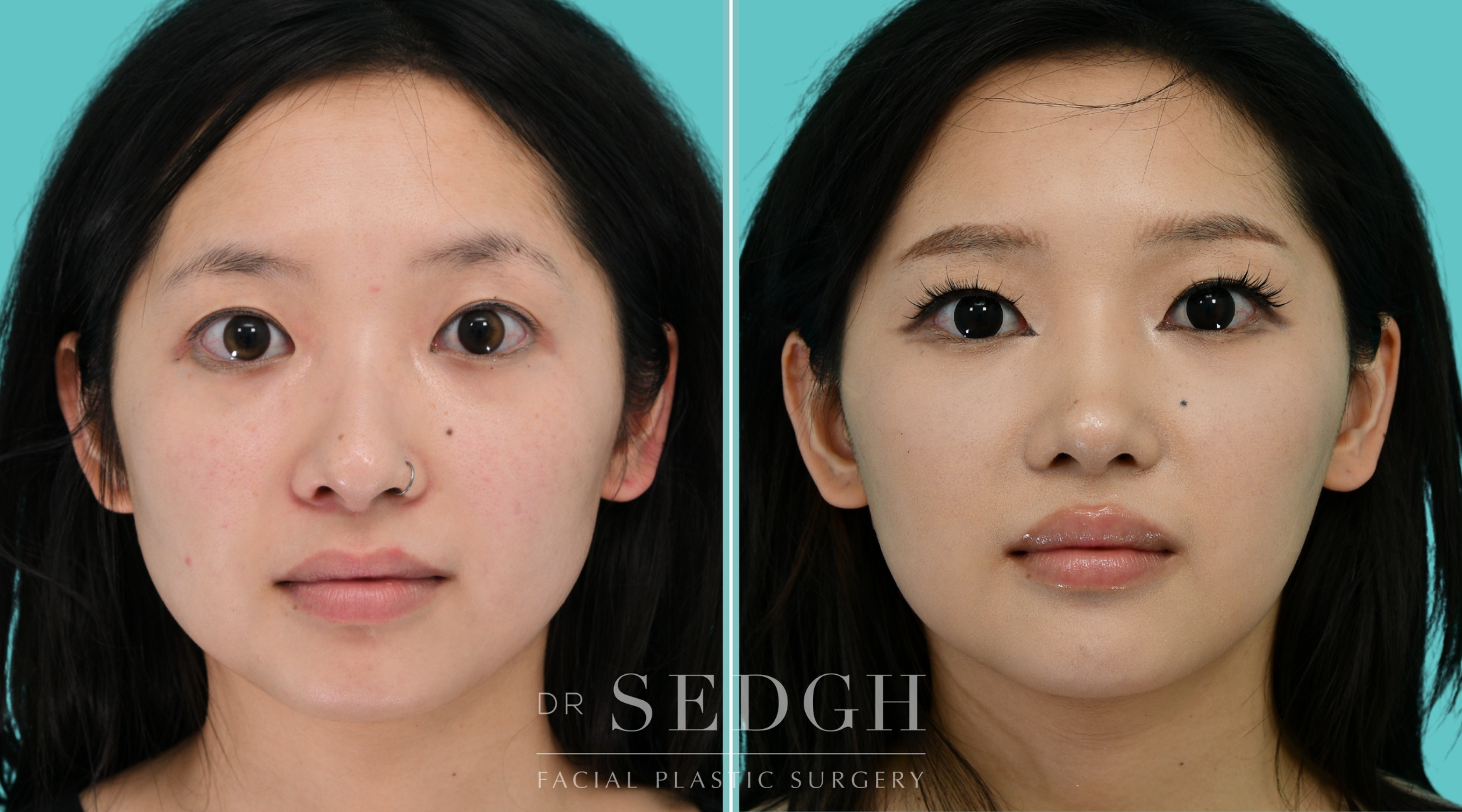
This is an excellent example of Asian rhinoplasty, which often presents unique anatomical considerations. In this case, I used rib cartilage grafting to enhance definition along both the bridge and nasal tip, improve tip projection, and increase the height of the radix. She also desired a refined, accentuated supratip break, something we were able to achieve beautifully.
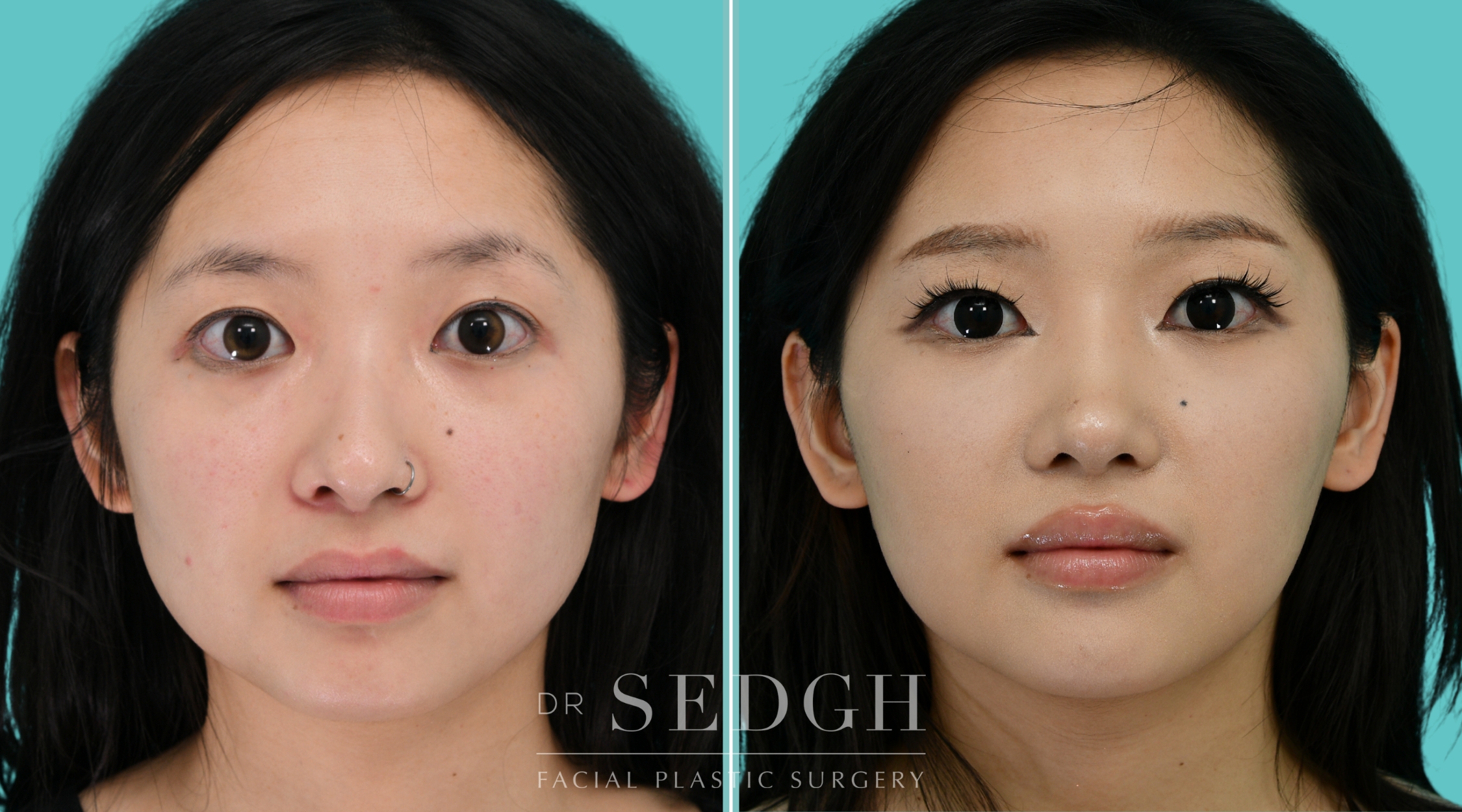
This is an excellent example of Asian rhinoplasty, which often presents unique anatomical considerations. In this case, I used rib cartilage grafting to enhance definition along both the bridge and nasal tip, improve tip projection, and increase the height of the radix. She also desired a refined, accentuated supratip break, something we were able to achieve beautifully.
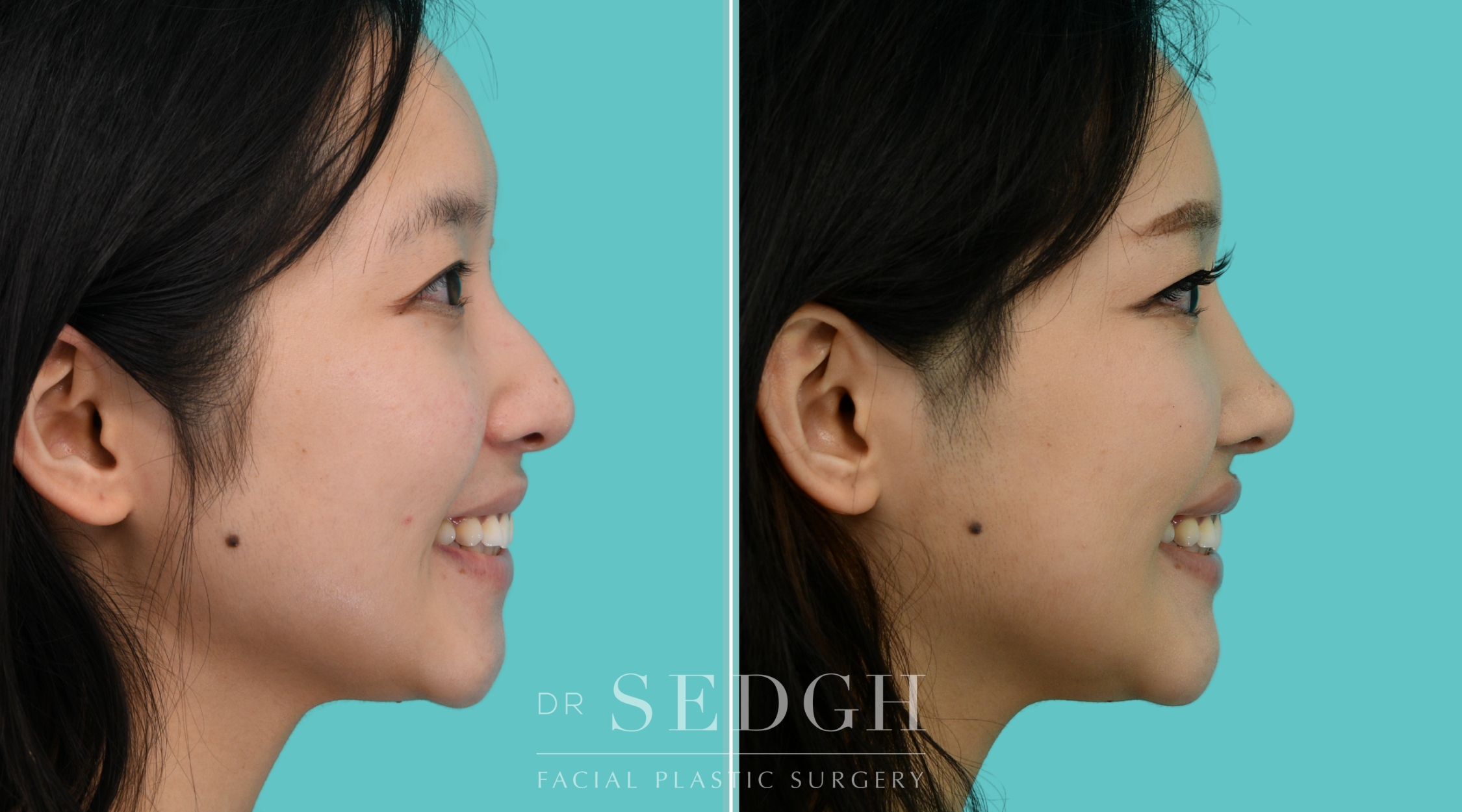
This is an excellent example of Asian rhinoplasty, which often presents unique anatomical considerations. In this case, I used rib cartilage grafting to enhance definition along both the bridge and nasal tip, improve tip projection, and increase the height of the radix. She also desired a refined, accentuated supratip break, something we were able to achieve beautifully.
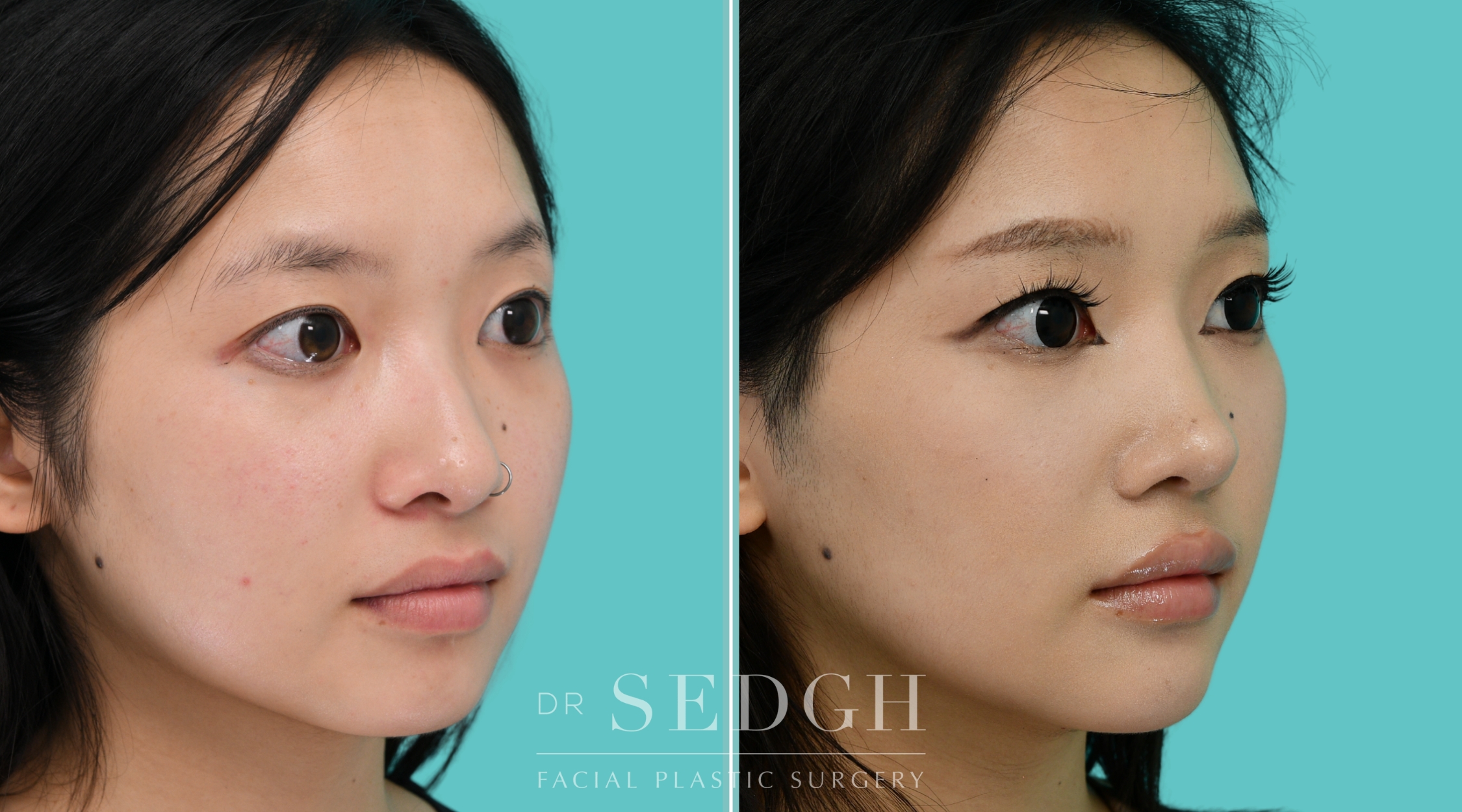
This is an excellent example of Asian rhinoplasty, which often presents unique anatomical considerations. In this case, I used rib cartilage grafting to enhance definition along both the bridge and nasal tip, improve tip projection, and increase the height of the radix. She also desired a refined, accentuated supratip break, something we were able to achieve beautifully.
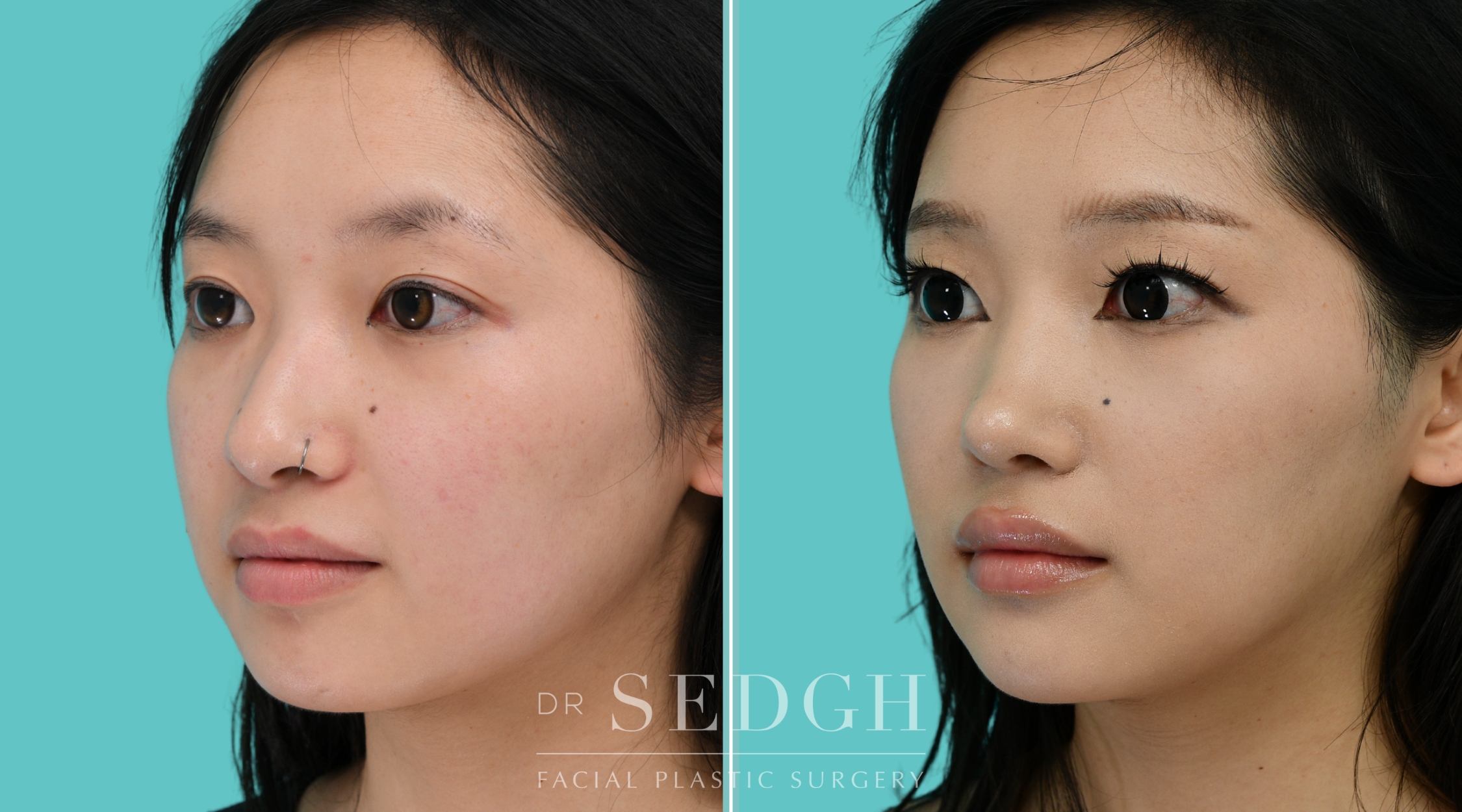
This is an excellent example of Asian rhinoplasty, which often presents unique anatomical considerations. In this case, I used rib cartilage grafting to enhance definition along both the bridge and nasal tip, improve tip projection, and increase the height of the radix. She also desired a refined, accentuated supratip break, something we were able to achieve beautifully.
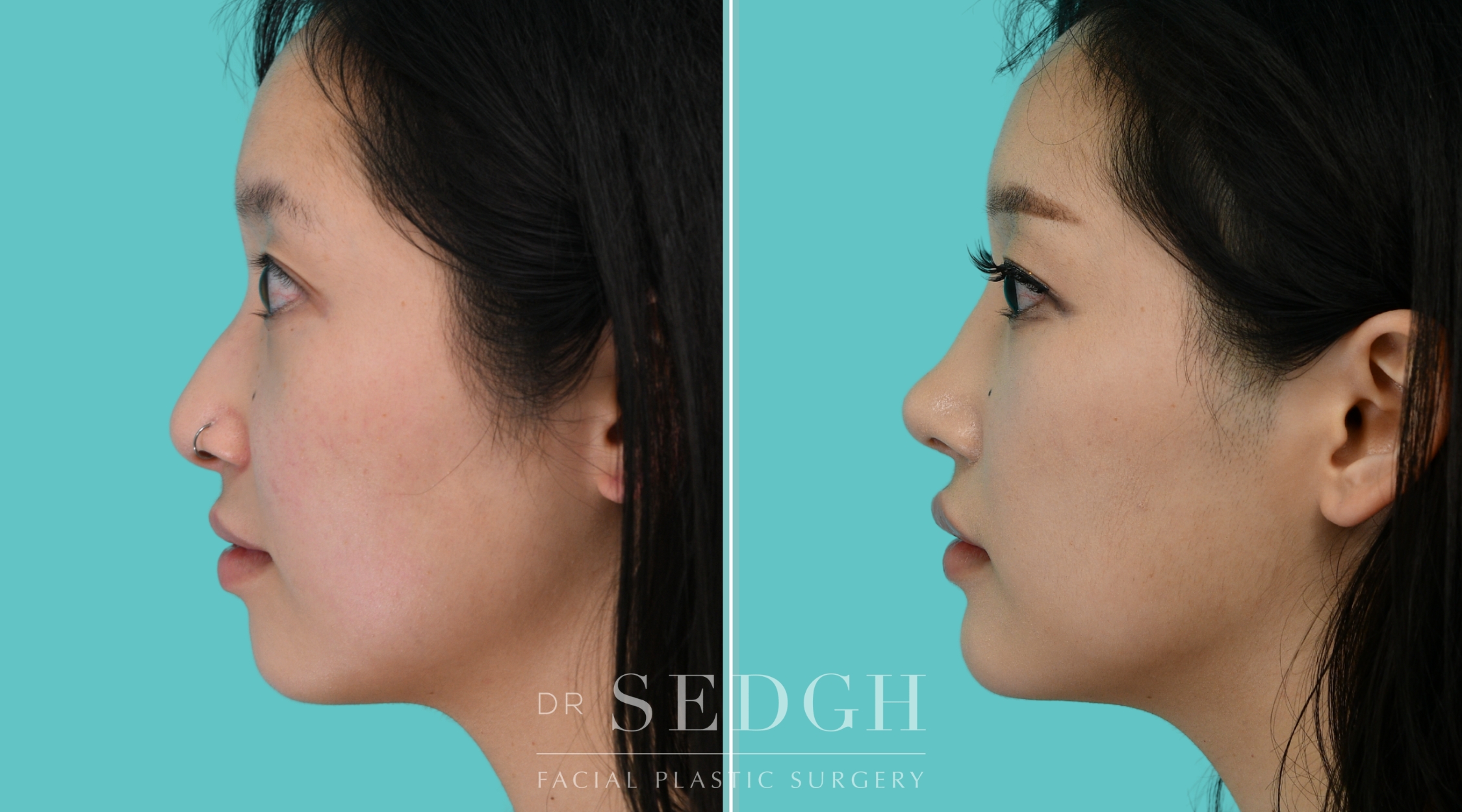
This is an excellent example of Asian rhinoplasty, which often presents unique anatomical considerations. In this case, I used rib cartilage grafting to enhance definition along both the bridge and nasal tip, improve tip projection, and increase the height of the radix. She also desired a refined, accentuated supratip break, something we were able to achieve beautifully.
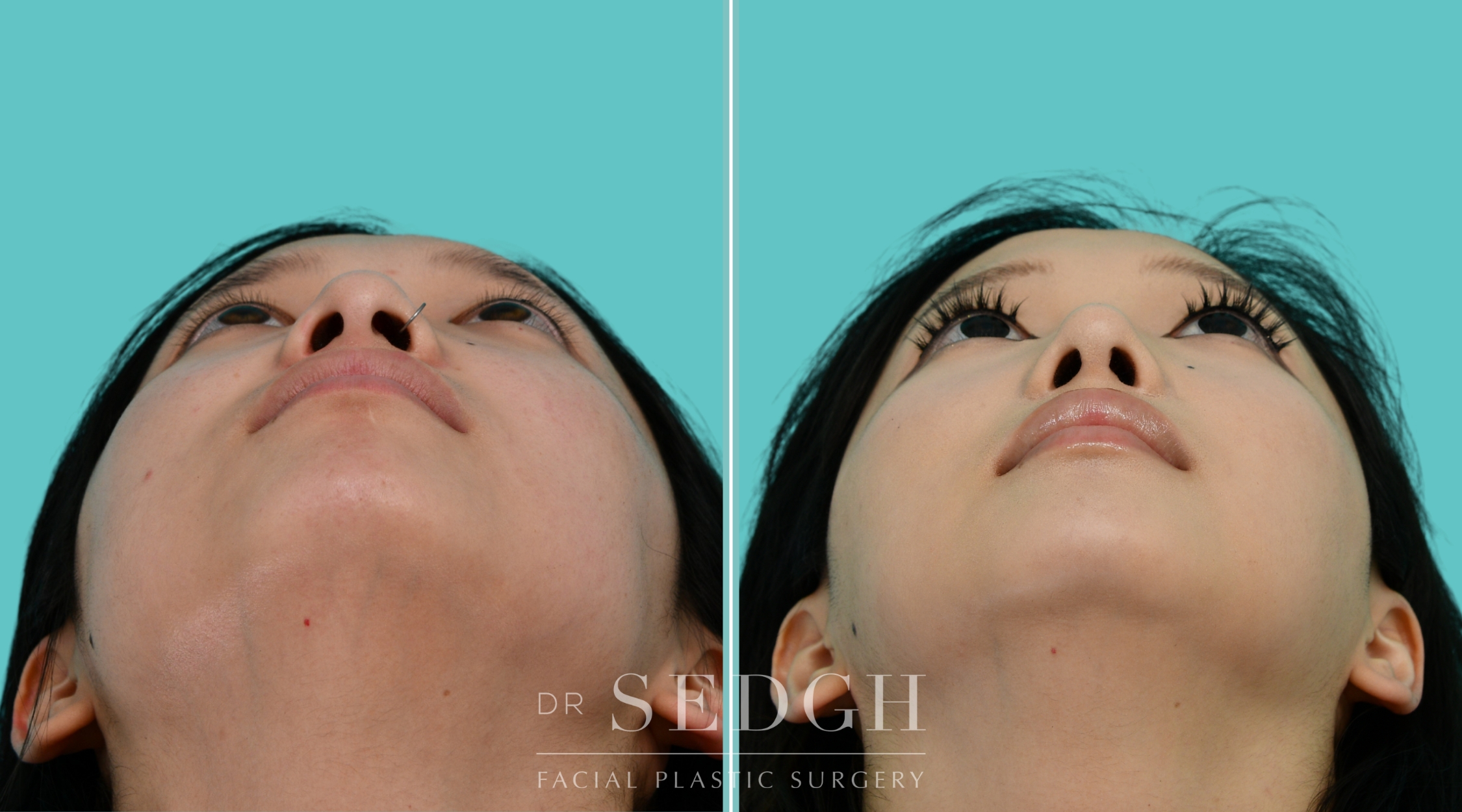
7 Month Post-Op 55
My beautiful patient had some concerns about her eyebrows hooding her eyes. She was a great candidtate for endoscopic browlift. It’s key in such cases to perform mostly a tail of the brow lift and avoid the temptation of lifting the medial (above the nose portion) that canl give patients a “puzzled” look. She look terrific at 1 month out.
With her rhinoplasty, we used rib cartilage grafting to lift the bridge and root and enhanced her tip projection. These are some of the common concern amongst Asian rhinoplasty patients. All together, those features are enhanced while still maintainging an authetntic look.
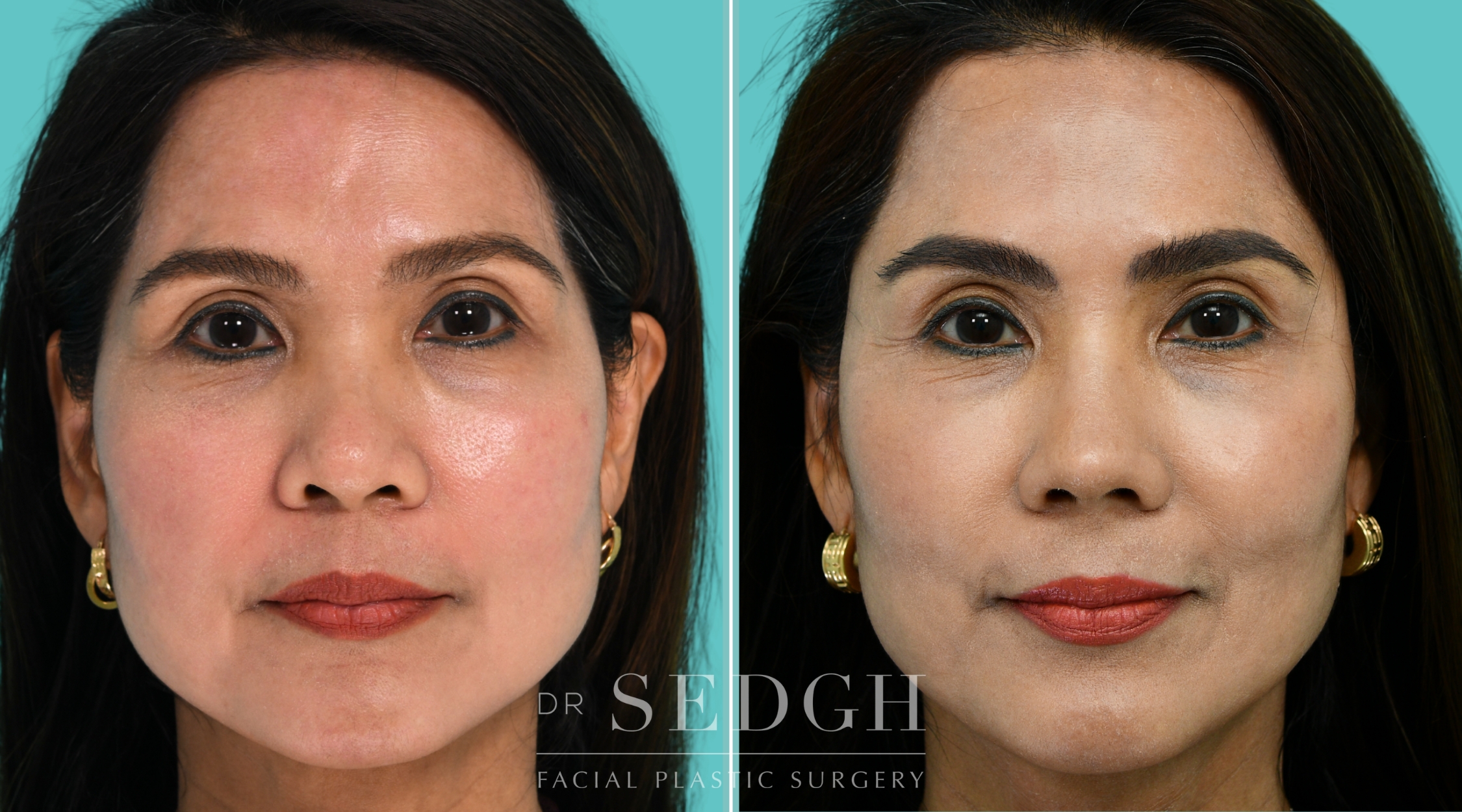
7 Month Post-Op 55
My beautiful patient had some concerns about her eyebrows hooding her eyes. She was a great candidtate for endoscopic browlift. It’s key in such cases to perform mostly a tail of the brow lift and avoid the temptation of lifting the medial (above the nose portion) that canl give patients a “puzzled” look. She look terrific at 1 month out.
With her rhinoplasty, we used rib cartilage grafting to lift the bridge and root and enhanced her tip projection. These are some of the common concern amongst Asian rhinoplasty patients. All together, those features are enhanced while still maintainging an authetntic look.
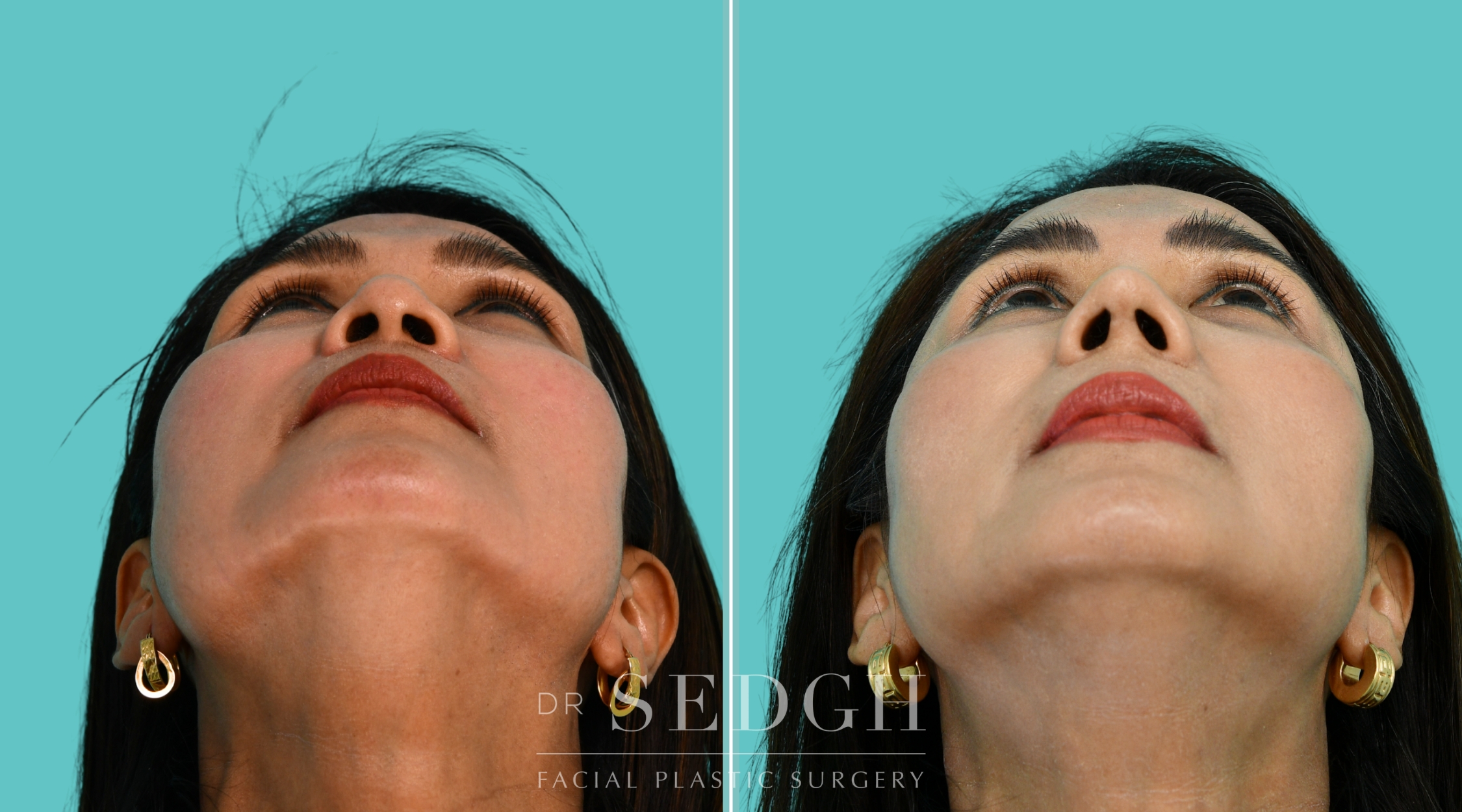
7 Month Post-Op 55
My beautiful patient had some concerns about her eyebrows hooding her eyes. She was a great candidtate for endoscopic browlift. It’s key in such cases to perform mostly a tail of the brow lift and avoid the temptation of lifting the medial (above the nose portion) that canl give patients a “puzzled” look. She look terrific at 1 month out.
With her rhinoplasty, we used rib cartilage grafting to lift the bridge and root and enhanced her tip projection. These are some of the common concern amongst Asian rhinoplasty patients. All together, those features are enhanced while still maintainging an authetntic look.
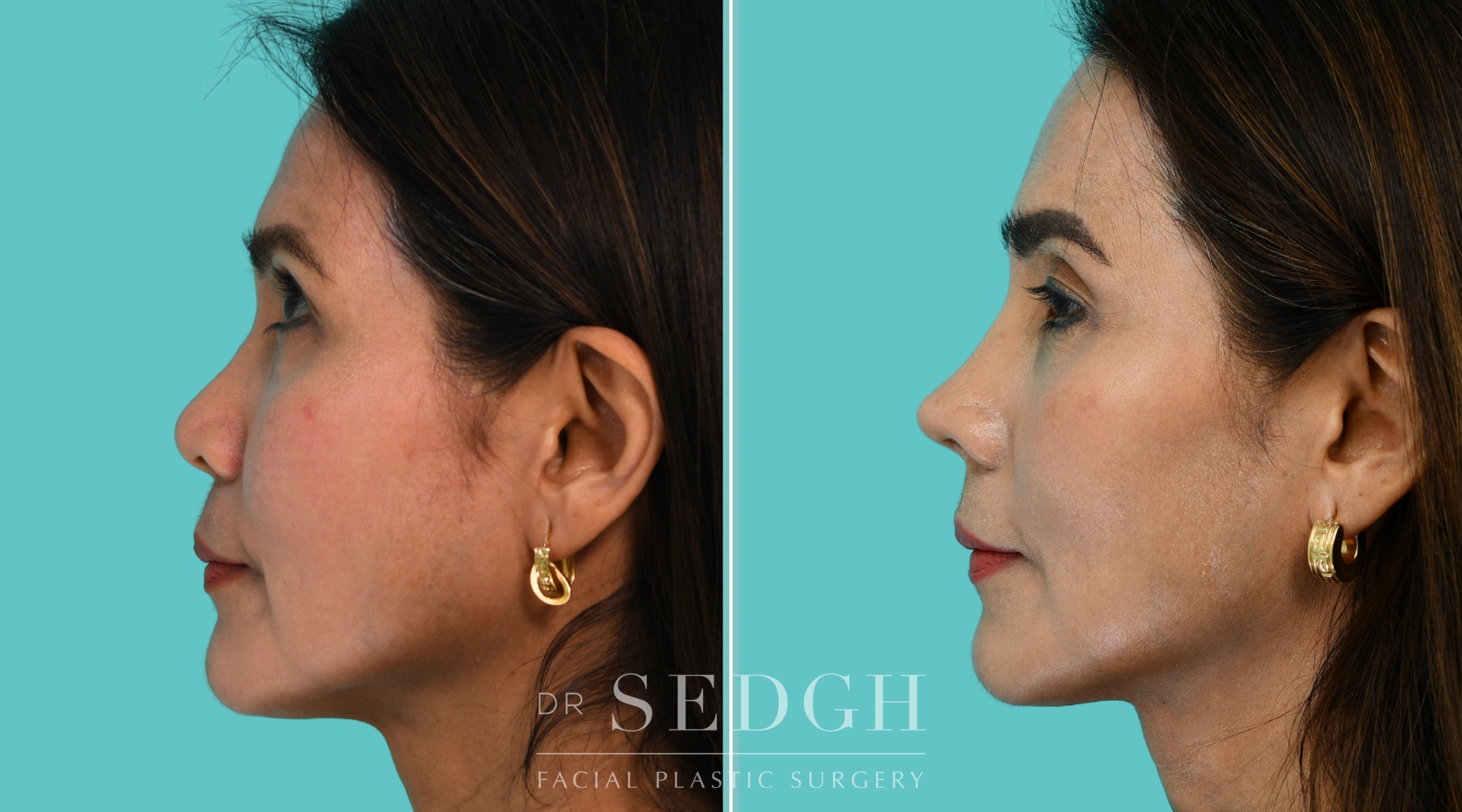
7 Month Post-Op 55
My beautiful patient had some concerns about her eyebrows hooding her eyes. She was a great candidtate for endoscopic browlift. It’s key in such cases to perform mostly a tail of the brow lift and avoid the temptation of lifting the medial (above the nose portion) that canl give patients a “puzzled” look. She look terrific at 1 month out.
With her rhinoplasty, we used rib cartilage grafting to lift the bridge and root and enhanced her tip projection. These are some of the common concern amongst Asian rhinoplasty patients. All together, those features are enhanced while still maintainging an authetntic look.
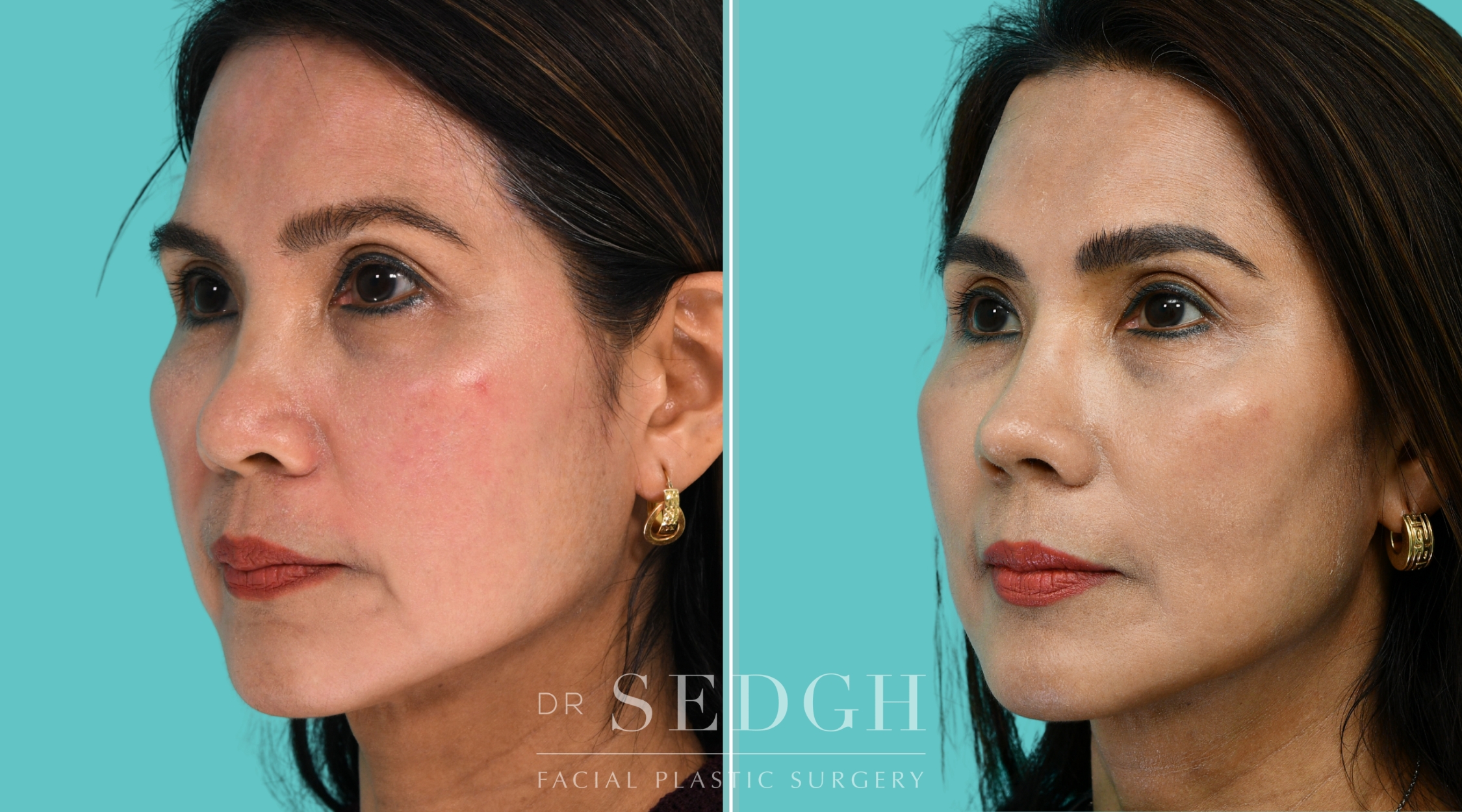
7 Month Post-Op 55
My beautiful patient had some concerns about her eyebrows hooding her eyes. She was a great candidtate for endoscopic browlift. It’s key in such cases to perform mostly a tail of the brow lift and avoid the temptation of lifting the medial (above the nose portion) that canl give patients a “puzzled” look. She look terrific at 1 month out.
With her rhinoplasty, we used rib cartilage grafting to lift the bridge and root and enhanced her tip projection. These are some of the common concern amongst Asian rhinoplasty patients. All together, those features are enhanced while still maintainging an authetntic look.
7 Month Post-Op 55
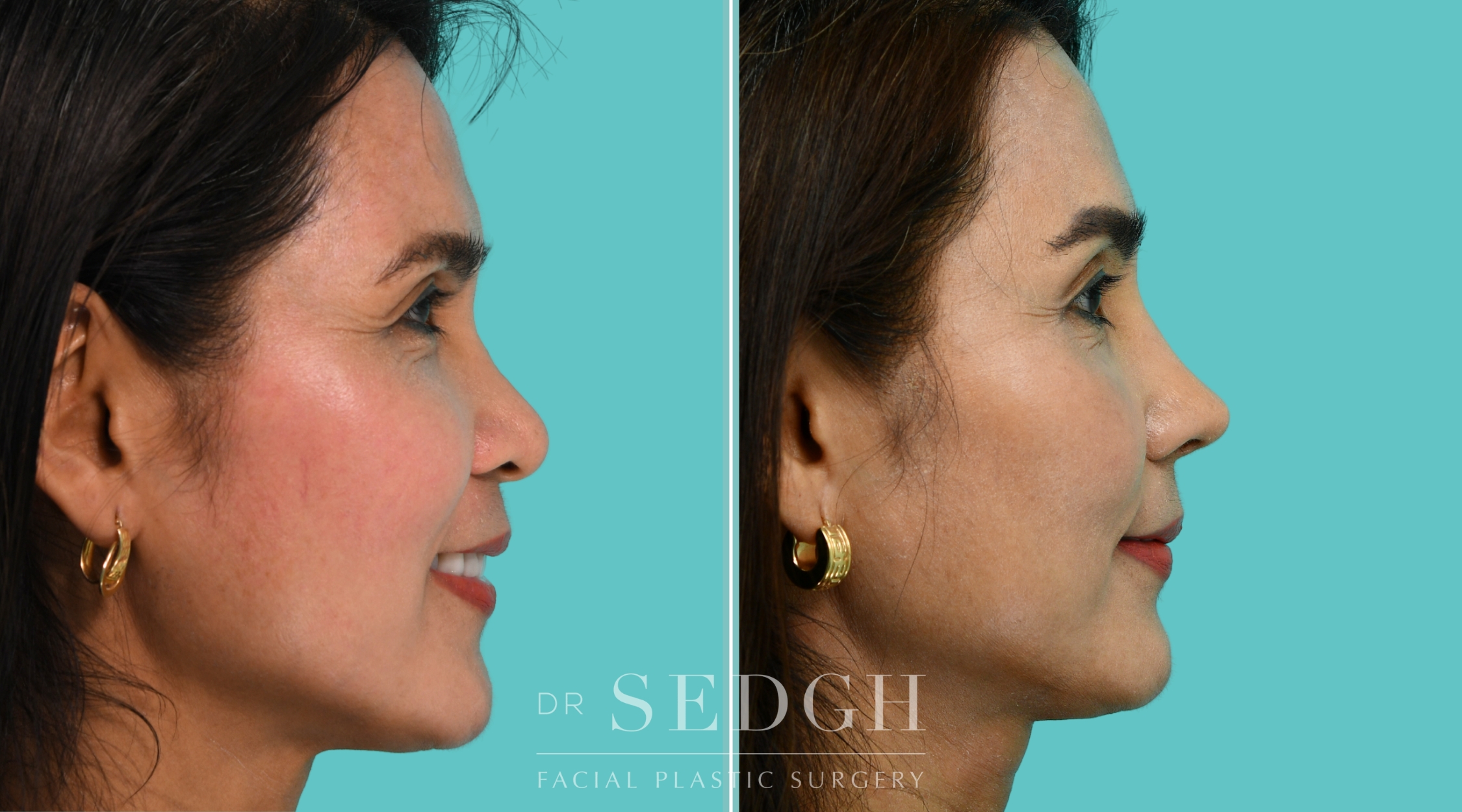
My beautiful patient had some concerns about her eyebrows hooding her eyes. She was a great candidtate for endoscopic browlift. It’s key in such cases to perform mostly a tail of the brow lift and avoid the temptation of lifting the medial (above the nose portion) that canl give patients a “puzzled” look. She look terrific at 1 month out.
With her rhinoplasty, we used rib cartilage grafting to lift the bridge and root and enhanced her tip projection. These are some of the common concern amongst Asian rhinoplasty patients. All together, those features are enhanced while still maintainging an authetntic look.
7 Month Post-Op 55
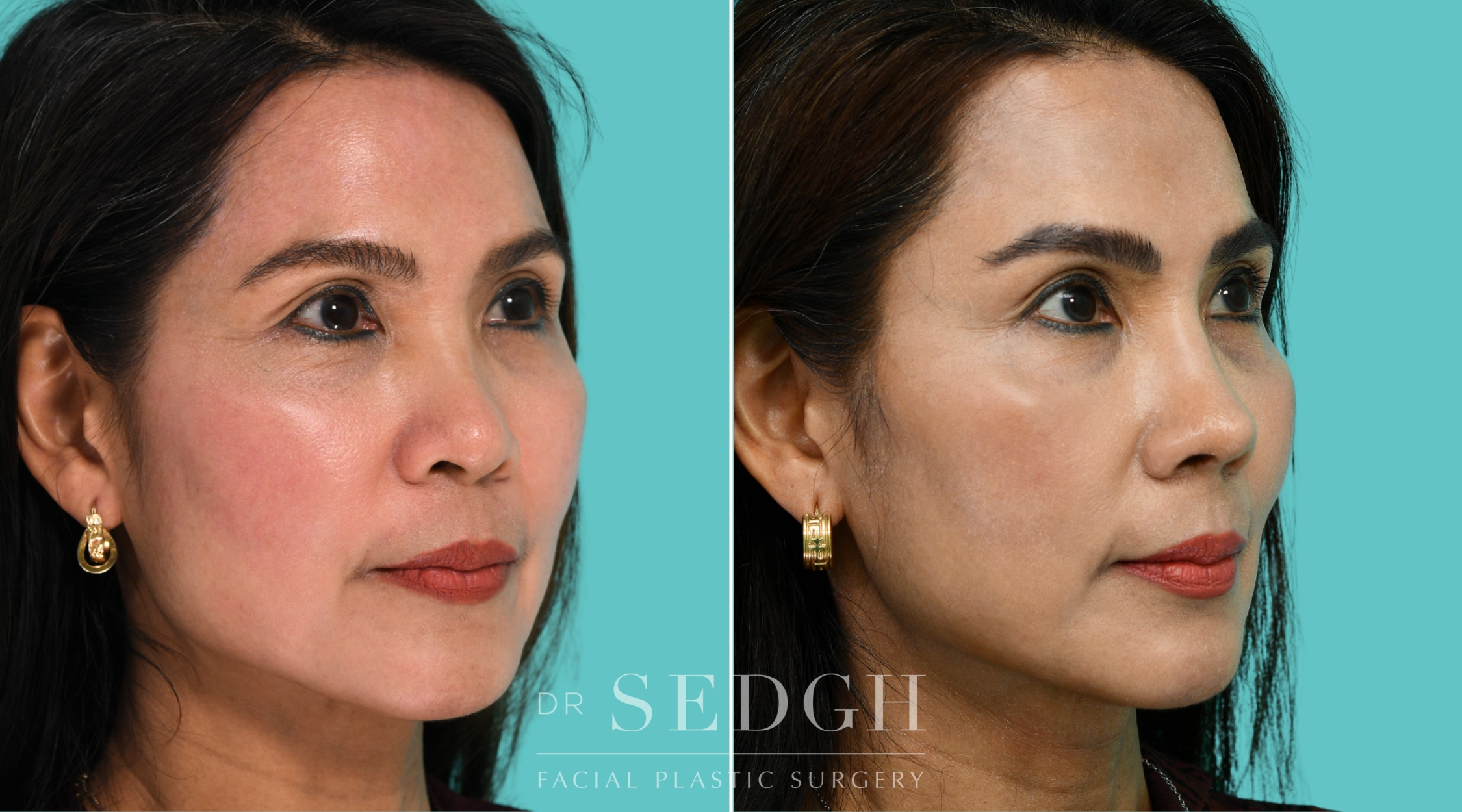
My beautiful patient had some concerns about her eyebrows hooding her eyes. She was a great candidtate for endoscopic browlift. It’s key in such cases to perform mostly a tail of the brow lift and avoid the temptation of lifting the medial (above the nose portion) that canl give patients a “puzzled” look. She look terrific at 1 month out.
With her rhinoplasty, we used rib cartilage grafting to lift the bridge and root and enhanced her tip projection. These are some of the common concern amongst Asian rhinoplasty patients. All together, those features are enhanced while still maintainging an authetntic look.
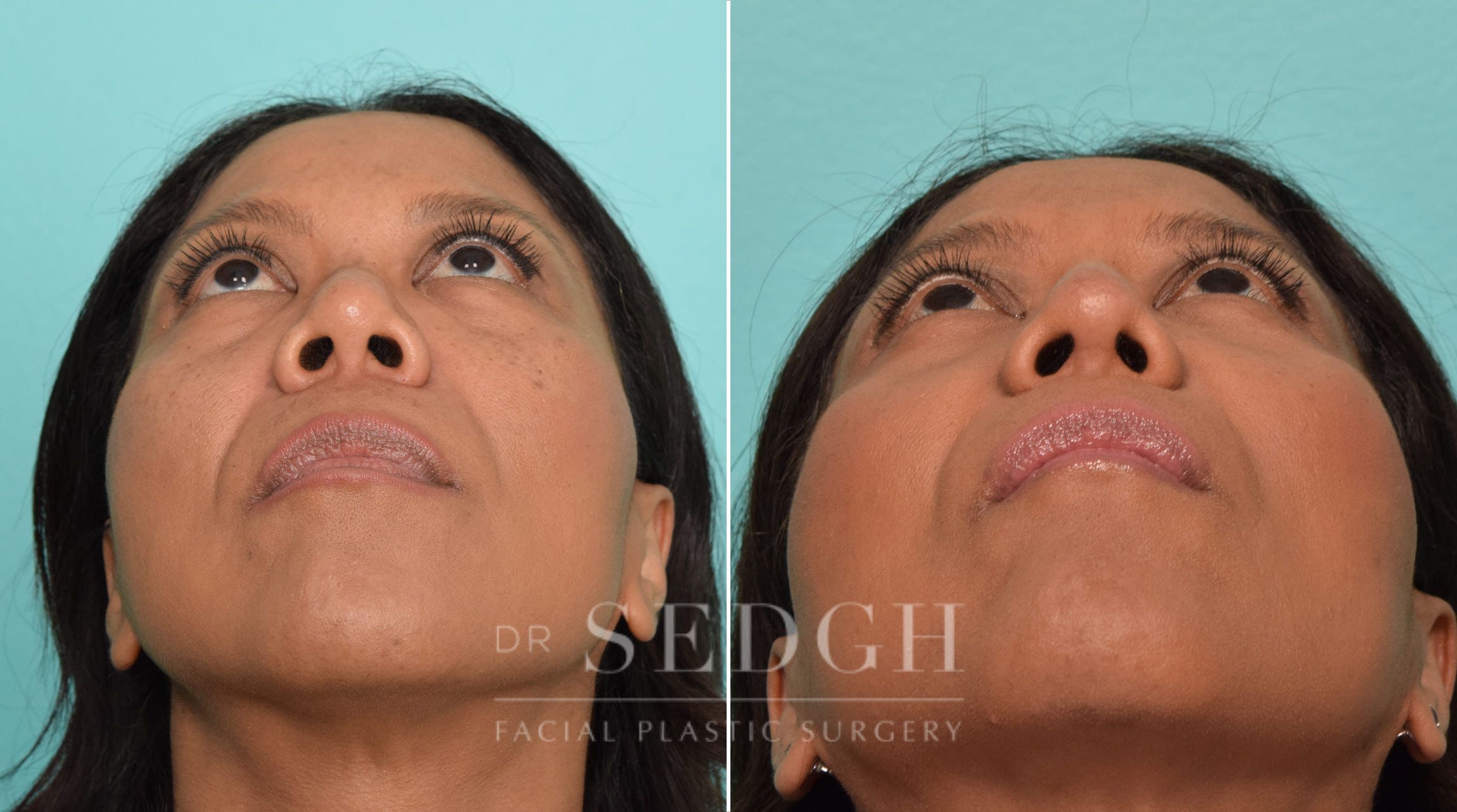
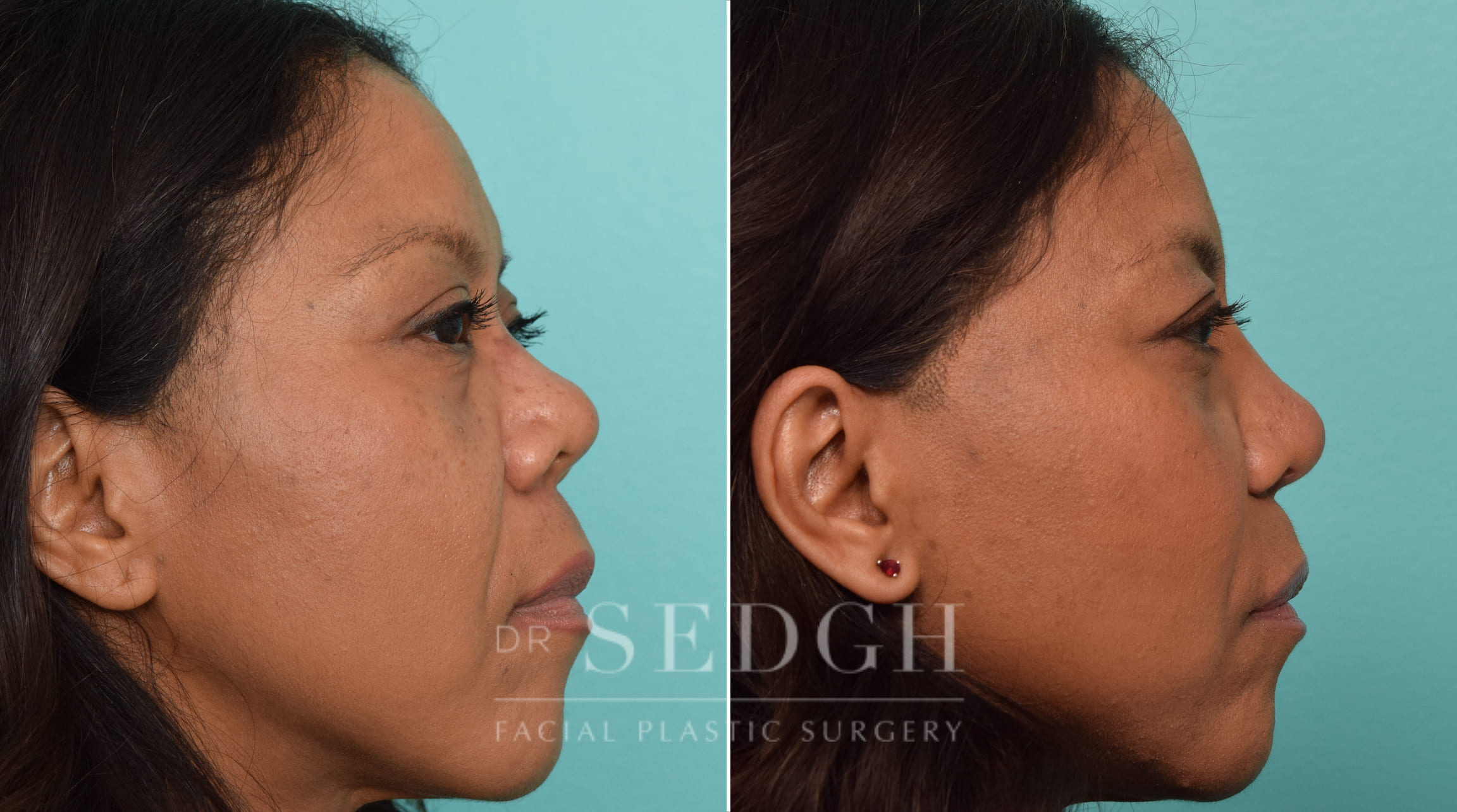
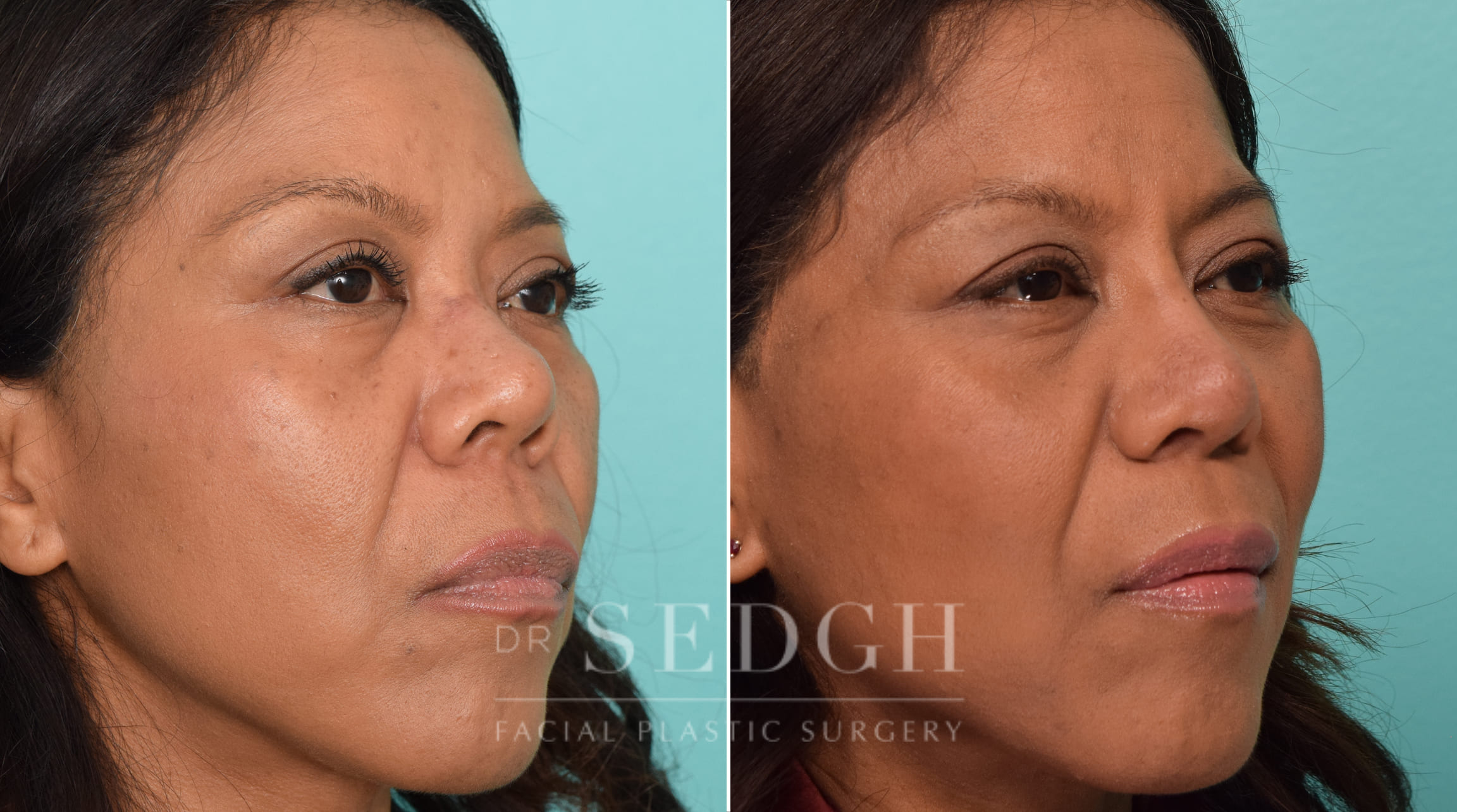
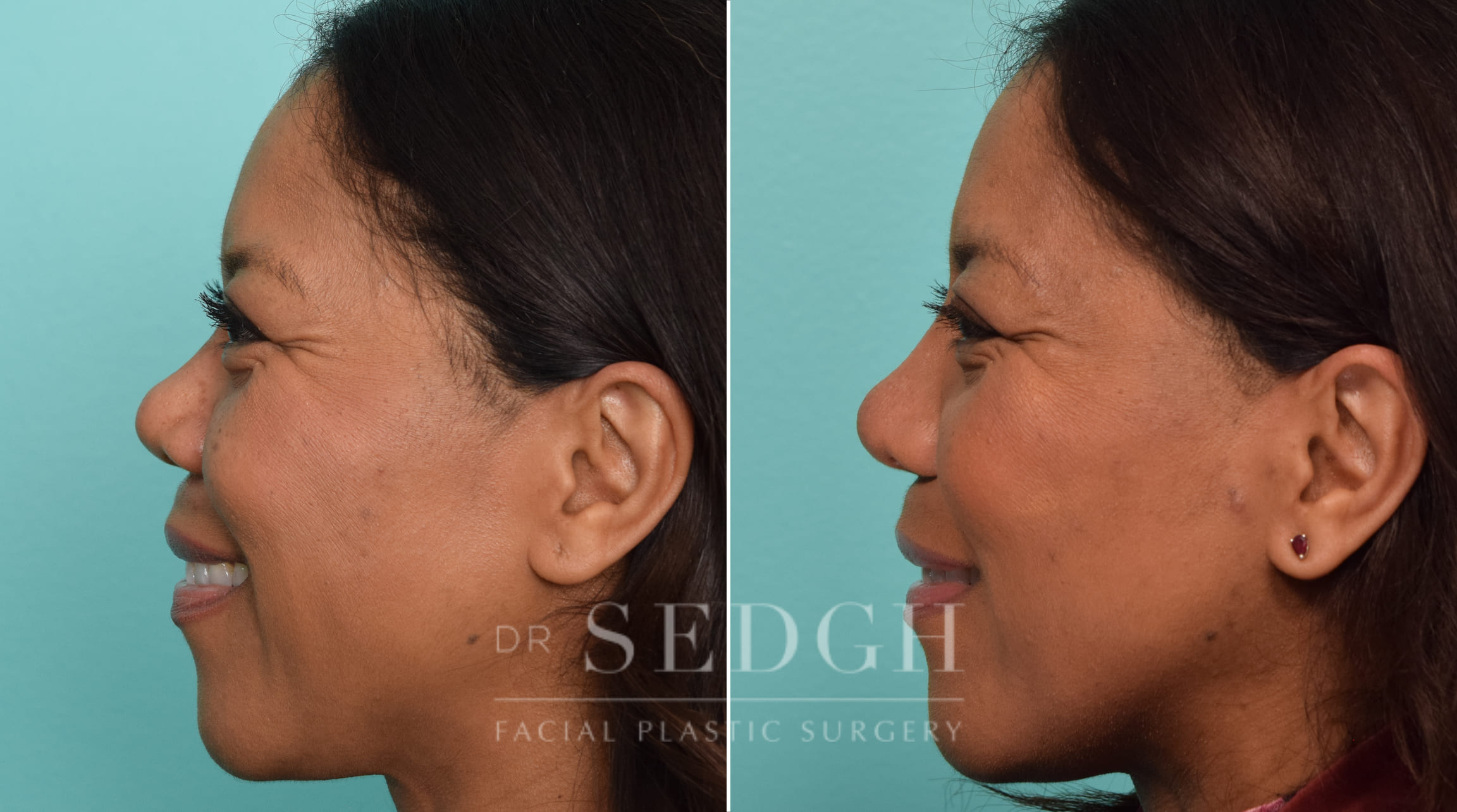
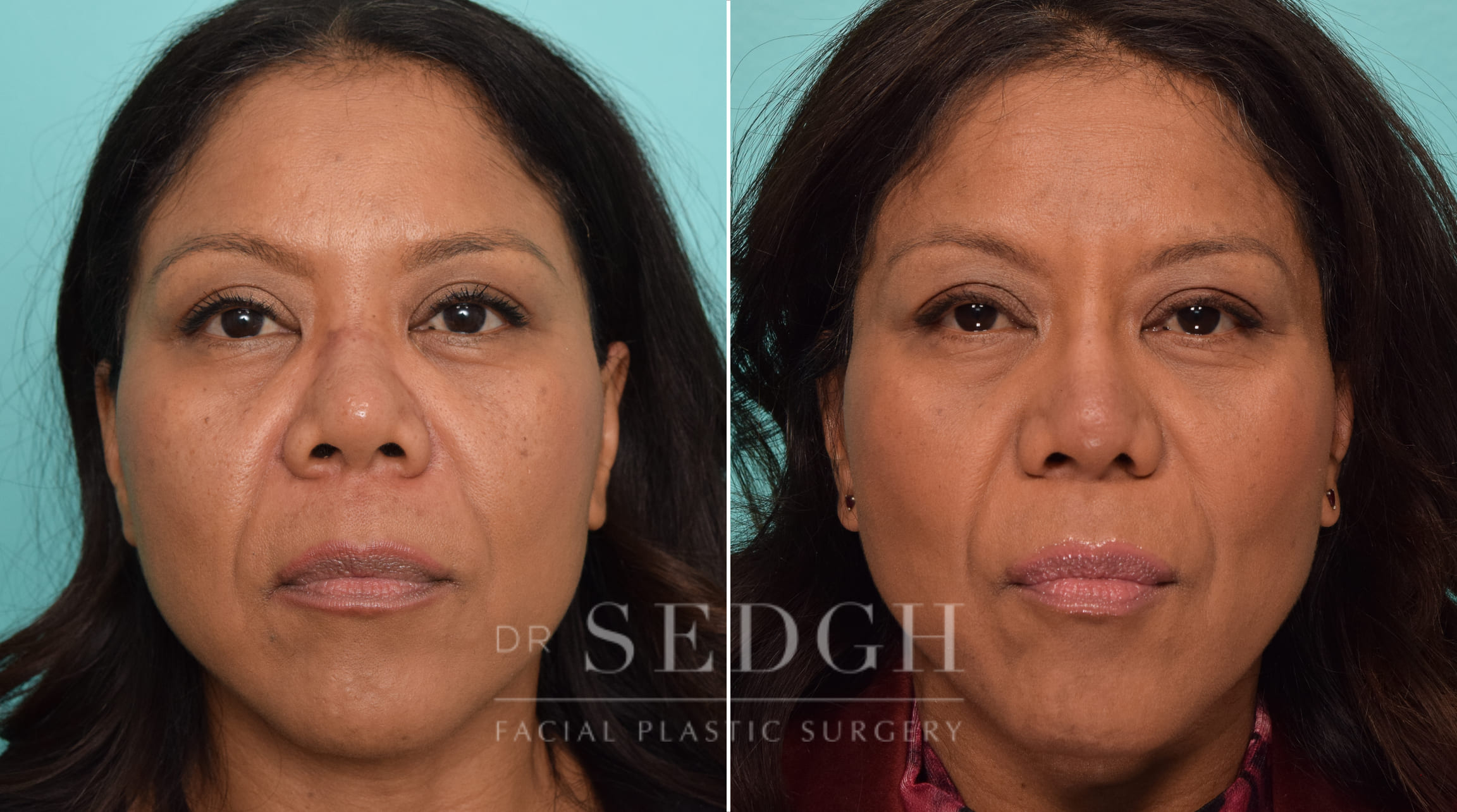
F, 50 yrs, 9 months post .
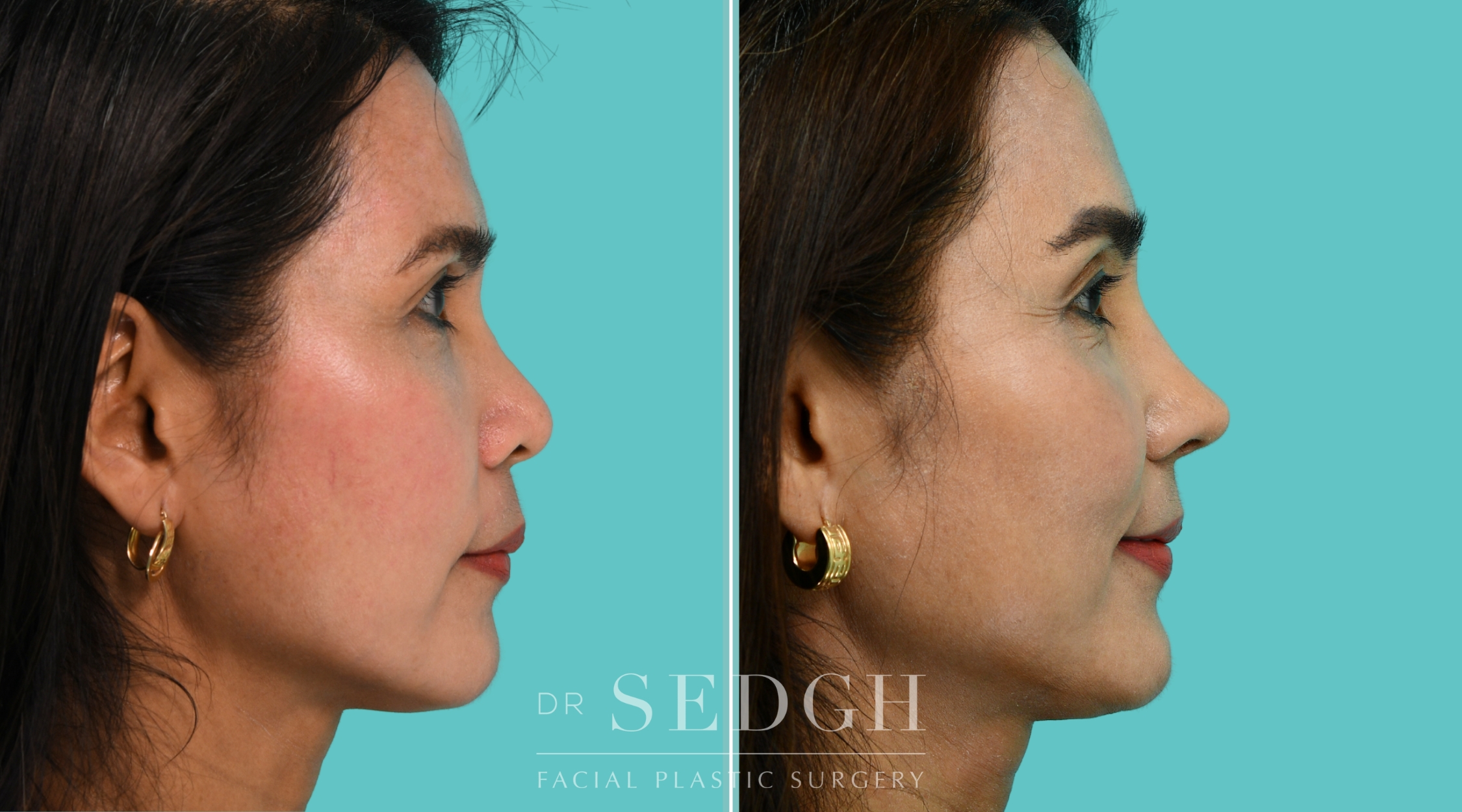
This is a classic case of Asian rhinoplasty, incrfeasing the height of the root of the nose, lengthening the nose with more tip definition and projection, and ultimately smaller nostrils.
F, 50 yrs, 9 months post .
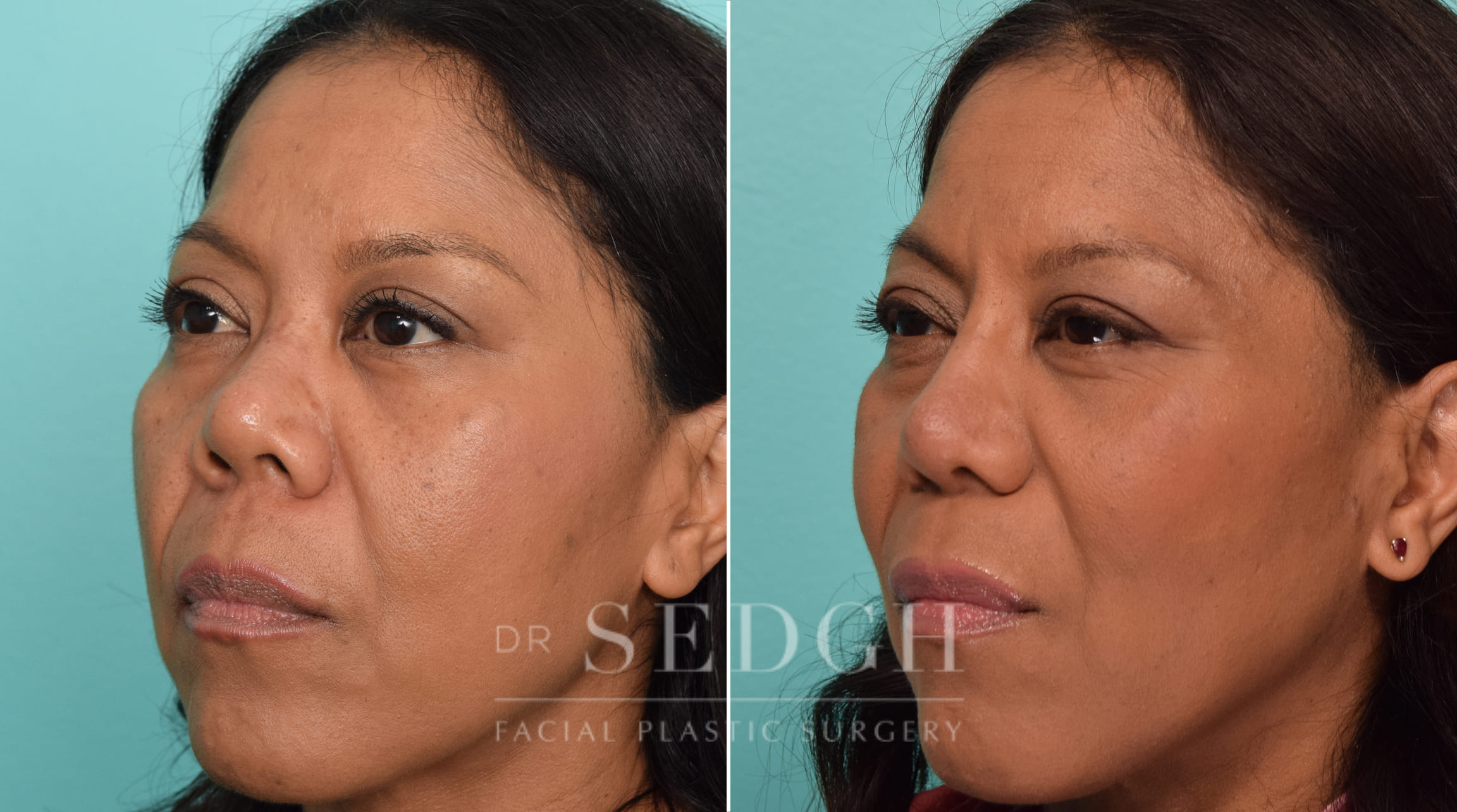
This is a classic case of Asian rhinoplasty, incrfeasing the height of the root of the nose, lengthening the nose with more tip definition and projection, and ultimately smaller nostrils.
F, 50 yrs, 9 months post .
This is a classic case of Asian rhinoplasty, incrfeasing the height of the root of the nose, lengthening the nose with more tip definition and projection, and ultimately smaller nostrils.
F, 50 yrs, 9 months post .
This is a classic case of Asian rhinoplasty, incrfeasing the height of the root of the nose, lengthening the nose with more tip definition and projection, and ultimately smaller nostrils.
F, 50 yrs, 9 months post .
This is a classic case of Asian rhinoplasty, incrfeasing the height of the root of the nose, lengthening the nose with more tip definition and projection, and ultimately smaller nostrils.
F, 50 yrs, 9 months post .
This is a classic case of Asian rhinoplasty, incrfeasing the height of the root of the nose, lengthening the nose with more tip definition and projection, and ultimately smaller nostrils.
This Korean-American gentleman wanted a stronger nasal bridge and tip while maintaining an authentic look. Rib cartilage was applied as grafting material and the results are shown only at 10 days following surgery before he moved to the East coast.
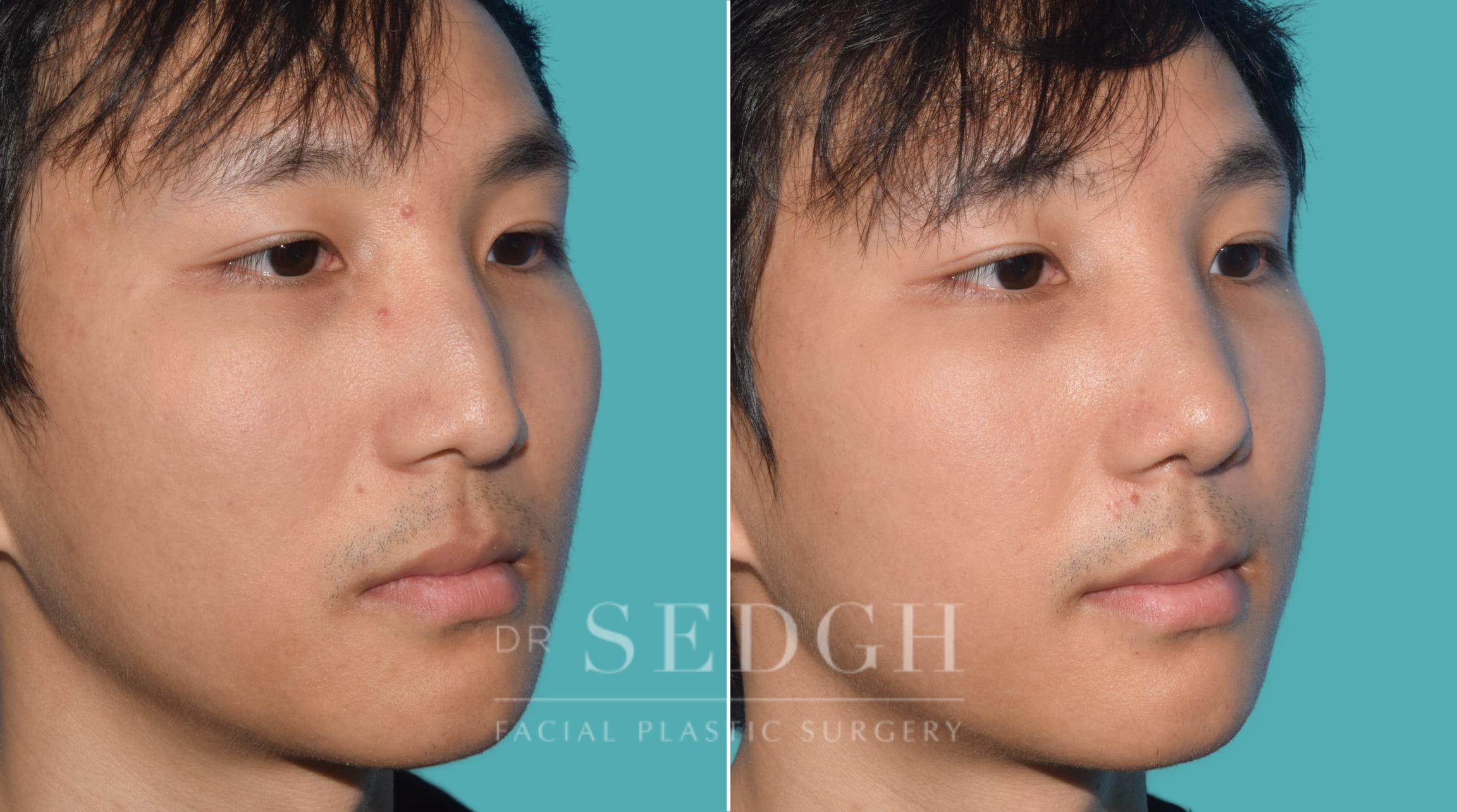
This Korean-American gentleman wanted a stronger nasal bridge and tip while maintaining an authentic look. Rib cartilage was applied as grafting material and the results are shown only at 10 days following surgery before he moved to the East coast.
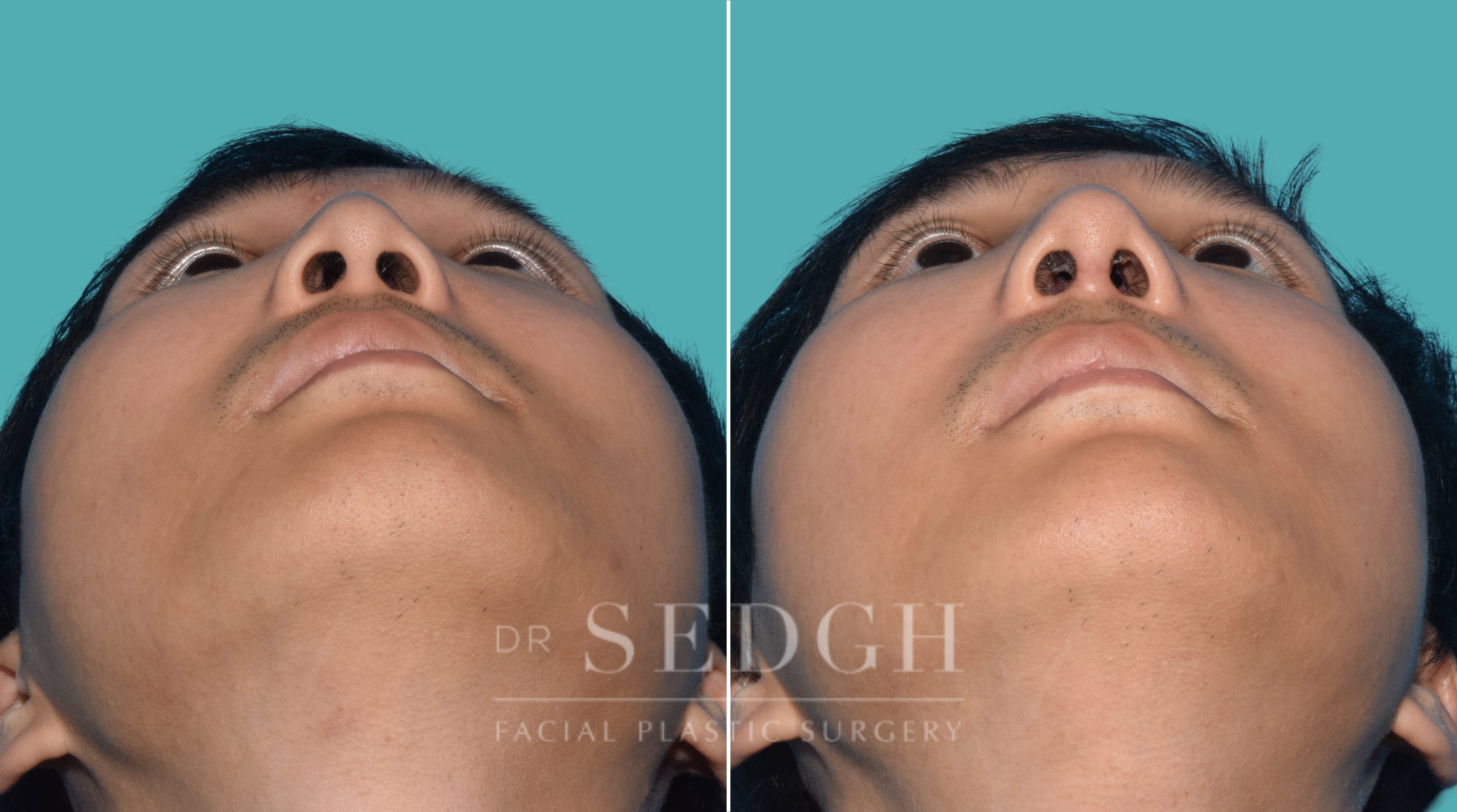
This Korean-American gentleman wanted a stronger nasal bridge and tip while maintaining an authentic look. Rib cartilage was applied as grafting material and the results are shown only at 10 days following surgery before he moved to the East coast.
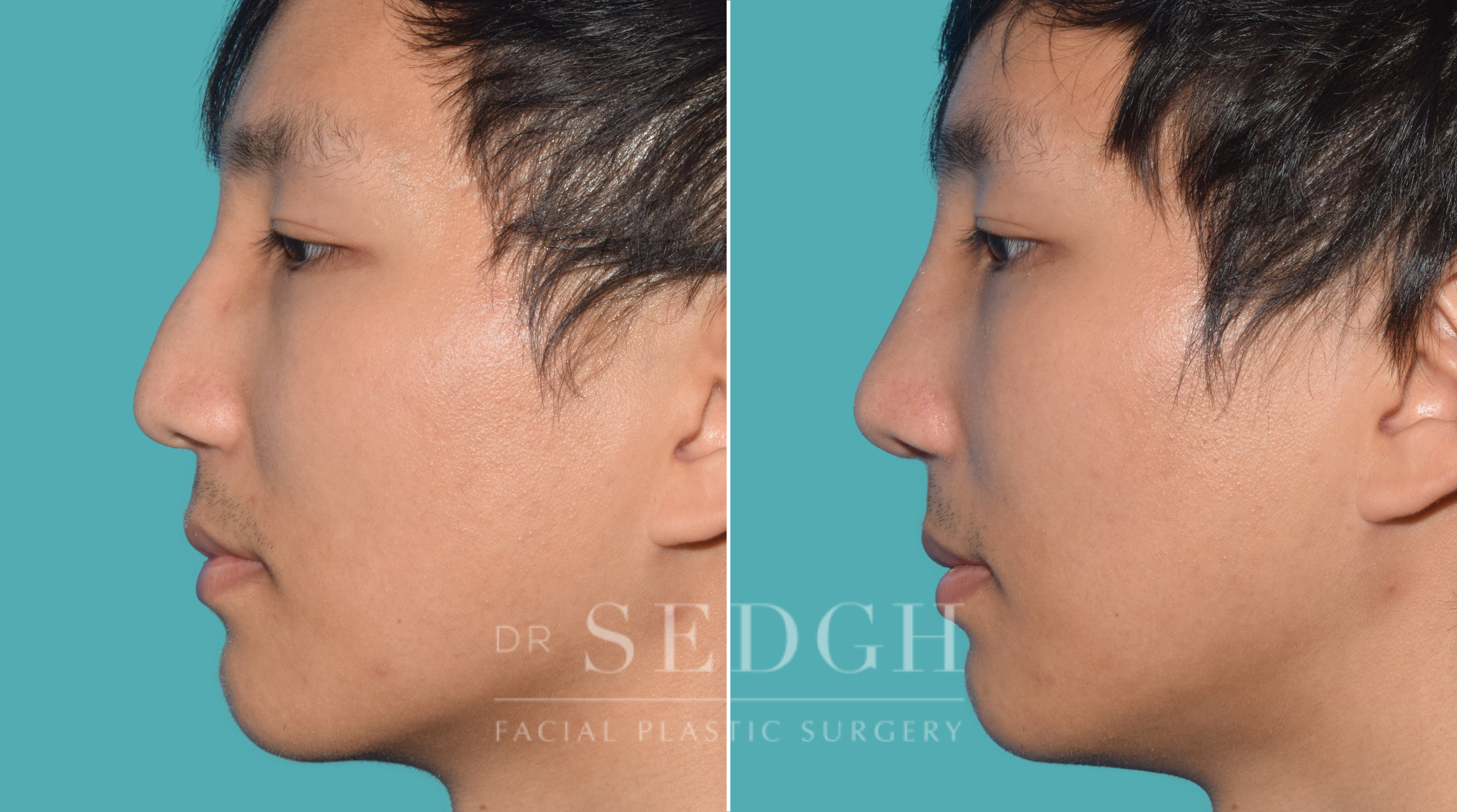
This Korean-American gentleman wanted a stronger nasal bridge and tip while maintaining an authentic look. Rib cartilage was applied as grafting material and the results are shown only at 10 days following surgery before he moved to the East coast.
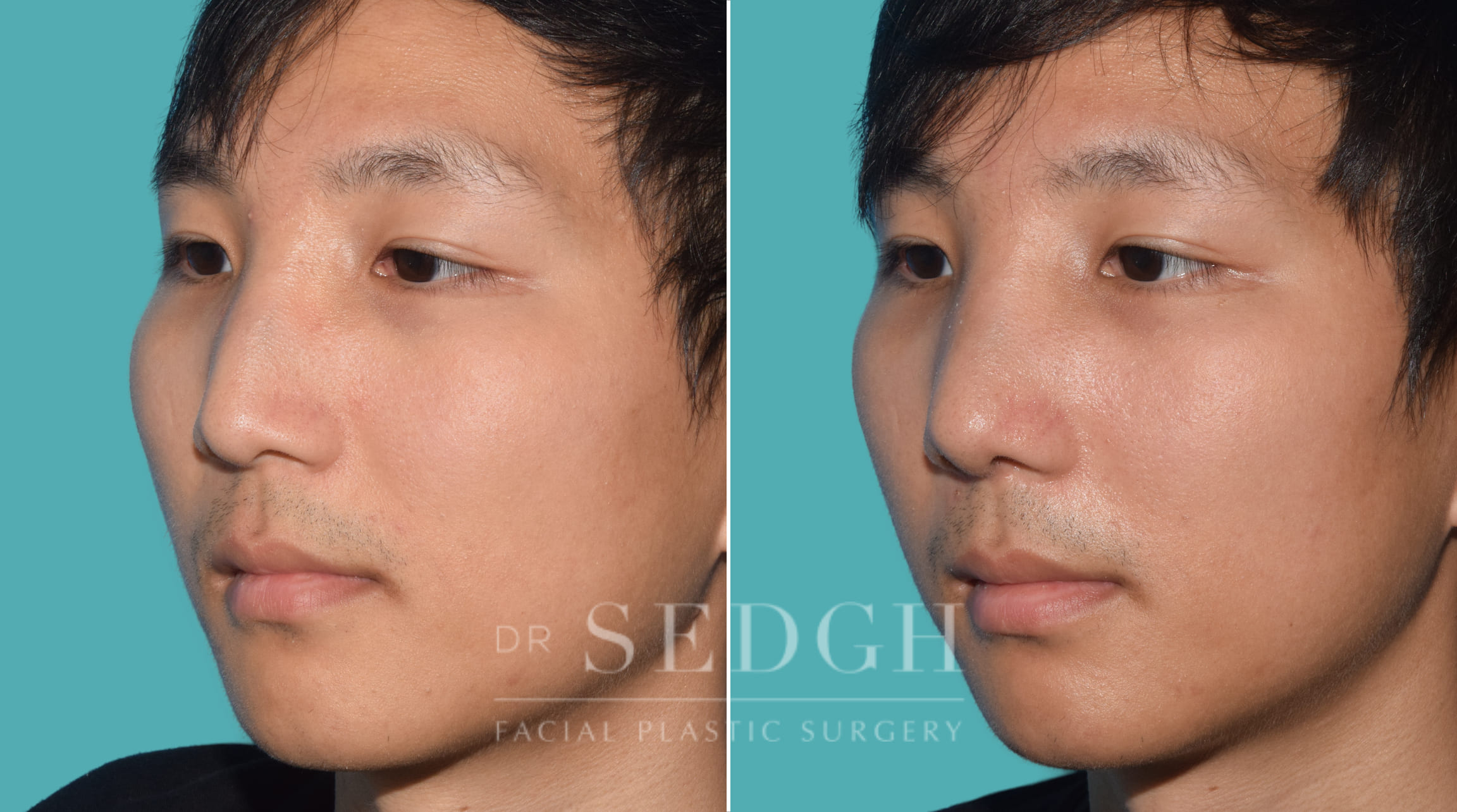
This Korean-American gentleman wanted a stronger nasal bridge and tip while maintaining an authentic look. Rib cartilage was applied as grafting material and the results are shown only at 10 days following surgery before he moved to the East coast.
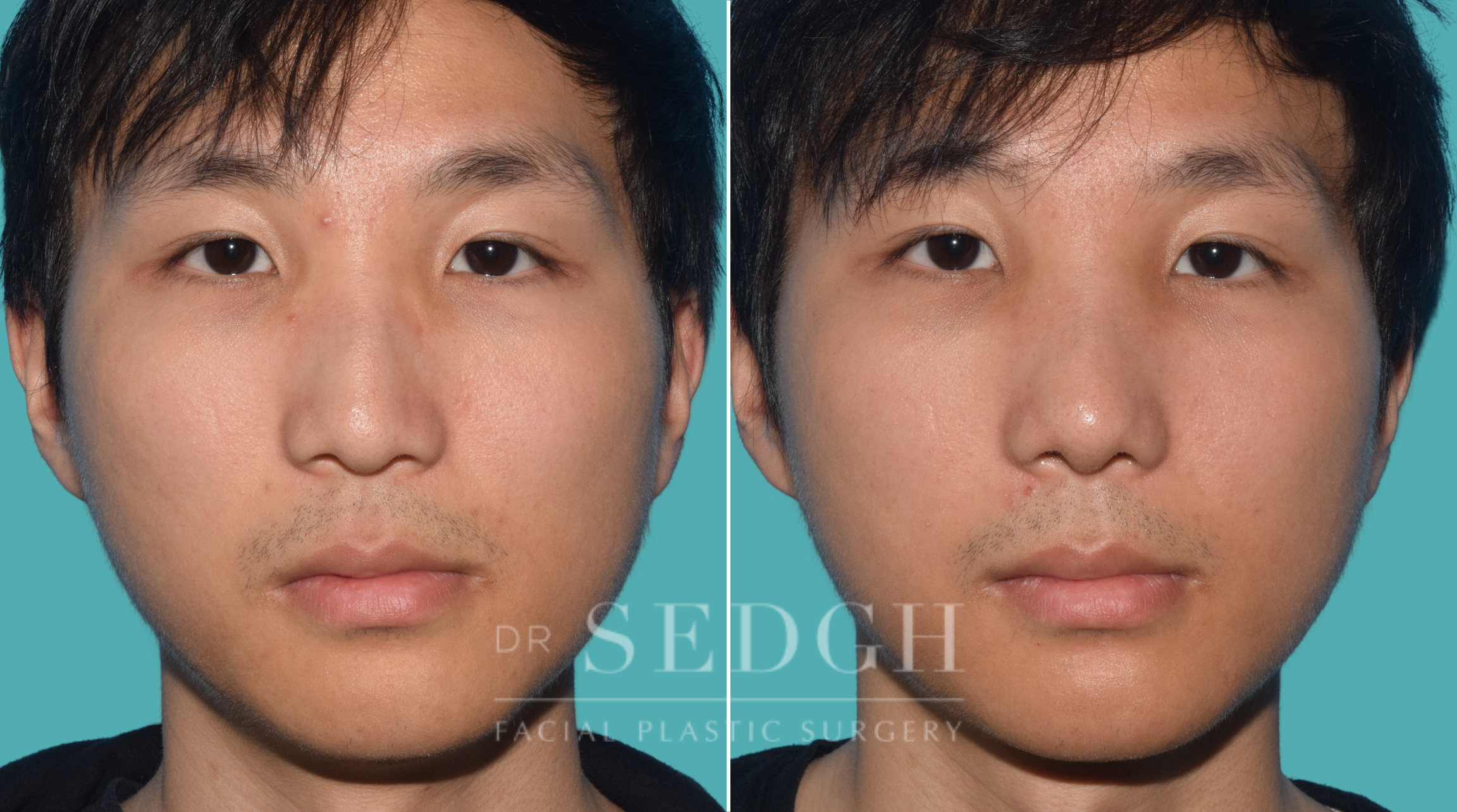
This Korean-American gentleman wanted a stronger nasal bridge and tip while maintaining an authentic look. Rib cartilage was applied as grafting material and the results are shown only at 10 days following surgery before he moved to the East coast.
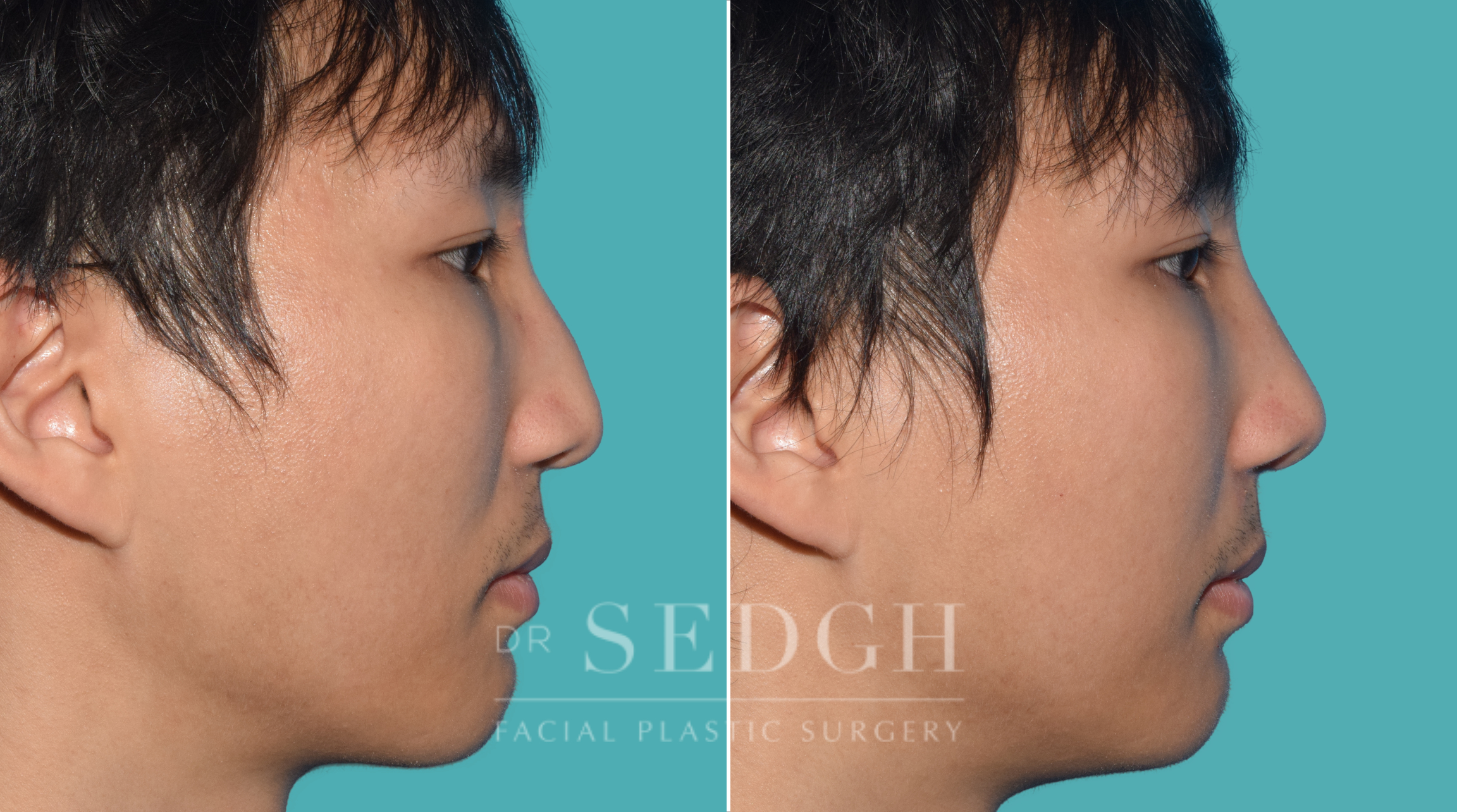
This lovely college student was interested in some classic features of Asian rhinoplasty including a higher bridge, a more defined and projected tip with smaller nostrils. She was thrilled with her results and back to school in one week!
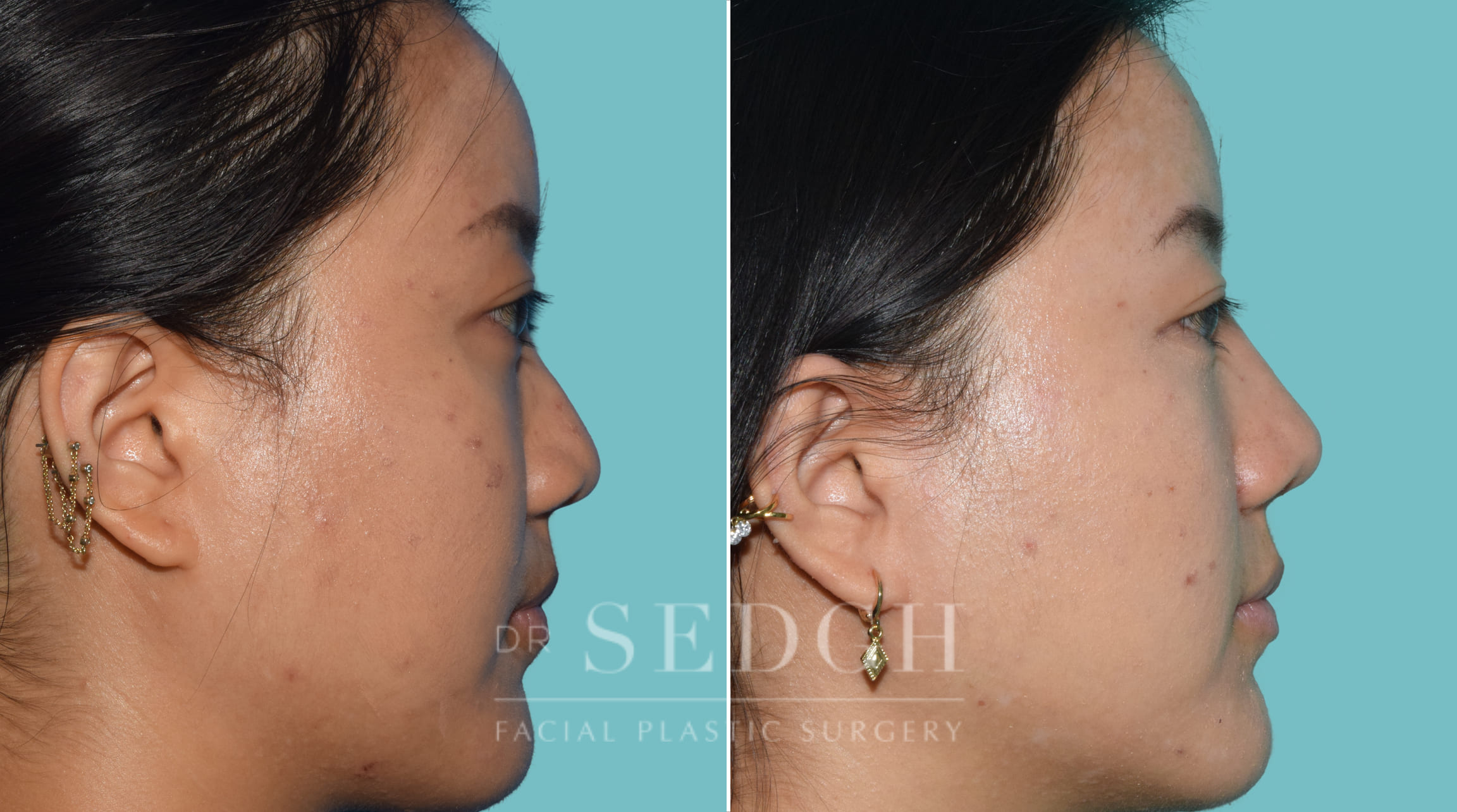
This lovely college student was interested in some classic features of Asian rhinoplasty including a higher bridge, a more defined and projected tip with smaller nostrils. She was thrilled with her results and back to school in one week!
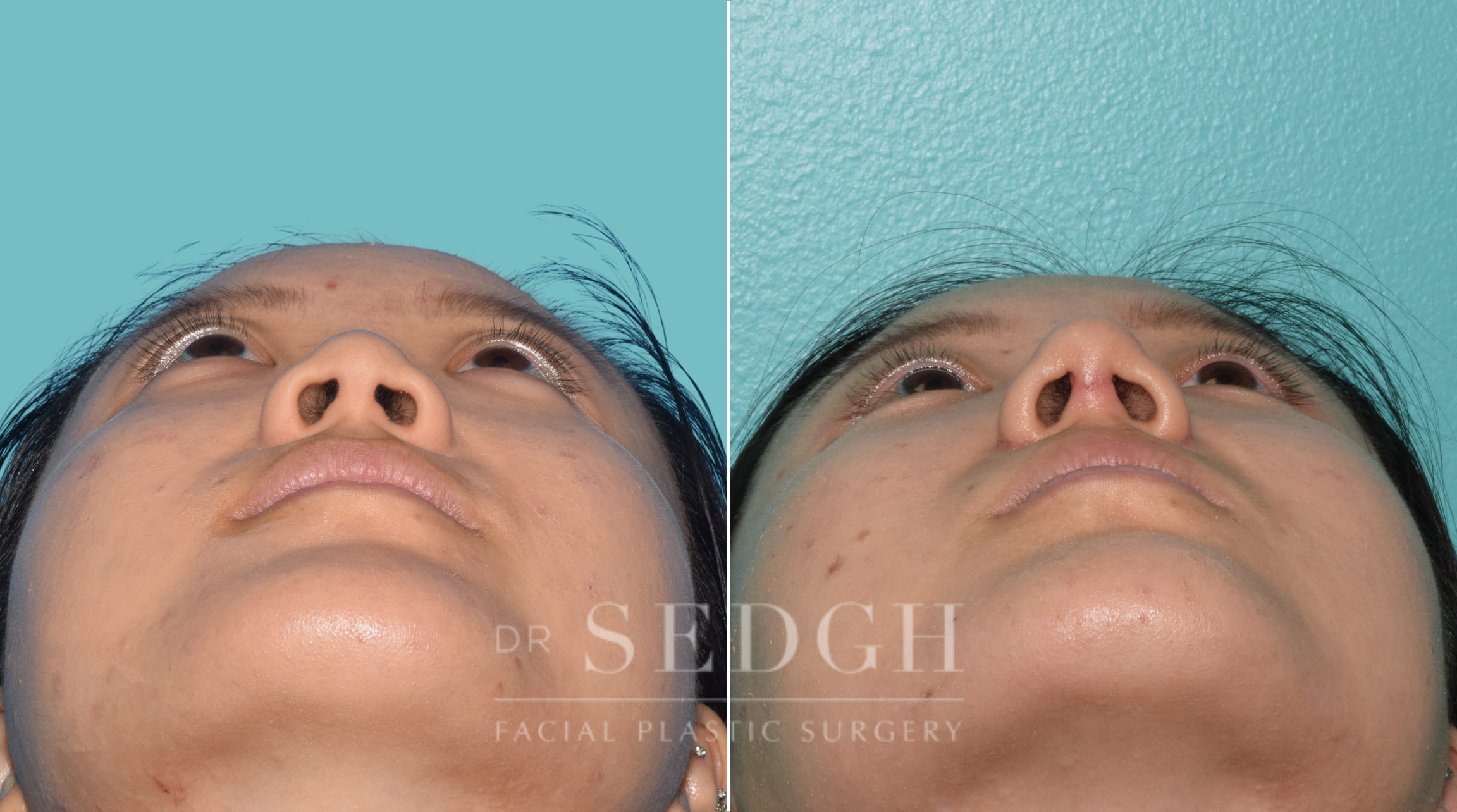
This lovely college student was interested in some classic features of Asian rhinoplasty including a higher bridge, a more defined and projected tip with smaller nostrils. She was thrilled with her results and back to school in one week!
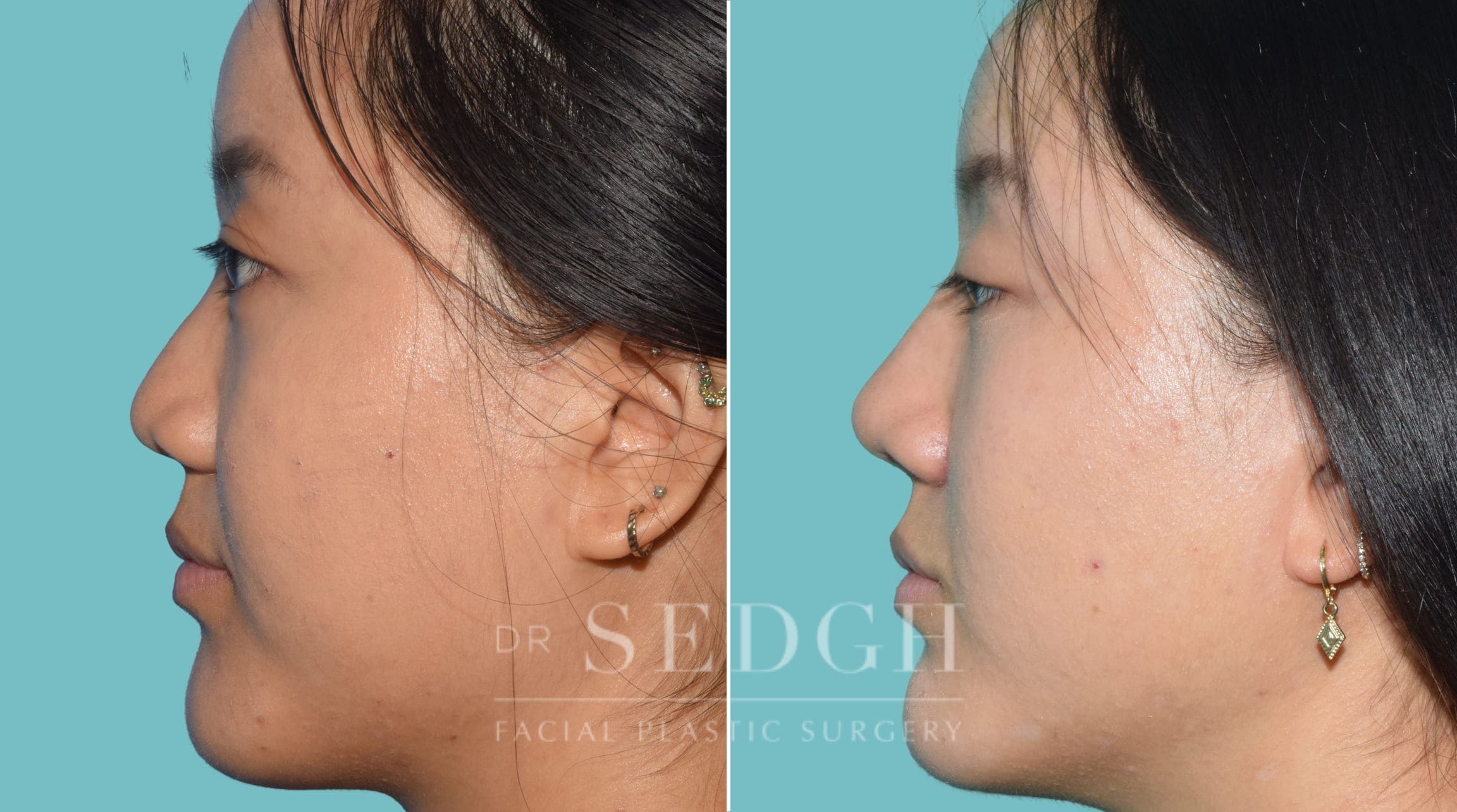
This lovely college student was interested in some classic features of Asian rhinoplasty including a higher bridge, a more defined and projected tip with smaller nostrils. She was thrilled with her results and back to school in one week!
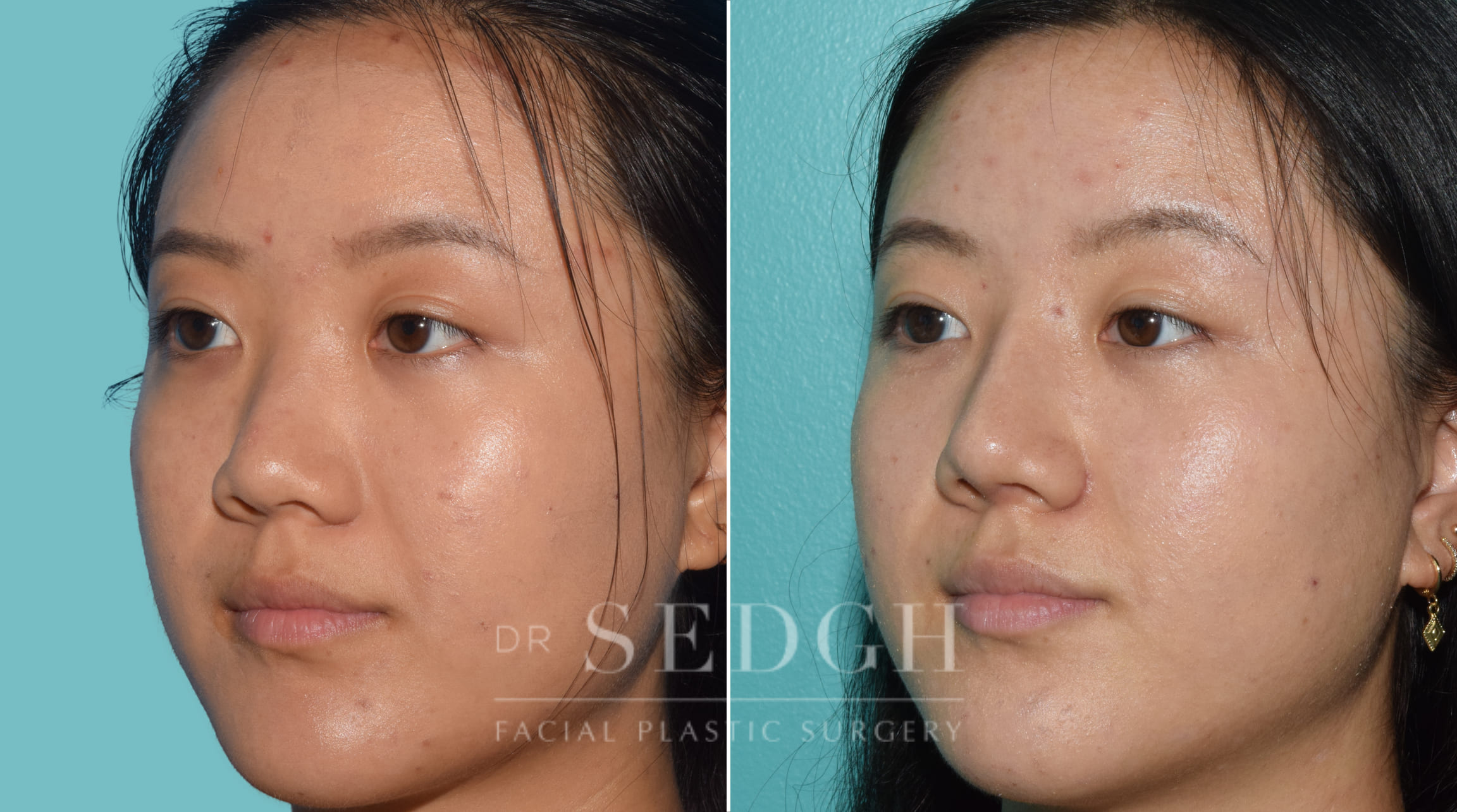
This lovely college student was interested in some classic features of Asian rhinoplasty including a higher bridge, a more defined and projected tip with smaller nostrils. She was thrilled with her results and back to school in one week!
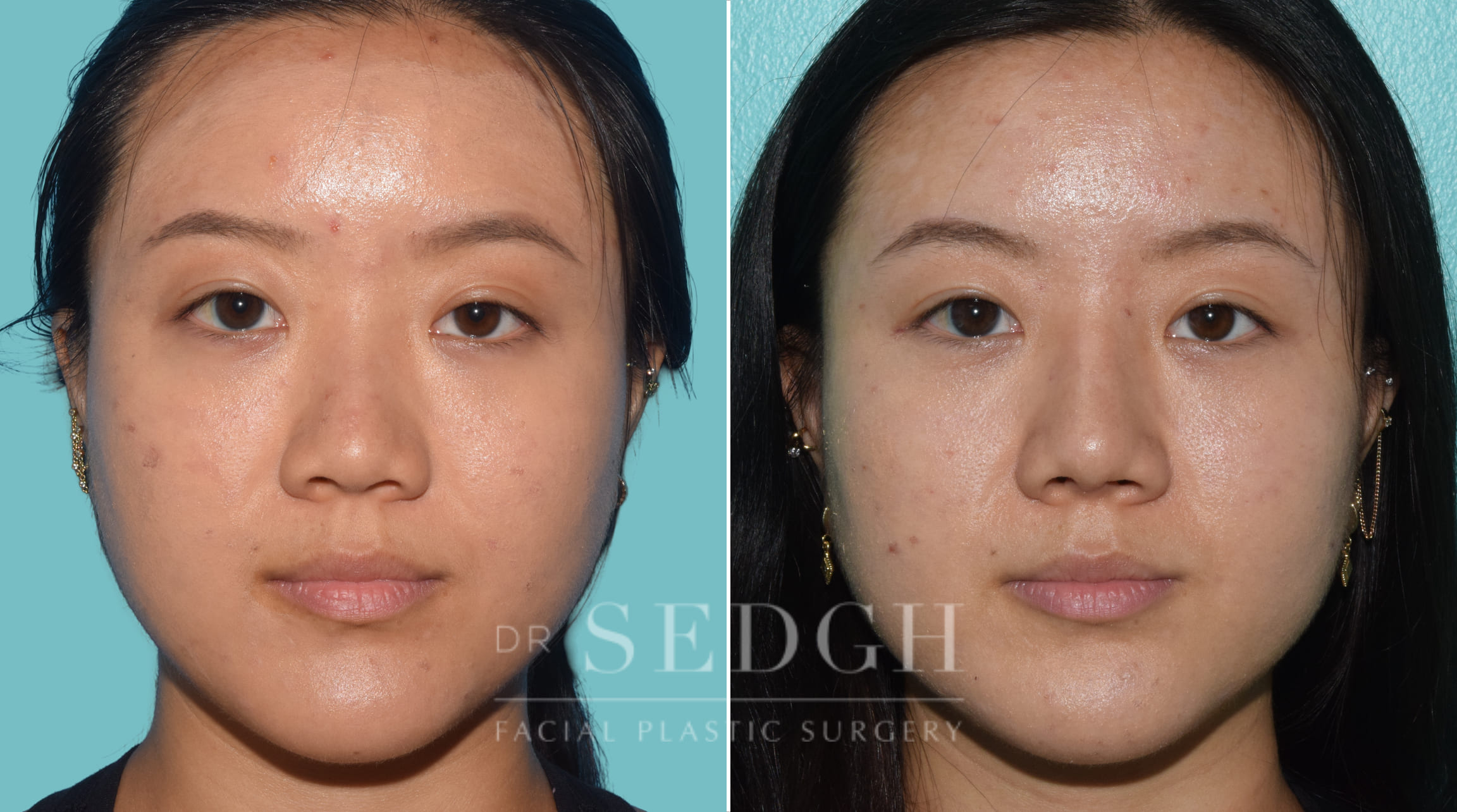
This lovely college student was interested in some classic features of Asian rhinoplasty including a higher bridge, a more defined and projected tip with smaller nostrils. She was thrilled with her results and back to school in one week!
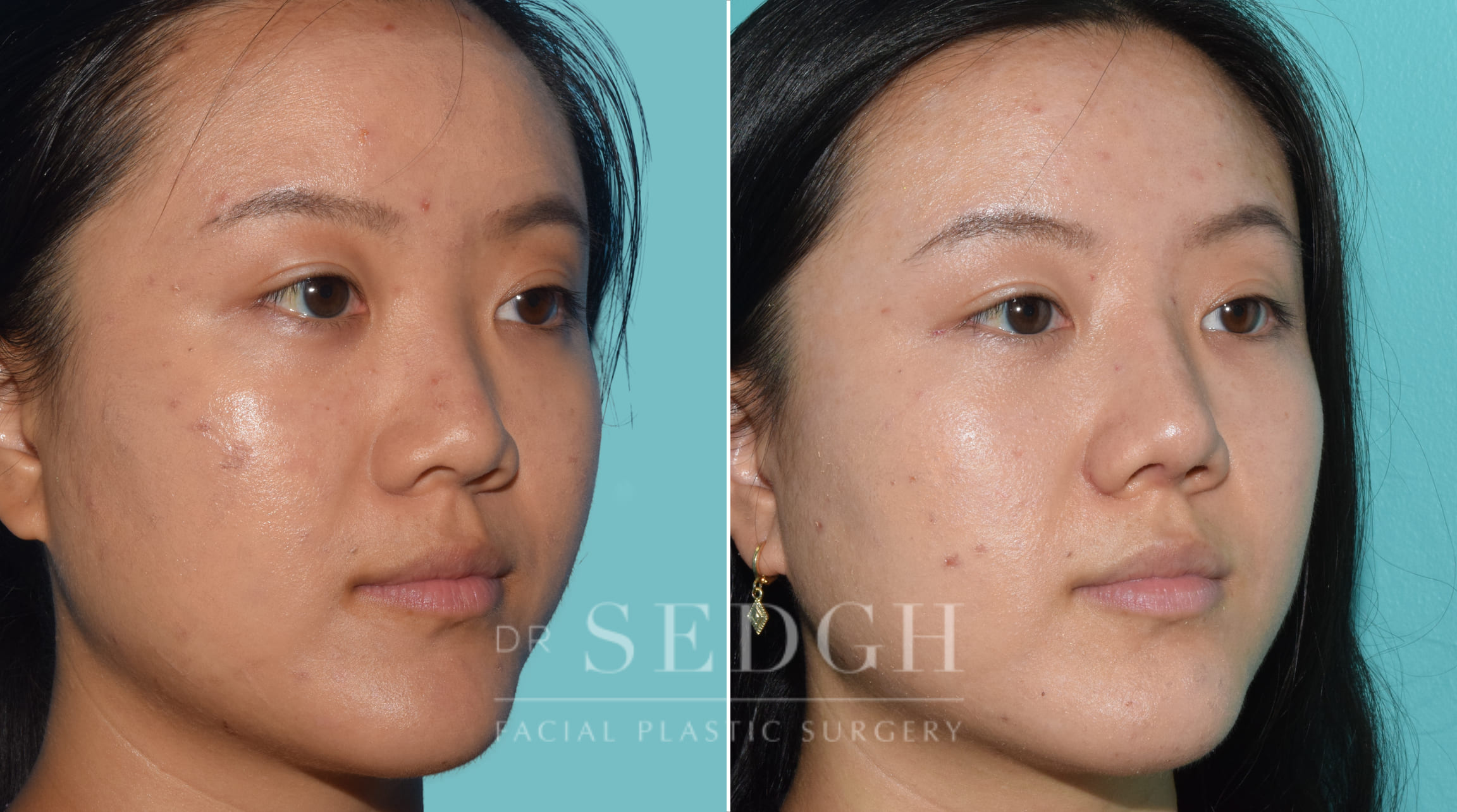
Asian patients usually require bridge augmentation, tip refinement, and alar base reduction. Such enhancements are performed with careful consideration of the overall facial structure to ensure balanced, aesthetically pleasing improvements that do not compromise the patient’s unique Asian features.
AM I A GOOD CANDIDATE?
Asian rhinoplasty is designed to address nasal structures commonly found among patients of East Asian, Southeast Asian, and other Asian backgrounds. However, candidacy is determined by individual anatomy and aesthetic goals, not ethnicity alone.
During a consultation, Dr. Jacob Sedgh evaluates facial proportions, nasal structure, skin characteristics, and your personal goals to determine whether Asian rhinoplasty is appropriate.
Ideal Candidates
You may be a good candidate for Asian rhinoplasty if you:
- Feel your nasal bridge is low or lacks definition
- Want greater tip projection or refinement
- Have wide nostrils or a broad nasal base
- Wish to enhance your nose while maintaining your natural ethnic appearance
- Are in good overall health and able to undergo surgery
- Have realistic expectations regarding surgical results
- Wide nostrils
- Low nasal bridge
- Flat facial profile
- Poor nasal function
A successful Asian rhinoplasty focuses on achieving balance and harmony with the rest of the face. While many patients desire natural, identity-preserving refinement, the results can still be significant or transformational depending on the patient’s goals. During your consultation, Dr. Sedgh will discuss the degree of change you desire and explain what is achievable while maintaining structural integrity and facial balance.
PROCEDURE OVERVIEW
Understanding what happens on the day of surgery helps patients feel prepared and confident. Dr. Sedgh and his surgical team provide detailed instructions before the procedure so patients know exactly what to expect.
Preparing for Surgery
Patients are typically instructed to avoid eating or drinking after midnight before surgery. Certain medications may need to be discontinued prior to the procedure to reduce the risk of bleeding.
Anesthesia
Asian rhinoplasty is usually performed under general anesthesia or IV sedation with local anesthesia. The safest option for each patient is determined during the consultation based on medical history and surgical complexity.
Patients should wear loose, comfortable clothing that does not need to be pulled over the head and avoid makeup, jewelry, or contact lenses on the day of surgery. Because anesthesia is used, patients must arrange transportation home after the procedure.
Surgical Techniques
Asian rhinoplasty often requires structural reinforcement to improve nasal shape and support.
Cartilage grafts may be taken from the septum, ear, or rib to strengthen the nasal structure and build bridge height. These grafts help create natural-looking contour and improve tip support.
Incisions are typically placed inside the nose or discreetly along the base of the nostrils so visible scarring is minimal.
RECOVERY TIMELINE
Recovery from Asian rhinoplasty occurs gradually as swelling decreases and the nose settles into its final shape.
Days 1–3
Swelling and mild bruising are most noticeable during the first few days. Patients should rest with their head elevated and avoid strenuous activity.
Week 1
The nasal splint is usually removed during the first postoperative visit. Many patients are able to resume light daily activities.
Weeks 2–3
Bruising typically fades and most patients feel comfortable returning to work or social events.
Three Months
The nose begins to look more refined as swelling continues to decrease, especially around the nasal tip.
One Year
Final results become visible as the nose fully settles into its long-term shape.
Recovery time can vary depending on the complexity of surgery. Procedures involving rib cartilage grafts or more extensive structural reconstruction may take slightly longer to heal.
SAFETY & SURGICAL RISKS
All surgical procedures carry some level of risk. However, when performed by a qualified facial plastic surgeon such as Dr. Jacob Sedgh, complications are uncommon and patient safety is prioritized.
Possible risks may include infection, bleeding, prolonged swelling, or asymmetry. In rare cases, revision surgery may be necessary to refine results.
Cartilage vs Implant Rhinoplasty
Asian rhinoplasty sometimes involves implants or cartilage grafts to augment the nasal bridge.
Implants
Implants can provide immediate structural height and are used in some practices; however, because they are synthetic materials, they carry a small risk of long-term complications such as infection, shifting, or extrusion.
Cartilage Grafts
Cartilage grafts, which are taken from the patient’s own septum, ear, or rib, integrate naturally with the body and provide durable structural support. For this reason, many surgeons consider cartilage grafting the most reliable approach for achieving stable, natural-looking results over time.
Dr. Sedgh only uses cartilage grafts when performing Asian rhinoplasty as they provide long-term structural support and reduce the potential risks associated with implants such as infection, shifting, or long-term complications.
Safety Measures
Patient safety is prioritized through detailed surgical planning, sterile surgical protocols, and careful postoperative monitoring. Dr. Sedgh’s specialized training in facial plastic surgery allows him to perform rhinoplasty procedures with precision and attention to detail.
COST & FINANCING
The cost of Asian rhinoplasty varies depending on several factors, including the complexity of the procedure, surgical techniques required, and facility fees.
Procedures that involve cartilage grafting from the ear or rib may require additional surgical time and therefore may affect overall cost.
Because every nose and treatment plan is unique, the most accurate way to determine the cost of surgery is through a personal consultation with Dr. Jacob Sedgh. During this visit, the office team can discuss available financing options and payment plans to make treatment more accessible.
WHAT TO EXPECT
The key to achieving your desired result from your rhinoplasty procedure is to clearly communicate your concerns and expectations during the initial consultation. Once Dr. Sedgh has gained a better understanding of your needs, he will take the time to evaluate your nasal structure to pinpoint all areas of concern that need to be addressed. This will allow him to determine the ideal nose shape and size for your facial structure, as well as the most appropriate techniques to utilize for the procedure. Your consultation will consist of the following:
- Interview and assessment of your medical history
- Thorough physical examination
- Discussion on the surgical approach to be used for the procedure
Dr. Sedgh also conducts consultations via video conferencing for prospective patients who live out of town or overseas. If needed, his office can provide assistance in arranging transportation, hotel accommodation, and even aftercare services for the day of the surgery.
WHY CHOOSE DR. JACOB SEDGH
Dr. Jacob Sedgh is a highly accomplished facial plastic surgeon with dual board certifications from the American Board of Facial Plastic & Reconstructive Surgery and the American Board of Otolaryngology-Head and Neck Surgery. His advanced training includes a prestigious fellowship in Facial Plastic Surgery at Penn State Milton S. Hershey Medical Center and a residency at the University of Pittsburgh Medical Center, one of the nation’s leading programs for head and neck surgery.
With nearly a decade of experience, Dr. Sedgh has successfully performed numerous rhinoplasty procedures for patients from various ethnic backgrounds. His meticulous attention to detail, deep understanding of nasal anatomy, and artistic approach make him the premier choice for Asian rhinoplasty in Los Angeles.
OPEN vs CLOSED RHINOPLASTY
Asian rhinoplasty differs from other types of nose reshaping procedures because it usually requires implants or cartilage grafts to build a more projected nose bridge.
The procedure is performed on patients placed under general anesthesia. It can be done in a hospital, in a surgical clinic, or in a surgical suite in your surgeon’s office, and generally takes two to three hours to complete.
Depending on the complexity of the procedure, your surgeon may perform either an open rhinoplasty or a closed rhinoplasty. With open rhinoplasty, Dr. Sedgh will make incisions across the columella between the nostrils, as well as additional incisions inside the nose.
This provides better access to the internal nasal framework, which makes it ideal for some of the more complicated rhinoplasty techniques.
On the other hand, closed rhinoplasty is performed with all incisions placed inside the nostrils. Through these incisions, Dr. Sedgh will carefully manipulate the underlying tissue to reshape the structure of the nose. This approach is recommended for simpler rhinoplasty cases and will yield no visible scarring.
To build the nasal bridge, Dr. Sedgh may install an artificial, biocompatible implant that has been carefully shaped to meet the patient’s desired outcome. Another option is to use cartilage grafts obtained from a donor site on the body, such as the septum, ear, or rib.
FREQUENTLY ASKED QUESTIONS
What makes Asian rhinoplasty different from traditional rhinoplasty?
Asian rhinoplasty often focuses on augmentation and structural support rather than reducing nasal size. Many patients seek improvements such as bridge height, tip projection, or nostril refinement while maintaining natural ethnic facial features.
Will Asian rhinoplasty make my nose look westernized?
No. When performed by an experienced surgeon like Dr. Jacob Sedgh, Asian rhinoplasty focuses on enhancing nasal structure while preserving your natural facial identity. The goal is refinement and balance, not changing your ethnic appearance.
How long does Asian rhinoplasty surgery take?
The procedure typically takes two to four hours, depending on surgical complexity and whether cartilage grafting is required.
How long is the recovery after Asian rhinoplasty?
Most patients return to normal daily activities within one to two weeks, although subtle swelling may take several months to fully resolve.
Are the results of Asian rhinoplasty permanent?
Yes. While the face continues to age naturally, the structural changes made during rhinoplasty are designed to be long-lasting.
PATIENT REVIEWS
When under our care, Dr. Sedgh always ensures you feel comfortable, cared for, well-informed about every aspect of your upcoming treatment, whether surgical or non-surgical. With an approach which focuses on achieving refreshed, natural-looking results, Dr. Sedgh prides himself on always acting with transparency, honesty, and the highest level of ethical treatment, from start to finish.