
Key Takeaways
- • Fix cosmetic and functional issues after primary nose surgery with revision rhinoplasty.
- • At least 5% to 15% of rhinoplasty procedures are revision rhinoplasty.
- • Altered anatomy makes secondary procedures more challenging.
- • Board certified and facial surgery specialist surgeons improve safety and result.
Introduction
When rhinoplasty does not deliver, it can have an emotional toll. From disappointment to breathing problems, patients feel disrupted in their daily life. Revision rhinoplasty is designed to correct those issues.
So what is Revision Rhinoplasty? Could it be the right solution for you?
What Is Revision Rhinoplasty?
If Rhinoplasty shapes the nose, revision rhinoplasty, also called secondary rhinoplasty or revision nose surgery, corrects and fixes the outcome when there are problems with appearance or function. Since nasal structures have already been altered,revision rhinoplasty becomes more complex because the anatomy has changed.
No surgery is risk-free. Revision rhinoplasty is necessary when there is failure on the rhinoplasty results, complications, or airway obstruction. The procedure may involve nasal deformity correction, scar tissue revision, or cartilage grafting.
Revision procedures make up 5% to 15% of all rhinoplasties in the US, per the American Society of Plastic Surgeons. That means thousands of patients each year explore options to improve or restore nasal form and function.
Why Patients Seek Tip Revision Rhinoplasty
Cosmetic Concerns
Cosmetic dissatisfaction is one of the most common reasons people explore revision rhinoplasty. Even small irregularities can significantly affect facial balance.
Common concerns include:
- • Asymmetry
- • Over-reduction of the nasal bridge
- • Under-reduction that leaves a hump
- • Collapsed nasal bridge
- • Pinched nasal tip
- • Irregular contours
In some cases, excessive tissue removal during a primary procedure can weaken structural support. This can create a narrow or artificial appearance. In others, under-correction may leave patients feeling their goals were not fully achieved.
A failed rhinoplasty does not always mean surgical error. Healing varies from person to person. But when results remain unsatisfactory after full recovery, corrective rhinoplasty may help.
Functional Issues
Breathing problems after rhinoplasty are a serious concern. Functional issues often stem from structural collapse or internal scarring.
Patients may experience:
- • Nasal airway obstruction
- • Structural collapse of the nasal valves
- • Septal perforation
- • Chronic congestion
The American Academy of Otolaryngology reported in 2025 that nasal valve collapse remains one of the leading causes of post rhinoplasty breathing difficulty. Revision nose surgery can rebuild internal support and restore airflow.
For many patients, revision rhinoplasty is not just about appearance. It is about comfort and quality of life.
Healing Complications
Healing complications can also lead to secondary rhinoplasty.
These may include:
- • Excess scar tissue
- • Warping of cartilage grafts
- • Irregular healing
Scar tissue revision is often necessary because scar formation can distort nasal shape or restrict breathing. Surgeons must carefully manage these tissues during revision procedures.
How Is Revision Rhinoplasty Different from Primary Rhinoplasty?
Revision rhinoplasty is more technically demanding than primary surgery. The presence of scar tissue and altered anatomy requires advanced expertise.
Scar tissue management is critical. Surgeons must carefully release internal scarring while preserving blood supply.
Grafting requirements are often greater. Cartilage grafting may involve septal cartilage, ear cartilage, or rib cartilage if prior tissue was removed.
Technical precision becomes even more important. Even millimeters matter.
Choosing a board-certified facial plastic surgeon with experience in complex nasal reconstruction significantly improves outcomes.
| Factor | Primary Rhinoplasty | Revision Rhinoplasty |
|---|---|---|
| Surgical History | First surgery | Previous surgery already performed |
| Scar Tissue | Minimal | Significant internal scarring |
| Grafting Needs | Sometimes required | Frequently required |
| Technical Difficulty | Moderate | High |
| Recovery Time | Standard | Often longer due to tissue complexity |
Who Is a Good Candidate for Revision Rhinoplasty?
Not everyone is ready for secondary rhinoplasty.
Ideal candidates include:
- ✓ Patients at least 12 months post primary rhinoplasty
- ✓ Individuals with persistent breathing issues
- ✓ Patients in good general health
- ✓ Those with realistic expectations
- ✓ Emotionally prepared for a complex procedure
Surgeons typically advise waiting at least one full year to allow swelling to fully resolve and tissues to stabilize before considering revision nose surgery.
What Happens During Revision Rhinoplasty Surgery?
Consultation and Planning
The journey begins with a detailed professional meeting. Surgeons frequently utilize 3D imaging in 2025 and 2026 to preview outcomes. Evaluation focuses on breathing clarity along with skin quality and existing scar tissue. Honest dialogue is vital when explaining what Is revision rhinoplasty and defining achievable improvements.
Surgical Techniques
Doctors select an open or closed approach depending on the case. The open method provides superior visibility for a complex revision rhinoplasty. Cartilage grafting remains a primary tool. While septal material is the first choice, ear or rib cartilage provides necessary structural support. This reinforcement fixes various issues and builds back nasal strength.
Duration and Anesthesia
A typical nasal deformity correction lasts between two and four hours. General anesthesia is standard for these procedures. Success depends heavily on the skill and experience of the surgeon.
Recovery After Revision Rhinoplasty
Revision rhinoplasty recovery takes longer.
- → Week 1: Splint removal and visible swelling. Bruising common.
- → Weeks 2 to 4: Gradual improvement in bruising. Light activity resumes.
- → Weeks 4 to 6: Most visible swelling goes away.
- → Months 3 to 6: Keeps refining.
- → Final Results: 12 to 18 months.
Swelling lasts longer than a first surgery because scar tissue slows down drainage.
Avoid heavy exercise for several weeks and follow all instructions.
European Journal of Plastic Surgery research found that SCHNOS scores dropped significantly after surgery which means better breathing and better looks for most patients.
Revision Rhinoplasty Result
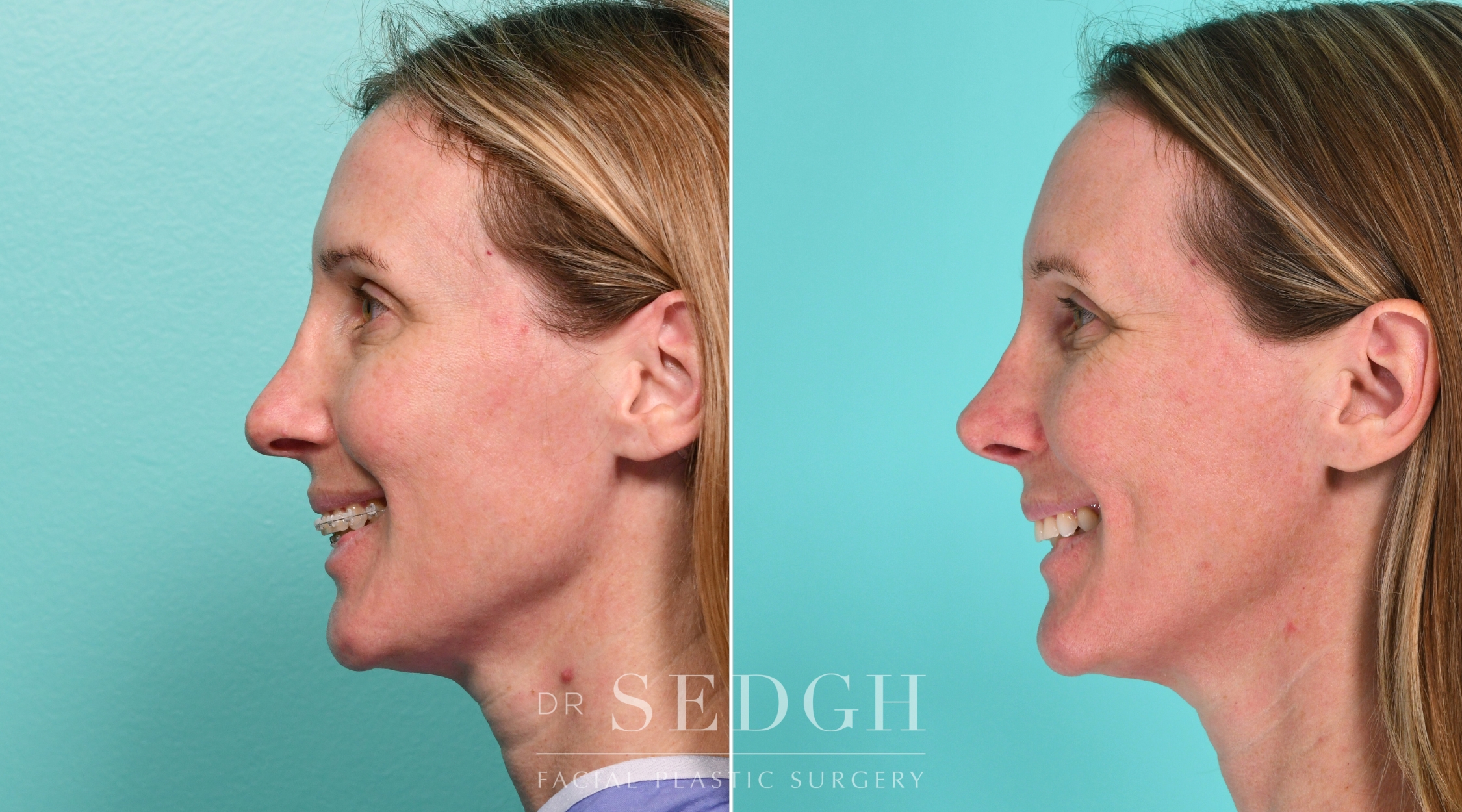
This is a great case of revision rhinoplasty, I have used this as a teaching example on how the vertical height of the tip is important in overall facial and nasal aesthetics. We will talk more about it as she continues with her journey and recovery throughout the year.
Risks and Complications of Revision Rhinoplasty
As with any surgery, risks exist.
Potential complications include:
- • Infection
- • Bleeding
- • Persistent asymmetry
- • Scar tissue formation
- • Need for further revision
Rhinoplasty complications are reduced when patients choose a board-certified facial plastic surgeon with specific experience in revision cases.
How to Choose the Right Revision Rhinoplasty Surgeon
Selecting the right surgeon is critical.
Look for:
- ✓ Board certification
- ✓ Facial surgery specialization
- ✓ Extensive experience in cartilage grafting
- ✓ Before and after photos of revision rhinoplasty cases
- ✓ Transparent consultations
- ✓ Verified patient reviews
Patients seeking West Hollywood rhinoplasty should prioritize surgeons who focus heavily on complex revision work.
Cost of Revision Rhinoplasty in Los Angeles
Revision rhinoplasty is more expensive, yes, but you have to consider the reconstruction needs.
In LA, it costs from $8,000 to $15,000. Some even more due to complexity, this includes increased surgical time, grafting materials, anesthesia, and facility fees.
Frequently Asked Questions
They mean the same thing. Both refer to surgery performed after a previous rhinoplasty.
At least 12 months after your first surgery.
Yes. It can correct structural issues that cause airway obstruction.
It is more complex and often requires cartilage grafting and longer operating time.
Patients in the revision rhinoplasty satisfaction survey showed a statistically significant decrease in SCHNOS scores after surgery, which indicates measurable improvement in both breathing symptoms and cosmetic concerns for most groups studied.
Schedule a personalized consultation to restore both form and function with natural-looking results. Explore real patient results and discover what you can achieve.
Posted on behalf of Sedgh Plastic Surgery