
If you struggle to breathe through your nose, experience frequent sinus infections, or suffer from chronic headaches, you might be dealing with a deviated septum. Many patients assume a standard “nose job” will fix these issues, but addressing both the function and appearance of the nose requires a highly specialized, dual-focus approach.
According to double board-certified facial plastic surgeon Dr. Jacob Sedgh, “Patients often come in asking for a rhinoplasty to fix their breathing, but what they actually need is a septoplasty—or a combination of both. True success in nasal surgery means achieving perfect harmony between how the nose works on the inside and how it looks on the outside.”
This comprehensive guide breaks down the anatomy of a deviated septum, the conservative treatments available, the exact mechanics of cosmetic and functional nasal surgery, and what to expect from a combined procedure known as a septorhinoplasty.
Understanding the Anatomy of the Nasal Septum
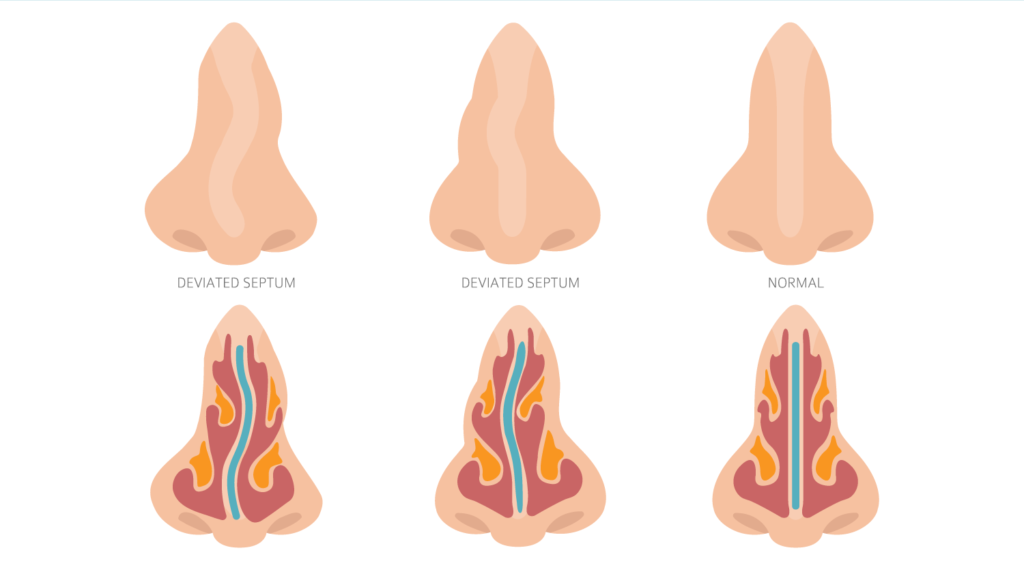
To understand why a deviated septum causes so many problems, it helps to understand how the nose is built. The nasal septum is the central dividing wall that separates your left and right nasal cavities. It provides structural support for the nose and directs airflow smoothly into the airway.
The septum is not just one solid piece of bone. It is composed of three main structures:
- The Quadrangular Cartilage: The flexible, rubbery portion at the front of the nose.
- The Perpendicular Plate of the Ethmoid Bone: A thin section of bone located higher up in the nasal cavity.
- The Vomer: A thicker bone situated at the lower and back portion of the nasal cavity.
In a textbook-perfect anatomical structure, this dividing wall sits perfectly in the center, allowing symmetrical airflow. However, perfect symmetry is incredibly rare. According to the American Academy of Otolaryngology, an estimated 80% of all nasal septums are off-center to some degree.
Causes of a Deviated Septum
A septum becomes deviated in one of two main ways:
- Congenital (Birth): Many people are simply born with a deviated septum. The deviation can occur during fetal development or as a result of pressure on the nose as the baby passes through the birth canal. As the child grows, the cartilage and bone may grow at different rates, worsening the deviation over time.
- Acquired (Trauma): A significant percentage of deviated septums are the result of facial trauma. This can happen from a broken nose during a sports injury, an automobile accident, or simply tripping and falling. Even minor childhood injuries that were forgotten can result in a deviated septum that becomes symptomatic in adulthood.
The Cascading Symptoms of Septal Deviation
A minor deviation might never cause problems. However, a functionally significant deviation alters the aerodynamics of your breathing, leading to a cascade of negative health effects.
- Chronic Nasal Congestion: The most common symptom is a persistent feeling of blockage in one or both nostrils. This is often exacerbated when you have a cold, allergies, or an upper respiratory infection.
- Turbinate Hypertrophy: When one side of the nose is blocked by the septum, the turbinates (structures that humidify air) on the “open” side often swell and enlarge to compensate. This creates a cruel irony where both sides of the nose eventually feel blocked.
- Frequent Sinus Infections (Sinusitis): The sinuses need to drain properly through small openings in the nasal cavity. A deviated septum can block these drainage pathways, allowing bacteria to pool and multiply, leading to chronic infections.
- Epistaxis (Frequent Nosebleeds): Altered, turbulent airflow can dry out the delicate mucosal lining on the surface of the septum, leading to cracking, crusting, and frequent bleeding.
- Facial Pain and Headaches: In severe cases, a bone spur on the deviated septum can literally press against the sensitive lateral wall of the inside of the nose. This constant physical contact causes referred pain, manifesting as chronic facial pain or “contact headaches.”
- Sleep Apnea and Snoring: Disrupted airflow during sleep forces patients to breathe through their mouths. This contributes to loud snoring, dry mouth upon waking, and can exacerbate Obstructive Sleep Apnea (OSA), a serious condition that impacts cardiovascular health.
Diagnosis and Non-Surgical Management
Before discussing surgery, a proper medical diagnosis is required. Dr. Sedgh uses a combination of patient history and physical examination to determine the severity of the obstruction.
The Diagnostic Process
- Anterior Rhinoscopy: Using a nasal speculum and a bright light, the surgeon visually inspects the front portion of the nasal cavity.
- Nasal Endoscopy: A thin, flexible camera (endoscope) is passed into the nose to evaluate the deeper structures, check for polyps, and assess the back of the septum (the vomer).
- CT Scans: In cases where chronic sinusitis is suspected, a Computed Tomography (CT) scan provides a highly detailed 3D view of the bones, septum, and sinus cavities.
Conservative Treatments
Medical insurance generally requires patients to attempt conservative, non-surgical management before approving septal surgery. These treatments do not straighten the cartilage, but they can temporarily shrink swollen tissues to improve airflow:
- Nasal Corticosteroids: Prescription sprays to reduce mucosal inflammation.
- Antihistamines: Oral medications to control allergy-induced swelling.
- Nasal Dilators: Over-the-counter adhesive strips (like Breathe Right strips) used at night to manually pull the nasal valves open.
When these medical therapies fail to provide adequate relief, surgery becomes the definitive answer.
Deciphering the Procedures: Septoplasty vs. Rhinoplasty
A frequent reason medical content fails to satisfy patient inquiries is the conflation of terms. To be clear: rhinoplasty and septoplasty are two completely distinct surgeries.
Procedure Comparison
| Feature | Septoplasty | Rhinoplasty | Septorhinoplasty |
|---|---|---|---|
| Primary Goal | Functional (restore breathing) | Cosmetic (enhance appearance) | Both functional and cosmetic |
| Target Area | Internal cartilage and bone | External nasal structure | Internal and external structures |
| Medical Necessity | High (if symptomatic) | None (purely elective) | Mixed |
| Insurance Coverage | Usually covered | Rarely covered | Only the septoplasty portion is covered |
| Changes Outward Appearance? | No | Yes | Yes |
The Power of Combined Surgery (Septorhinoplasty)
If a patient desires cosmetic changes (like removing a bump or refining a wide tip) alongside functional breathing improvements, the best approach is to combine them into a single procedure: the septorhinoplasty.
The strategic advantage of combining them is significant. During a functional septoplasty, the surgeon removes bent or excess cartilage to clear the airway. Instead of discarding this cartilage, Dr. Sedgh can harvest it and use it as a highly stable, natural grafting material to rebuild, support, or refine the external cosmetic shape of the nose during the rhinoplasty phase. Furthermore, undergoing both procedures at once means the patient only has to undergo general anesthesia once and endure a single recovery period.
The Septorhinoplasty Procedure: A Step-by-Step Breakdown
Understanding the mechanical reality of the surgery helps alleviate patient anxiety. A combined functional and cosmetic procedure is meticulous, taking between 2 to 4 hours depending on the complexity of the reconstruction.
Step 1: Anesthesia and Preparation
Patient safety is the top priority. The procedure is performed under general anesthesia administered by a board-certified anesthesiologist. Once the patient is asleep, the surgical team injects a local anesthetic (typically lidocaine mixed with epinephrine) into the nasal tissues. This serves two purposes: it numbs the area for prolonged post-operative comfort and constricts the blood vessels to minimize bleeding during the operation.
Step 2: The Surgical Approach (Open vs. Closed)
Dr. Sedgh selects the surgical approach based on the specific anatomical challenges of the patient:
- Closed (Endonasal) Approach: All surgical incisions are made entirely inside the nostrils. The primary advantage is the total absence of visible external scarring and generally a slightly faster resolution of tip swelling. However, it provides a narrower field of vision for the surgeon.
- Open Approach: A tiny incision (usually in the shape of an inverted V) is made across the columella—the narrow strip of tissue separating the nostrils. This allows the surgeon to gently lift the skin envelope off the nasal framework. This approach provides unparalleled, direct visibility of the bone and cartilage, which is absolutely critical for complex crooked noses, severe trauma cases, or intricate tip work. The resulting scar heals so well it is usually imperceptible.
Step 3: Correcting the Septum (The Functional Phase)
The surgeon carefully elevates the delicate mucosal membrane off the septal cartilage. Once the crooked cartilage and bone are exposed, the deviated portions are scored, reshaped, or conservatively resected (removed). Dr. Sedgh is incredibly careful to preserve an L-shaped strut of cartilage along the bridge and tip to ensure the nose does not lose its structural support (which could cause a “saddle nose” deformity). Once the airway is visibly clear, the mucosa is laid back into place.
Step 4: Turbinate Reduction
If the inferior turbinates are enlarged and contributing to the blockage, the surgeon will reduce their size. This is often done using radiofrequency ablation or by carefully shaving away excess tissue, further opening the breathing passages.
Step 5: Cosmetic Reshaping (The Aesthetic Phase)
With the foundation stable, attention turns to the external appearance.
- Dorsal Hump Reduction: Excess bone and cartilage on the bridge are carefully filed down or removed.
- Osteotomies: If the nasal bones are excessively wide, or if a large hump was removed, the surgeon may need to carefully break and reset the nasal bones to narrow the bridge and close the “open roof.”
- Tip Refinement: Cartilage grafts (harvested from the septum in Step 3) are meticulously sutured into the nasal tip to project, rotate, or refine its shape.
Step 6: Closing and Splinting
The incisions are meticulously closed using fine, dissolvable sutures on the inside and tiny structural sutures on the outside (if an open approach was used). To support the newly straight septum and prevent blood from pooling (hematoma), soft, flexible silicone splints are temporarily placed inside the nasal airway. Finally, sterile steri-strips and a rigid external cast are applied to the bridge of the nose to protect the new shape and suppress swelling.
The Recovery Timeline: What to Expect Post-Surgery
Recovery requires patience. The healing process is not a sprint; it is a marathon. While functional breathing improvements happen quickly, the cosmetic settling of the tissues takes much longer.
| Timeframe | Physical Milestones | Patient Instructions & Restrictions |
|---|---|---|
| Days 1-3 | Peak swelling occurs. Bruising may develop around the eyes (especially if nasal bones were reset). Mild to moderate congestion from internal swelling. | Keep head elevated at all times (sleep on two pillows). Apply cold compresses to cheeks. Do not blow your nose. Eat a soft diet to minimize facial movement. |
| Day 7 | The “Reveal Day.” The external cast, external sutures, and internal silicone splints are removed in the office. | You may gently wash your face. Continue to avoid lifting anything over 10 lbs or bending over. |
| Weeks 2-3 | Visible bruising usually fades entirely. A massive improvement in nasal breathing is noted. About 70% of the major swelling resolves. | Can typically return to office work or school. Light walking is permitted, but avoid activities that spike heart rate. |
| Weeks 4-6 | The nasal bones have mostly stabilized. The nose looks socially presentable, though it will feel stiff to the touch. | Can resume strenuous exercise, running, and heavy lifting. Continue to avoid contact sports. |
| 6-12 Months | The final 10-20% of “micro-swelling” slowly dissipates, especially in the thick skin of the nasal tip. The nose softens and the final cosmetic result emerges. | Cleared for all activities, including contact sports (with appropriate protective gear). |
The Economics: Insurance Coverage and Financing
The intersection of functional necessity and cosmetic desire can make surgical billing complex. Patients frequently ask: “Will my health insurance pay for my nose job if I have a deviated septum?”
The definitive answer is: Insurance will only cover the functional, medically necessary components of the surgery.
When Dr. Sedgh performs a septorhinoplasty, the procedure is itemized and billed in two distinct categories:
- The Functional Component (Covered): If you have documented proof of breathing issues (CT scans, endoscopy notes, and a history of failed conservative treatments), your insurance will typically cover the septoplasty and turbinate reduction. This means insurance contributes to the facility fees, the anesthesiologist’s time for that portion of the surgery, and the surgical fee for fixing the airway.
- The Cosmetic Component (Out-of-Pocket): Any surgical maneuvers performed strictly to change the outward appearance of the nose (shaving a hump, narrowing the tip, altering the nostrils) are considered elective. The patient is 100% responsible for the cosmetic surgeon’s fee, as well as the proportional facility and anesthesia fees tied to the extra time it takes to perform the aesthetic work.
During your consultation, the surgical coordination team will provide a transparent, line-by-line cost breakdown so you know exactly what your insurance covers and what your out-of-pocket responsibility will be before you ever commit to surgery.
Exploring Different Types of Rhinoplasty
Every face is unique, and a “one-size-fits-all” approach to nasal surgery simply does not work. Beyond addressing a deviated septum through functional surgery, Dr. Sedgh specializes in several advanced rhinoplasty techniques tailored to each patient’s specific anatomy, gender, and ethnic background.
If you are considering altering the outward appearance of your nose along with your septoplasty, your surgical plan may incorporate elements of the following specialized procedures:
- Cosmetic Rhinoplasty: The standard procedure focusing entirely on aesthetics. Common goals include shaving down a dorsal hump, refining a bulbous tip, or narrowing a wide nasal bridge to bring the nose into harmony with the rest of the facial features.
- Revision Rhinoplasty: A highly complex reconstructive procedure performed to correct unsatisfactory cosmetic or functional results from a previous nose surgery performed by another doctor. This often requires advanced cartilage grafting techniques (sometimes utilizing rib cartilage) to rebuild a collapsed or over-resected nasal structure.
- Ethnic Rhinoplasty: A specialized approach designed to enhance nasal aesthetics and function while meticulously preserving a patient’s unique cultural identity. Dr. Sedgh utilizes distinct, structurally sound techniques tailored for Asian, African American, Latino, and Middle Eastern anatomies.
- Liquid (Non-Surgical) Rhinoplasty: For patients who want to disguise a minor dorsal hump or correct slight asymmetry without going under the knife, strategically placed dermal fillers can temporarily reshape the nose. This involves zero downtime, though it cannot make a nose smaller or fix an internal deviated septum.
- Male Rhinoplasty: Men require a vastly different surgical approach than women to avoid overly scooped bridges or pinched tips that can feminize the face. Male rhinoplasty focuses on preserving a strong, masculine profile while refining the structural shape and clearing the airway.
- Rhinoplasty with Chin Implant: Often referred to as “profile balancing,” this dual surgery pairs a nose job with chin augmentation. Because a weak, recessed chin can create an optical illusion that makes a normal-sized nose appear disproportionately large, enhancing both features simultaneously yields the most dramatic, natural-looking improvement in facial harmony.
Frequently Asked Questions (FAQ)
To provide maximum clarity, we have compiled the most common questions patients ask regarding deviated septums and nasal surgery.
Can a regular nose job fix my breathing?
No. A standard cosmetic nose job (rhinoplasty) focuses entirely on the external bone and cartilage. It will not fix breathing issues caused by a deviated septum deep inside the nasal cavity. In fact, reducing the overall size of the nose without reinforcing the internal structure can sometimes make pre-existing breathing problems worse by narrowing the nasal valves.
Does fixing a deviated septum change the shape of your nose?
If you strictly undergo a septoplasty (functional only), the outward appearance of your nose will remain exactly the same. The surgery is performed entirely behind the scenes. The only exception is in cases of severe trauma where the septum is so badly dislocated that it is physically dragging the lower half of the nose off-center; in those rare cases, releasing the septum may allow the external nose to sit straighter.
Will my nose be packed with gauze after surgery?
Historically, surgeons used yards of cotton gauze packing inside the nose to control bleeding, which was notoriously uncomfortable to have removed. Dr. Sedgh utilizes modern surgical techniques that virtually eliminate the need for traditional nasal packing. Instead, thin, flexible silicone splints with hollow breathing tubes are used, making the recovery significantly more comfortable.
Is the surgery painful?
Most patients describe the recovery as uncomfortable rather than acutely painful. The primary sensation is feeling severely congested, similar to having a bad head cold, for the first week. Pain is typically well-managed with prescribed oral medications for the first few days, after which most patients transition to over-the-counter Tylenol.
How do I know if my deviated septum is severe enough to warrant surgery?
Surgery is indicated when your symptoms (chronic congestion, recurrent sinus infections, mouth breathing, or sleep disturbances) significantly impact your quality of life and fail to improve with medical treatments like steroid sprays. A physical examination and a frank discussion with a specialist like Dr. Sedgh is the only way to determine if the structural benefits of surgery outweigh the recovery process.
How long do the results of a septorhinoplasty last?
The structural changes made to the cartilage and bone are permanent. Once the septum is straightened and healed, it does not spontaneously deviate again (unless you sustain a new facial trauma). However, it is important to remember that the nose is living tissue; it will still undergo the natural, subtle changes associated with the standard aging process over the decades.
Ready to Breathe Easier and Look Your Best?
Living with a functionally deviated septum isn’t just a minor inconvenience—it’s an active drain on your daily energy, your sleep quality, and your overall well-being. Furthermore, if you feel self-conscious about the outward appearance of your nose, you shouldn’t have to choose between breathing perfectly and looking your best. You deserve both.
Because nasal surgery is a “millimeter game” where structural engineering and artistic vision are equally paramount, trusting your face and your airway to a true specialist is the most important decision you will make. With his dual board certifications and exclusive focus on the face and neck, Dr. Jacob Sedgh has built a reputation for delivering results that are as beautiful as they are breathable.
Stop compromising on your health, your sleep, and your confidence. Take the first step toward a customized surgical plan designed specifically for your unique anatomy and aesthetic goals.
Contact Sedgh Plastic Surgery today to schedule your private consultation with Dr. Jacob Sedgh. Your journey to effortless breathing and total facial harmony starts here.
Posted on behalf of Sedgh Plastic Surgery