
Key Takeaways
- • Healing takes longer than a first surgery because scar tissue blocks progress.
- • Most swelling drops within weeks though minor changes can last 12 to 18 months.
- • Thick skin and cartilage cause the nasal tip to stay swollen longest.
- • Knowing the revision rhinoplasty swelling timeline helps patients stay patient during the recovery.
Introduction
Revision rhinoplasty swelling timeline is most important when having a secondary nose surgery. There is less worry knowing what to expect after surgery.
Secondary rhinoplasty recovery is harder. Surgeons deal with existing scar tissue and the healing process take longer. Most patients get better in a few weeks but still, subtle changes continue up to 12 to 18 months. Swelling is usually more apparent in the morning, but it goes down as the day goes on. Swelling at the nasal tip takes a bit longer as the skin is thicker than the rest of the bridge.
Information is key. Understanding the revision rhinoplasty swelling timeline matters. But the question remains, how long does revision rhinoplasty take to heal?
Understanding the Revision Rhinoplasty Swelling Timeline
The revision rhinoplasty swelling timeline lasts longer than primary recovery. This happens for two reasons. Surgeons must navigate scar tissue swelling from the prior operation. This tissue lacks the flexibility and blood flow of healthy skin. Additionally the altered nasal anatomy complicates the reconstruction.
Swelling behaves differently due to these factors. Major improvements appear within weeks though nasal swelling after surgery often persists for a year or more. Plastic surgery recovery guidance suggests most patients see significant reduction in the first few months while final refinement can take 12 months or longer.
Why Swelling Lasts Longer After Revision Rhinoplasty
Scar Tissue from Previous Surgery
Scar tissue swelling is a primary reason the revision rhinoplasty healing process takes longer. This tissue differs from normal skin or cartilage because it is thicker and lacks flexibility. It contains fewer lymphatic vessels which slows fluid drainage.
Consequently swelling takes more time to resolve than it does after a first surgery.
Increased Surgical Complexity
Revision surgery often involves rebuilding nasal structure. Surgeons may use cartilage grafts taken from the ear or rib to support the nose.
This reconstruction increases surgical trauma and can extend the revision rhinoplasty swelling timeline. The body must integrate grafts and rebuild circulation in the treated area.
Thicker Skin & Tip Work
The nasal tip heals slower than any other part of the nose. This area contains thicker skin and cartilage which traps fluid and slows recovery. Such density explains why nose job tip swelling often persists long after the bridge looks refined.
Inflammation also triggers tissue remodeling during the healing phase. This process gradually reshapes the nose as the swelling fades.
Revision Rhinoplasty Swelling Timeline: Week-by-Week & Month-by-Month
First 72 Hours
The first three days bring peak swelling.
Patients often experience:
- • Significant swelling around the nose and eyes
- • Bruising under the eyes
- • Nasal congestion
- • External splint protection
Swelling typically peaks within 48 to 72 hours after surgery
Week 1
The splint is usually removed around day 5 to 7.
At this stage:
- • Significant visible swelling is still present, and the nose may appear larger than expected
- • Bruising begins fading
- • Many patients feel emotional when seeing their nose early in recovery
This phase can feel discouraging, but it is a normal part of the revision rhinoplasty swelling timeline.
Weeks 2–4
During this period:
- • Major swelling reduction begins
- • Most bruising disappears
- • Many patients return to work or social activities
However, the nasal tip often remains firm due to scar tissue swelling.
Months 1–3
By the end of the third month:
- • Most visible swelling has improved, though some swelling is still present
- • Subtle asymmetry may still appear
- • The nasal tip may remain puffy
These changes are typical during rhinoplasty swelling months.
Months 3–6
Refinement becomes more noticeable.
During this stage:
- • The bridge becomes more defined
- • Nasal shape continues to improve as swelling decreases
- • Tip swelling slowly softens
Many patients begin to notice clearer changes in the rhinoplasty final results timeline.
Months 6–12
By this stage:
- • Most swelling has significantly improved, though subtle swelling may remain
- • The nasal shape becomes clearer
- • Scar tissue remodeling continues
Subtle swelling may still fluctuate.
Months 12–18
The final phase of the revision rhinoplasty swelling timeline includes:
- • Final tip refinement
- • Residual swelling gradually fading
- • Stable long term results
Many surgeons evaluate final results after at least 12 months of healing.
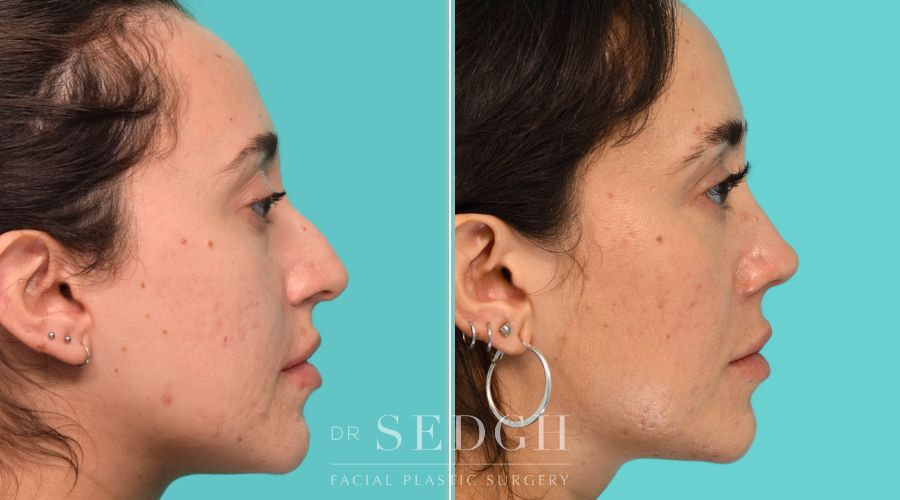
When Will I See My Final Results?
The rhinoplasty final results timeline varies depending on skin thickness and surgical complexity.
Most patients see a clear improvement within several months. However, full refinement after revision surgery can take up to 18 months.
Thick skin causes swelling to linger in the nasal tip for longer.
Most surgeons wait at least one year before they evaluate the final results.
Factors That Affect Healing Time
Surgical Technique
The technique used during surgery can affect swelling.
For example:
- • Open rhinoplasty recovery may take longer because tissue is lifted for better visibility.
- • Closed rhinoplasty may involve less tissue disruption.
Skin Thickness
Thicker skin retains fluid longer which extends the revision rhinoplasty swelling timeline.
While thin skin might show results faster it also reveals subtle irregularities more easily.
Patient Health
General health plays a major role in recovery.
Factors that may delay healing include:
- • Smoking
- • Autoimmune disorders
- • Poor nutrition or dehydration
Post-Operative Care Compliance
Following instructions carefully improves recovery.
Important steps include:
- • Post surgery taping
- • Steroid injections when recommended
- • Protecting the nose from trauma
Tips to Reduce Swelling After Revision Rhinoplasty
Doctors often recommend several strategies to reduce nasal swelling after surgery.
Common guidance includes:
- • Keep the head elevated for 2 to 3 weeks
- • Use cold compresses during the first 48 hours only
- • Follow a low sodium diet
- • Avoid strenuous exercise for 4 to 6 weeks
- • Avoid glasses resting on the bridge
- • Consider lymphatic massage if approved by your surgeon
- • Use steroid injections for persistent nose job tip swelling
These steps help support the revision rhinoplasty healing process.
Want to reduce swelling after surgery?
A professional post-surgery recovery tip that helps patients reduce swelling and support a smoother healing process.
Swelling is a normal part of the recovery process after facial procedures such as rhinoplasty. While it gradually improves over time, proper aftercare can make a significant difference in helping the body heal comfortably and efficiently. Understanding how to manage swelling can help patients feel more confident and prepared during the recovery period.
Is Prolonged Swelling Normal After Revision Rhinoplasty?
Prolonged swelling is common after revision procedures.
The nasal tip often stays firm for months due to scar tissue swelling. This firmness gradually softens as tissues remodel.
However, you should contact your surgeon if you notice:
- • Severe pain
- • Signs of infection
- • Sudden uneven swelling
Regular follow ups help monitor healing and ensure the revision rhinoplasty swelling timeline stays on track.
Comparing Primary vs. Revision Rhinoplasty Swelling Timeline
| Recovery Stage | Primary Rhinoplasty | Revision Rhinoplasty |
|---|---|---|
| Initial swelling | Usually improves within the first few weeks | Often lasts longer due to scar tissue and surgical complexity |
| Major swelling reduction | Most visible swelling improves within several months | Swelling may take several additional months to settle |
| Tip swelling improvement | Tip refinement continues throughout the first year | Tip swelling may persist longer, sometimes up to 18 months |
| Final results | Typically around 12 months | Often 12–18 months |
Revision surgery typically takes longer because of scar tissue swelling and structural reconstruction.
Why Choosing an Experienced Revision Specialist Matters
Revision rhinoplasty requires advanced expertise.
The surgeon must:
- • Understand complex nasal anatomy
- • Reinforce weakened cartilage
- • Manage existing scar tissue
Expert facial plastic surgeons use precise methods that limit trauma and manage swelling. Doing this improves the revision rhinoplasty healing process and ensures more predictable results.
Frequently Asked Questions
Most swelling fades within a few months though minor changes can last 12 to 18 months.
Yes. Revision procedures usually require a longer healing period due to scar tissue and structural reconstruction.
The nasal tip has thicker skin and cartilage so nose job tip swelling usually lasts the longest.
Yes. Mild asymmetry during the revision rhinoplasty swelling timeline is common and usually improves over time.
Yes. Thick skin holds fluid longer and may extend swelling, sometimes lasting up to 12 to 18 months.
Understand your healing timeline and plan your revision with confidence. Schedule your personalized consultation today.
Posted on behalf of Sedgh Plastic Surgery