
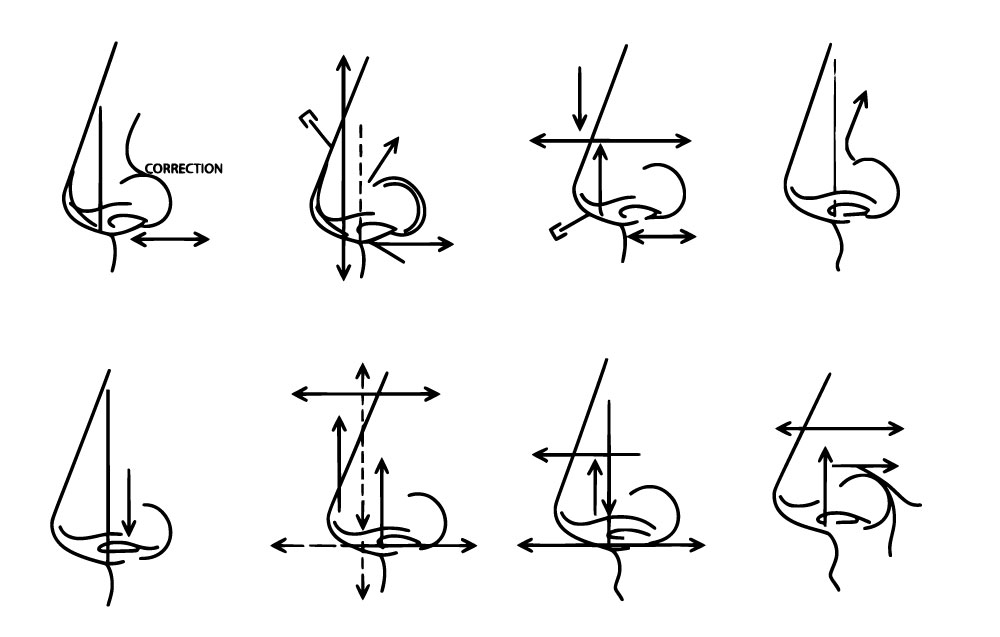
Getting a nose job used to mean getting the exact same nose as everyone else. You probably know the look: pinched, heavily sloped, and obviously surgically altered. Thankfully, facial plastic surgery has moved far beyond those days. Today, the best rhinoplasty results are the ones you cannot even tell happened. The modern goal is to craft a nose that fits your specific facial structure, respects your heritage, and works flawlessly when you breathe.
Because your nose is a highly complex structure made up of cartilage, bone, and soft tissue, surgeons do not use a one-size-fits-all playbook. Whether you want to smooth out a bump, fix a breathing issue, or correct a previous surgery that did not go as planned, understanding the different types of nose jobs is your best first step. So yo umay be wondering what are the different Types of Rhinoplasty?
Here is a breakdown of the major types of rhinoplasty, categorized by the surgical approach, the area of the nose being treated, and your personal goals.
1. Surgical Approaches: How Your Surgeon Accesses the Nose
Before making any changes to the shape of your nose, your surgeon has to decide how they will access the underlying bone and cartilage. This choice determines where your incisions will be and how the recovery might unfold.
Open Rhinoplasty
During an open rhinoplasty, the surgeon makes a tiny incision across the columella, which is the narrow strip of skin separating your nostrils. They connect this small cut to incisions hidden inside the nose, allowing them to gently lift the nasal skin upward.
The biggest advantage here is visibility. When surgeons can clearly see the nasal framework in its natural position, they can perform highly detailed work with pinpoint accuracy. This makes the open approach the gold standard for complex tip reshaping, major reconstructive work, and revision surgeries. It does leave a very small external scar under the nose, but in the hands of an expert, this scar usually fades until it is practically invisible.
Closed (Endonasal) Rhinoplasty
People often call this the “scarless nose job” because all the incisions are made strictly inside the nostrils. The external skin is never fully lifted, meaning there is zero visible scarring on the outside of your nose.
Aside from avoiding scars, closed rhinoplasty usually causes less disruption to the soft tissues. This can lead to a faster recovery time and less swelling after surgery. However, because the surgeon has to work through narrow spaces inside the nose, this technique requires an incredible amount of skill and spatial awareness. It is a fantastic option for straightforward bridge tweaks and primary surgeries that do not require massive structural changes.
Preservation Rhinoplasty
Preservation rhinoplasty is one of the most exciting shifts in modern plastic surgery. In the past, if you wanted a bump removed, a surgeon would typically shave down the top of the nasal bridge and then piece the remaining bones back together. Preservation techniques flip that entirely.
Instead of cutting away the natural roof of your nose, the surgeon removes small pieces of cartilage and bone from underneath the bridge. This allows them to simply “drop” the entire nasal bridge down to a lower profile. By keeping your natural bridge intact, your nose retains its smooth, continuous lines, and you significantly lower the risk of breathing problems or structural collapse later in life.
2. The Nasal Bridge: Smoothing the Profile
The bridge of your nose dictates your side profile. Modifying this area requires a careful balance between removing excess tissue and keeping the nose structurally sound.
Common Nasal Bridge Fixes
- Dorsal Hump Reduction: Removing a bone or cartilage bump.
- Saddle Nose Correction: Rebuilding a collapsed or scooped-out bridge.
- Radix Adjustments: Fixing a starting point that is high or deep.
- Crooked Nose Surgery: Realigning deviated bones or cartilage.
Dorsal Hump Reduction
If you have a noticeable bump on the bridge of your nose, you are not alone. It is the most common reason people seek out this surgery. A dorsal hump is usually made of both bone near the top and cartilage near the middle. A reduction carefully shaves or drops this excess tissue to create a straighter profile or a gentle slope, depending entirely on what looks best with your facial features.
Saddle Nose Deformity Correction
Some patients have the opposite problem. A saddle nose deformity happens when the bridge collapses, creating a scooped-out appearance. This is often the result of trauma, medical conditions, or a previous surgery where too much tissue was removed. Fixing this requires the surgeon to rebuild the bridge using cartilage grafts, often taken from the ear or rib, to restore a strong, healthy profile.
Radix Augmentation and Reduction
The radix is the very top of your nose where it meets your forehead. If your radix is deeply depressed, it can make your nose look short or artificially scooped. Surgeons can use small grafts to build this area up. On the flip side, if your radix is too high, it creates a heavy “Roman nose” look, which can be softened by carefully reducing the bone.
Crooked Nose Realignment
A crooked nose means the nasal bones and the underlying septum are visibly leaning to one side. Whether this was caused by genetics or a broken nose from a sports injury, fixing it usually requires a combination approach. The surgeon will straighten the internal septum and perform osteotomies, which are controlled micro-fractures of the nasal bones, to physically move the nose back into the center of the face.
3. The Nasal Tip and Nostrils: Perfecting the Details
The lower third of the nose is made completely of flexible cartilage and skin. Reshaping this area is true surgical artistry because changing even a single millimeter can completely alter how your nose looks from the front.
Bulbous Tip Refinement
A bulbous tip happens when the lower cartilages are wide or round, making the end of the nose look heavy or undefined. To fix this, surgeons use precise suturing techniques to fold the cartilages closer together or trim away tiny segments. The goal is to create natural definition without making the tip look pinched.
Hanging Columella Correction
Ideally, the tissue separating your nostrils should sit just slightly lower than the edges of your nostrils. If it hangs down too far, it exposes too much of the inside of your nose. A surgeon can correct this by tucking the underlying cartilage upward to create a much cleaner, more balanced side profile.
Drooping Tip Correction
Gravity and aging can cause the tip of the nose to droop downward, especially when you smile. To lift the tip permanently, surgeons often insert a columellar strut graft. This is a tiny, hidden pillar of firm cartilage that acts like a support beam, locking the tip into an elevated, youthful position.
Pollybeak Deformity
A pollybeak deformity is a specific complication from a previous surgery. It happens when the area just above the tip holds onto too much fullness, making the nose look like a parrot beak. Correcting it takes a highly skilled revision surgeon who can carefully remove the underlying scar tissue or lower the remaining cartilage.
Alarplasty (Nostril Reduction)
If you feel like your nostrils flare out too much or your nose looks too wide at the base, an alarplasty is a great standalone option. The surgeon removes a tiny wedge of tissue from the base of the nostril where it meets the cheek. Because the incisions are hidden directly in the natural crease of your nose, the scars are practically undetectable once healed.
4. Functional Rhinoplasty: Improving Your Breathing
Rhinoplasty is not just about looks. The nose is a vital respiratory organ, and true success means you look great and breathe easily.
- Septorhinoplasty: This is the most common dual-purpose surgery. It combines cosmetic reshaping with a septoplasty, which straightens a deviated internal septum to clear airway blockages.
- Nasal Valve Collapse Repair: The nasal valves are the narrowest breathing passages in your nose. If they are naturally weak or were damaged during a past surgery, they can collapse inward every time you take a breath. Surgeons fix this by installing spreader grafts, which are thin strips of cartilage that act like internal splints to hold the airway open permanently.
5. Personalized Procedures for Your Demographics
The best modern surgeons know that facial balance is highly individual. Technique must adapt to who you are.
Ethnic Rhinoplasty
Ethnic rhinoplasty focuses on tailoring the surgery for Asian, African American, Hispanic, or Middle Eastern patients. Instead of applying Westernized beauty standards to everyone, the goal is to enhance facial balance while proudly preserving your unique ethnic identity. This might involve building up a flat bridge for an Asian patient or refining a drooping tip for a Middle Eastern patient without erasing their family traits.
Male Rhinoplasty
Men generally require completely different angles than women. While many women prefer a slight slope and an upwardly tilted tip, men typically look best with a strong, straight bridge and a tip that sits at a more masculine 90-degree angle to the lip. Preserving this strength is crucial for keeping the face balanced.
Liquid Rhinoplasty (Non-Surgical)
If you want to test out a new look without the downtime of surgery, a liquid nose job uses dermal fillers to make temporary adjustments. By strategically injecting fillers, a provider can hide a small bump or lift a drooping tip in about fifteen minutes. It cannot make a nose smaller or fix breathing issues, but it is a fantastic, low-commitment alternative.
The Next Step in Your Rhinoplasty Journey
The most important takeaway is that there is no magic technique that works for everyone. The secret to a beautiful and natural-looking rhinoplasty is a customized surgical plan tailored specifically to your anatomy and your goals. If you are in the Los Angeles area and are ready to explore your options, Dr. John Sedgh is here to guide you. Known for his meticulous precision and highly personalized approach, Dr. Sedgh combines advanced surgical techniques with a deep understanding of facial harmony. Whether you are seeking a subtle aesthetic refinement, a complex revision, or functional breathing relief, our team is committed to delivering results that help you look and feel your absolute best. Take the next step today and schedule your private consultation by visiting sedghplasticsurgery.com.
Posted on behalf of Sedgh Plastic Surgery